 Add to Chrome
 Add to Firefox
 Add to Edge
Benchmarking Time Series Generation Methods for Privacy-Preserving Forecasting
Aug 11, 2026
Time series forecasting in privacy-sensitive domains often requires training models on released data rather than original observations. Synthetic time series generation has been developed primarily for data augmentation, where generated series supplement the original training set. How well these methods perform when fully replacing the original data - and how much privacy risk the released series carry - remains underexplored. We address this gap through a benchmark evaluating synthetic generation methods and noise-based anonymization baselines under a Train on Synthetic, Test on Real (TSTR) protocol. We jointly assess forecasting performance and distance-based empirical privacy risk across seven datasets, characterizing the trade-off between these objectives. We also introduce Grasynda-P, a privacy-motivated extension of the graph-based generator Grasynda, incorporating matrix ensembling and kernel density estimation. Our results show that: (1) no generation method fully substitutes for original training data; (2) noise-based anonymization yields the strongest privacy but the worst forecasting performance; (3) simple transformation-based generators outperform deep generative models for forecasting in this setting; and (4) Grasynda-P lies on the Pareto frontier, achieving competitive forecasting with stronger privacy separation than other generators. This benchmark establishes a reference point for evaluating and developing new privacy-aware synthetic time series generation methods.

Rashomon Alignment
Jul 28, 2026We propose Rashomon Alignment (RA), a new measure to assess functional similarity between two models. Existing functional similarity measures are distributional, quantifying differences between outputs of models applied to real-world data. However, these measures can be regarded as ecologically valid only for regions in the input space represented by the available data. We introduce a geometrical perspective on functional model similarity, which estimates it across the entire data space, offering a comprehensive view of decision boundary alignment independent of any specific data distribution. We also propose geometric Rashomon Alignment as a measure of geometrical similarity, which is computed using data uniformly sampled from the instance space. We perform an experimental analysis on more than 90 datasets, examining critical cases where model alignment diverges from predictive accuracy. Our results show that geometrical and distributional alignment provide different and complementary perspectives on the similarity between models and algorithms. RA can be used for multiple purposes, including model selection, ensemble construction, and enhanced interpretability of machine learning models and algorithms.
Selective Time Series Forecasting via Metalearning
Jun 22, 2026Deep learning methods have achieved state-of-the-art in time series forecasting, yet their accuracy varies considerably across samples, as some instances remain inherently difficult to predict. Reject option mechanisms, which allow models to abstain from high-risk predictions, are well established in classification and regression but underexplored in forecasting. Existing abstention strategies typically rely on proxies, such as the width of the prediction interval or learned confidence scores derived from forecasts. However, these approaches are inherently tied to the training domain, limiting their ability to generalize. We propose a selective forecasting framework that addresses this limitation by modeling the empirical percentile of forecasting errors, that is, a scale-invariant statistic, based on structural characteristics extracted from recent lags via metalearning. By decoupling the rejection decision from the forecast itself and grounding it in domain-agnostic features, the framework enables effective abstention transfer across heterogeneous time series. Experiments in both in-domain and transfer learning settings show that rejecting samples predicted as challenging consistently improves forecasting accuracy across coverage levels.
Rethinking XAI Evaluation: A Human-Centered Audit of Shapley Benchmarks in High-Stakes Settings
Apr 24, 2026Shapley values are a cornerstone of explainable AI, yet their proliferation into competing formulations has created a fragmented landscape with little consensus on practical deployment. While theoretical differences are well-documented, evaluation remains reliant on quantitative proxies whose alignment with human utility is unverified. In this work, we use a unified amortized framework to isolate semantic differences between eight Shapley variants under the low-latency constraints of operational risk workflows. We conduct a large-scale empirical evaluation across four risk datasets and a realistic fraud-detection environment involving professional analysts and 3,735 case reviews. Our results reveal a fundamental misalignment: standard quantitative metrics, such as sparsity and faithfulness, are decoupled from human-perceived clarity and decision utility. Furthermore, while no formulation improved objective analyst performance, explanations consistently increased decision confidence, signaling a critical risk of automation bias in high-stakes settings. These findings suggest that current evaluation proxies are insufficient for predicting downstream human impact, and we provide evidence-based guidance for selecting formulations and metrics in operational decision systems.
Exploring Transformer Placement in Variational Autoencoders for Tabular Data Generation
Jan 28, 2026Tabular data remains a challenging domain for generative models. In particular, the standard Variational Autoencoder (VAE) architecture, typically composed of multilayer perceptrons, struggles to model relationships between features, especially when handling mixed data types. In contrast, Transformers, through their attention mechanism, are better suited for capturing complex feature interactions. In this paper, we empirically investigate the impact of integrating Transformers into different components of a VAE. We conduct experiments on 57 datasets from the OpenML CC18 suite and draw two main conclusions. First, results indicate that positioning Transformers to leverage latent and decoder representations leads to a trade-off between fidelity and diversity. Second, we observe a high similarity between consecutive blocks of a Transformer in all components. In particular, in the decoder, the relationship between the input and output of a Transformer is approximately linear.
Grasynda: Graph-based Synthetic Time Series Generation
Jan 27, 2026Data augmentation is a crucial tool in time series forecasting, especially for deep learning architectures that require a large training sample size to generalize effectively. However, extensive datasets are not always available in real-world scenarios. Although many data augmentation methods exist, their limitations include the use of transformations that do not adequately preserve data properties. This paper introduces Grasynda, a novel graph-based approach for synthetic time series generation that: (1) converts univariate time series into a network structure using a graph representation, where each state is a node and each transition is represented as a directed edge; and (2) encodes their temporal dynamics in a transition probability matrix. We performed an extensive evaluation of Grasynda as a data augmentation method for time series forecasting. We use three neural network variations on six benchmark datasets. The results indicate that Grasynda consistently outperforms other time series data augmentation methods, including ones used in state-of-the-art time series foundation models. The method and all experiments are publicly available.
SPATA: Systematic Pattern Analysis for Detailed and Transparent Data Cards
Sep 30, 2025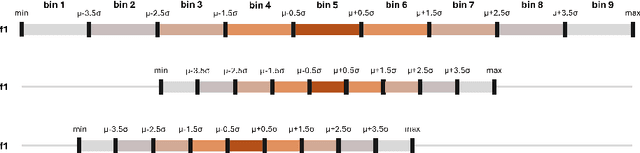
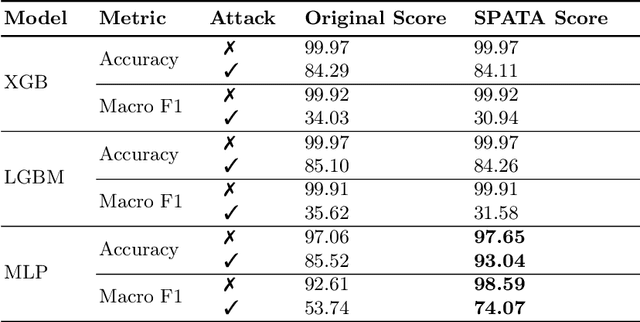
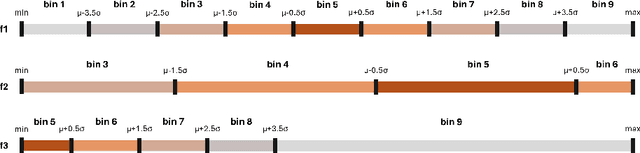
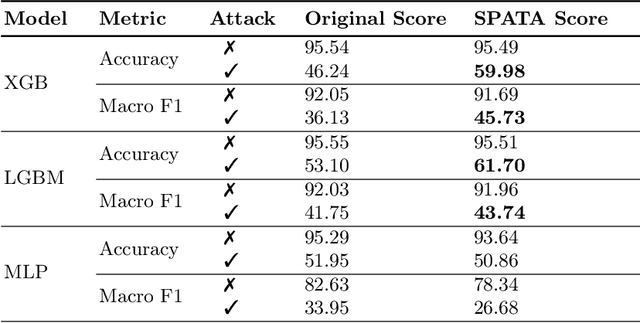
Due to the susceptibility of Artificial Intelligence (AI) to data perturbations and adversarial examples, it is crucial to perform a thorough robustness evaluation before any Machine Learning (ML) model is deployed. However, examining a model's decision boundaries and identifying potential vulnerabilities typically requires access to the training and testing datasets, which may pose risks to data privacy and confidentiality. To improve transparency in organizations that handle confidential data or manage critical infrastructure, it is essential to allow external verification and validation of AI without the disclosure of private datasets. This paper presents Systematic Pattern Analysis (SPATA), a deterministic method that converts any tabular dataset to a domain-independent representation of its statistical patterns, to provide more detailed and transparent data cards. SPATA computes the projection of each data instance into a discrete space where they can be analyzed and compared, without risking data leakage. These projected datasets can be reliably used for the evaluation of how different features affect ML model robustness and for the generation of interpretable explanations of their behavior, contributing to more trustworthy AI.
L-GTA: Latent Generative Modeling for Time Series Augmentation
Jul 31, 2025Data augmentation is gaining importance across various aspects of time series analysis, from forecasting to classification and anomaly detection tasks. We introduce the Latent Generative Transformer Augmentation (L-GTA) model, a generative approach using a transformer-based variational recurrent autoencoder. This model uses controlled transformations within the latent space of the model to generate new time series that preserve the intrinsic properties of the original dataset. L-GTA enables the application of diverse transformations, ranging from simple jittering to magnitude warping, and combining these basic transformations to generate more complex synthetic time series datasets. Our evaluation of several real-world datasets demonstrates the ability of L-GTA to produce more reliable, consistent, and controllable augmented data. This translates into significant improvements in predictive accuracy and similarity measures compared to direct transformation methods.
Generating Large Semi-Synthetic Graphs of Any Size
Jul 02, 2025Graph generation is an important area in network science. Traditional approaches focus on replicating specific properties of real-world graphs, such as small diameters or power-law degree distributions. Recent advancements in deep learning, particularly with Graph Neural Networks, have enabled data-driven methods to learn and generate graphs without relying on predefined structural properties. Despite these advances, current models are limited by their reliance on node IDs, which restricts their ability to generate graphs larger than the input graph and ignores node attributes. To address these challenges, we propose Latent Graph Sampling Generation (LGSG), a novel framework that leverages diffusion models and node embeddings to generate graphs of varying sizes without retraining. The framework eliminates the dependency on node IDs and captures the distribution of node embeddings and subgraph structures, enabling scalable and flexible graph generation. Experimental results show that LGSG performs on par with baseline models for standard metrics while outperforming them in overlooked ones, such as the tendency of nodes to form clusters. Additionally, it maintains consistent structural characteristics across graphs of different sizes, demonstrating robustness and scalability.
ModelRadar: Aspect-based Forecast Evaluation
Mar 31, 2025Accurate evaluation of forecasting models is essential for ensuring reliable predictions. Current practices for evaluating and comparing forecasting models focus on summarising performance into a single score, using metrics such as SMAPE. While convenient, averaging performance over all samples dilutes relevant information about model behavior under varying conditions. This limitation is especially problematic for time series forecasting, where multiple layers of averaging--across time steps, horizons, and multiple time series in a dataset--can mask relevant performance variations. We address this limitation by proposing ModelRadar, a framework for evaluating univariate time series forecasting models across multiple aspects, such as stationarity, presence of anomalies, or forecasting horizons. We demonstrate the advantages of this framework by comparing 24 forecasting methods, including classical approaches and different machine learning algorithms. NHITS, a state-of-the-art neural network architecture, performs best overall but its superiority varies with forecasting conditions. For instance, concerning the forecasting horizon, we found that NHITS (and also other neural networks) only outperforms classical approaches for multi-step ahead forecasting. Another relevant insight is that classical approaches such as ETS or Theta are notably more robust in the presence of anomalies. These and other findings highlight the importance of aspect-based model evaluation for both practitioners and researchers. ModelRadar is available as a Python package.