 Add to Chrome
 Add to Firefox
 Add to Edge
Solar Open 2 Technical Report
Jul 24, 2026
We present Solar Open 2, a 250B-A15B Mixture-of-Experts language model built for long-horizon agentic tasks, scaled up from Solar Open 1 (Solar Open 100B). To hold entire agent trajectories in a single context, Solar Open 2 reaches a 1M-token window through a hybrid attention stack that interleaves one softmax layer among every three linear-attention layers, using no positional encoding and a gated delta rule extended to negative eigenvalues. To train at this scale under a fixed compute budget, we make training efficient in two ways: a stronger starting point, and higher-value data. For the starting point, we initialize Solar Open 2 from Solar Open 1, transferring the 5.69B-parameter shared skeleton that survives the architectural change and learning everything else through full pre-training. For the data, we curate for value per token: quality- and rarity-aware data curation and mixture-ratio optimization refine a 20T pool into a 10T mixture that, at equal token budget, outperforms the Solar Open 1 recipe. To build its agent skills, we train twelve domain specialists across purpose-built scenarios, then consolidate them into a single model by Multi-teacher On-Policy Distillation (MOPD). Against comparably sized open-weight models on English benchmarks, Solar Open 2 leads on MMLU-Pro, LiveCodeBench, and the APEX-Agents agentic suite, and stays competitive with the strongest (DeepSeek-V4-Flash and MiMo-V2.5) elsewhere. On Korean benchmarks, Solar Open 2 records the highest average of any model compared, including fast-tier closed APIs, and on Ko-GDPval, an in-house Korean officework-agent benchmark, it is competitive with DeepSeek-V4-Pro (1.6T) at less than a sixth of its size.

Optimal Parameter Inflation to Enhance the Availability of Single-Frequency GBAS for Intelligent Air Transportation
Nov 03, 2021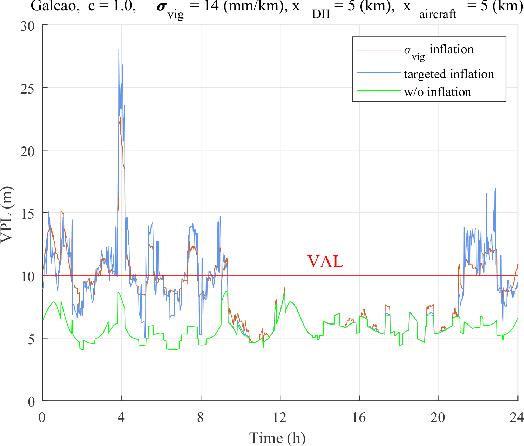
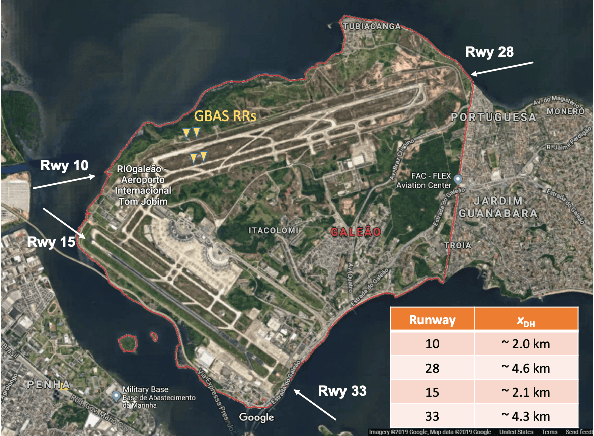
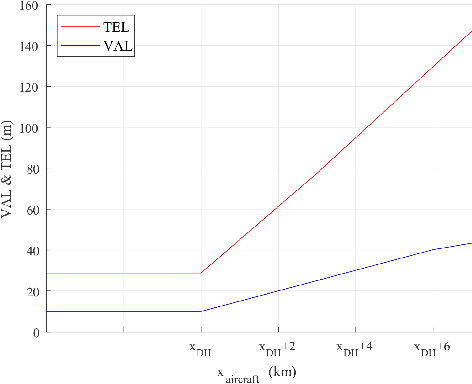
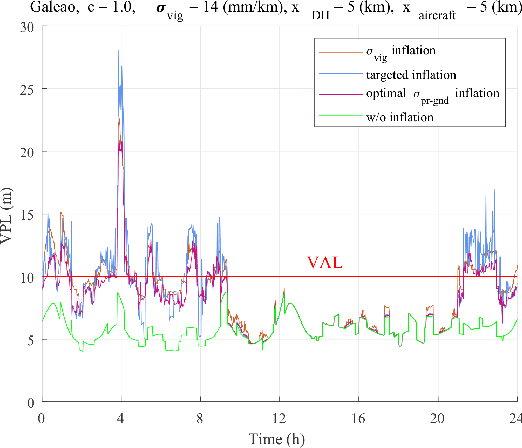
Ground-based Augmentation System (GBAS) augments Global Navigation Satellite Systems (GNSS) to support the precision approach and landing of aircraft. To guarantee integrity, existing single-frequency GBAS utilizes position-domain geometry screening to eliminate potentially unsafe satellite geometries by inflating one or more broadcast GBAS parameters. However, GBAS availability can be drastically impacted in low-latitude regions where severe ionospheric conditions have been observed. Thus, we developed a novel geometry-screening algorithm in this study to improve GBAS availability in low-latitude regions. Simulations demonstrate that the proposed method can provide 5-8 percentage point availability enhancement of GBAS at Gale\~ao airport near Rio de Janeiro, Brazil, compared to existing methods.