 Add to Chrome
 Add to Firefox
 Add to Edge
AI Empowered Communication and Radar Modulation Recognition: A Survey
Jul 25, 2026
Automatic modulation recognition (AMR) is of vital importance for ensuring communication and radar reliability, efficient spectrum utilization and resistance to electronic interference. The development of artificial intelligence (AI) technology is reshaping the technological paradigm of AMR, promoting its transition from traditional modes relying on manual features to data-driven intelligent recognition. This change is not only reflected in the significant improvement of recognition accuracy, but also injects strong momentum into the intelligent evolution of both communication and radar systems through algorithm innovation, architecture optimization, and scenario expansion. In order to clarify the current development status and bottlenecks of AMR, and to find breakthrough directions, we make a comprehensive survey of recent AI-based technologies for AMR in this paper, including model-based machine learning (ML) methods and data-driven deep learning (DL) methods. We first investigate the modulation types used in current communication and radar systems. Next, we summarize the typically used features in the field of AMR, and discuss their inherent advantages and disadvantages. Then, we introduce the basic AI models for AMR and conduct a hierarchical investigation of AMR methods for communication and radar. Finally, based on existing research works, we highlight open issues and propose future research directions for AMR.

Underwater Sound Speed Profile Construction: A Review
Oct 12, 2023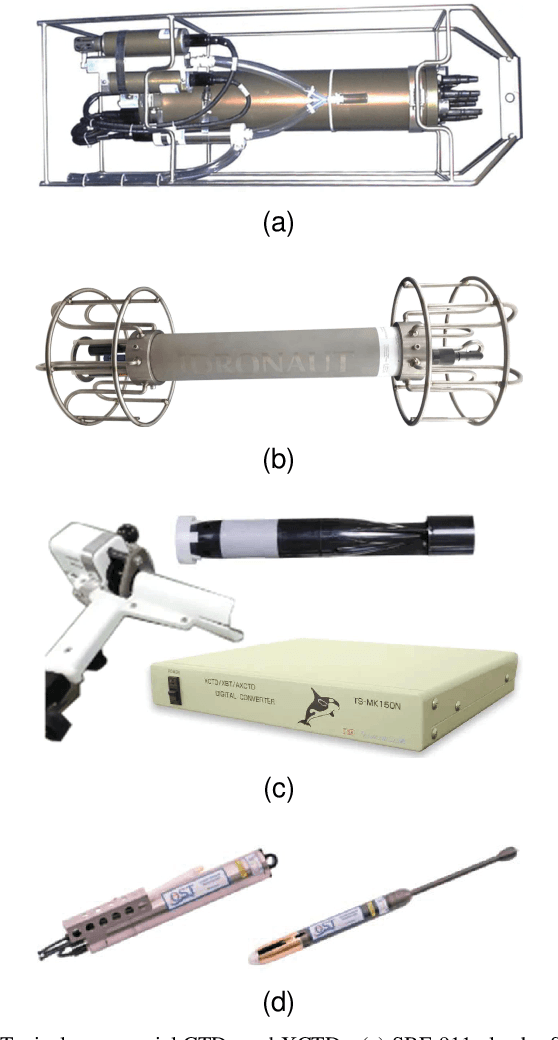
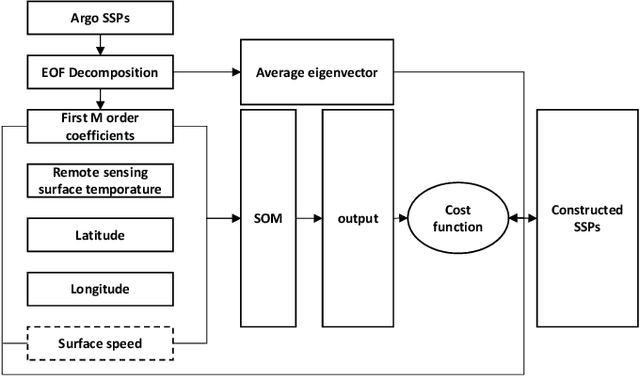
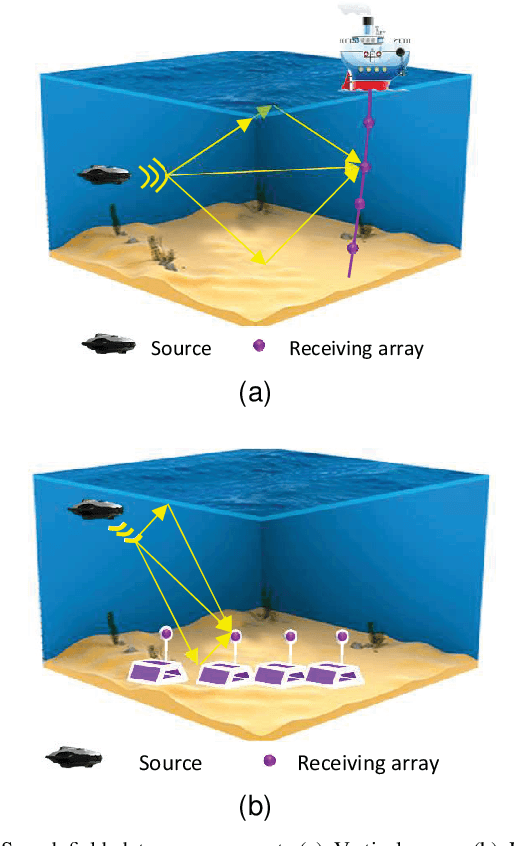
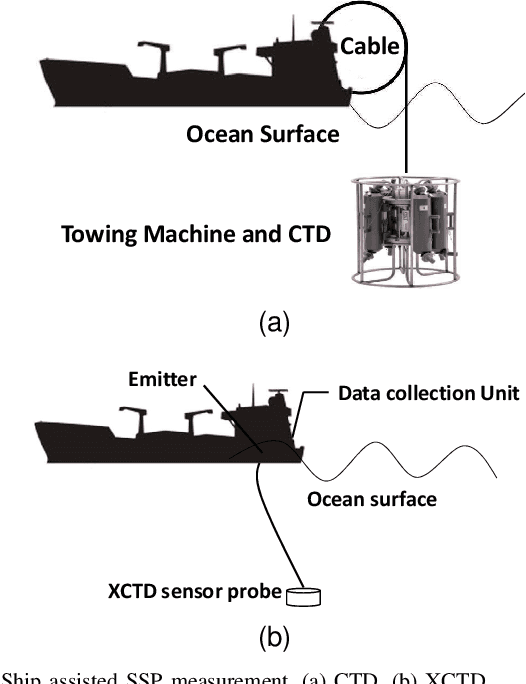
Real--time and accurate construction of regional sound speed profiles (SSP) is important for building underwater positioning, navigation, and timing (PNT) systems as it greatly affect the signal propagation modes such as trajectory. In this paper, we summarizes and analyzes the current research status in the field of underwater SSP construction, and the mainstream methods include direct SSP measurement and SSP inversion. In the direct measurement method, we compare the performance of popular international commercial temperature, conductivity, and depth profilers (CTD). While for the inversion methods, the framework and basic principles of matched field processing (MFP), compressive sensing (CS), and deep learning (DL) for constructing SSP are introduced, and their advantages and disadvantages are compared. The traditional direct measurement method has good accuracy performance, but it usually takes a long time. The proposal of SSP inversion method greatly improves the convenience and real--time performance, but the accuracy is not as good as the direct measurement method. Currently, the SSP inversion relies on sonar observation data, making it difficult to apply to areas that couldn't be covered by underwater observation systems, and these methods are unable to predict the distribution of sound velocity at future times. How to comprehensively utilize multi-source data and provide elastic sound velocity distribution estimation services with different accuracy and real-time requirements for underwater users without sonar observation data is the mainstream trend in future research on SSP construction.