 Add to Chrome
 Add to Firefox
 Add to Edge
MemTools: A Unified Research Framework for Interoperable Agent Memory
Jul 23, 2026
While memory systems are essential for agent architectures, pervasive architectural fragmentation restricts systematic research. Existing implementations typically couple different stages of the memory lifecycle, entangle evaluation logic with specific datasets, and provide limited support for the management of heterogeneous memory types. We introduce MemTools, an interoperability research framework that decouples memory system components from their underlying deployment environments. MemTools standardizes the memory lifecycle through declarative data contracts, enabling the interchangeable assembly of components across different systems. It orthogonally separates benchmark datasets from execution protocols to facilitate controlled assessments. Furthermore, MemTools provides a unified computational interface for coordinating symbolic, neural, and multimodal memory representations within a shared runtime. Empirical evaluations on cross-system component integration, evaluation protocol reconfiguration, and heterogeneous memory coordination demonstrate that MemTools enables systematic isolation and analysis of memory design variables. These findings suggest that MemTools provides a practical and extensible infrastructure for advancing principled research on agent memory.

Global Cross-Modal Geo-Localization: A Million-Scale Dataset and a Physical Consistency Learning Framework
Mar 09, 2026Cross-modal Geo-localization (CMGL) matches ground-level text descriptions with geo-tagged aerial imagery, which is crucial for pedestrian navigation and emergency response. However, existing researches are constrained by narrow geographic coverage and simplistic scene diversity, failing to reflect the immense spatial heterogeneity of global architectural styles and topographic features. To bridge this gap and facilitate universal positioning, we introduce CORE, the first million-scale dataset dedicated to global CMGL. CORE comprises 1,034,786 cross-view images sampled from 225 distinct geographic regions across all continents, offering an unprecedented variety of perspectives in varying environmental conditions and urban layouts. We leverage the zero-shot reasoning of Large Vision-Language Models (LVLMs) to synthesize high-quality scene descriptions rich in discriminative cues. Furthermore, we propose a physical-law-aware network (PLANET) for cross-modal geo-localization. PLANET introduces a novel contrastive learning paradigm to guide textual representations in capturing the intrinsic physical signatures of satellite imagery. Extensive experiments across varied geographic regions demonstrate that PLANet significantly outperforms state-of-the-art methods, establishing a new benchmark for robust, global-scale geo-localization. The dataset and source code will be released at https://github.com/YtH0823/CORE.
Foveated Instance Segmentation
Mar 27, 2025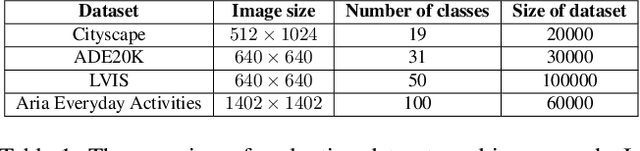
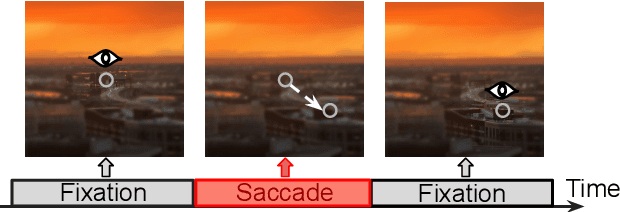
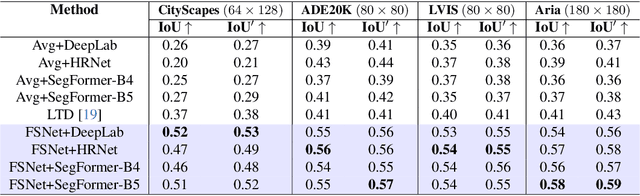
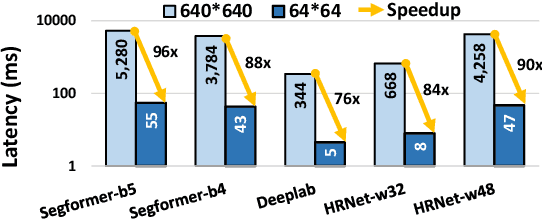
Instance segmentation is essential for augmented reality and virtual reality (AR/VR) as it enables precise object recognition and interaction, enhancing the integration of virtual and real-world elements for an immersive experience. However, the high computational overhead of segmentation limits its application on resource-constrained AR/VR devices, causing large processing latency and degrading user experience. In contrast to conventional scenarios, AR/VR users typically focus on only a few regions within their field of view before shifting perspective, allowing segmentation to be concentrated on gaze-specific areas. This insight drives the need for efficient segmentation methods that prioritize processing instance of interest, reducing computational load and enhancing real-time performance. In this paper, we present a foveated instance segmentation (FovealSeg) framework that leverages real-time user gaze data to perform instance segmentation exclusively on instance of interest, resulting in substantial computational savings. Evaluation results show that FSNet achieves an IoU of 0.56 on ADE20K and 0.54 on LVIS, notably outperforming the baseline. The code is available at https://github.com/SAI-