 Add to Chrome
 Add to Firefox
 Add to Edge
PersonaKit (PK): A Plug-and-Play Platform for User Testing Diverse Roles in Full-Duplex Dialogue
May 07, 2026
As spoken dialogue systems expand beyond traditional assistant roles to encompass diverse personas -- such as authoritative instructors, uncooperative merchants, or distracted workers -- they require distinct, human-like turn-taking behaviors to maintain psychological immersion. However, current full-duplex systems often default to a rigid, overly accommodating ``always-yield'' policy during overlapping speech, which severely undermines character consistency for non-submissive roles. Evaluating alternative, persona-specific turn-taking strategies through empirical user studies is challenging because building real-time full-duplex test environments requires substantial engineering overhead. To address this, we present PersonaKit (PK), an open-source, low-latency web platform for the rapid prototyping and evaluation of conversational agents. Using intuitive JSON configurations, researchers can define personas, specify probabilistic interruption-handling behaviors (e.g., yield, hold, bridge, or override), and automatically deploy comparative A/B surveys. Through an in-the-wild evaluation with 8 distinct personas, we demonstrate that PersonaKit provides an extensible, end-to-end framework for studying complex sociolinguistic behaviors in next-generation spoken agents.

Why Are We Lonely? Leveraging LLMs to Measure and Understand Loneliness in Caregivers and Non-caregivers
Apr 09, 2026This paper presents an LLM-driven approach for constructing diverse social media datasets to measure and compare loneliness in the caregiver and non-caregiver populations. We introduce an expert-developed loneliness evaluation framework and an expert-informed typology for categorizing causes of loneliness for analyzing social media text. Using a human-validated data processing pipeline, we apply GPT-4o, GPT-5-nano, and GPT-5 to build a high-quality Reddit corpus and analyze loneliness across both populations. The loneliness evaluation framework achieved average accuracies of 76.09% and 79.78% for caregivers and non-caregivers, respectively. The cause categorization framework achieved micro-aggregate F1 scores of 0.825 and 0.80 for caregivers and non-caregivers, respectively. Across populations, we observe substantial differences in the distribution of types of causes of loneliness. Caregivers' loneliness were predominantly linked to caregiving roles, identity recognition, and feelings of abandonment, indicating distinct loneliness experiences between the two groups. Demographic extraction further demonstrates the viability of Reddit for building a diverse caregiver loneliness dataset. Overall, this work establishes an LLM-based pipeline for creating high quality social media datasets for studying loneliness and demonstrates its effectiveness in analyzing population-level differences in the manifestation of loneliness.
ReCUBE: Evaluating Repository-Level Context Utilization in Code Generation
Mar 26, 2026Large Language Models (LLMs) have recently emerged as capable coding assistants that operate over large codebases through either agentic exploration or full-context generation. Existing benchmarks capture a broad range of coding capabilities, such as resolving GitHub issues, but none of them directly isolate and measure how effectively LLMs leverage repository-level context during code generation. To address this, we introduce ReCUBE, a benchmark in which LLMs reconstruct a masked file within a real-world repository, using all remaining source files, dependency specifications, and documentation as their only source of context. ReCUBE evaluates reconstructed code with usage-aware test cases that simulate both internal module logic and external cross-file integration, reflecting real-world software usage patterns. We further propose the Caller-Centric Exploration (CCE) toolkit, a set of dependency graph-based tools that can be integrated into agentic frameworks to guide agents toward the most relevant caller files during repository exploration. Experiments across eight models in four settings show that repository-level context utilization remains highly challenging even for state-of-the-art models, with GPT-5 achieving only 37.57% strict pass rate in the full-context setting. Agents augmented with our CCE toolkit consistently outperform all baselines across all evaluated models, with improvements of up to 7.56% in strict pass rate. We release our benchmark, code, and evaluation framework as open source for the NLP research community.
Tinker Tales: Supporting Child-AI Collaboration through Co-Creative Storytelling with Educational Scaffolding
Feb 04, 2026Artificial intelligence (AI) is increasingly framed as a collaborative partner in creative activities, yet children's interactions with AI have largely been studied in AI-led instructional settings rather than co-creative collaboration. This leaves open questions about how children can meaningfully engage with AI through iterative co-creation. We present Tinker Tales, a tangible storytelling system designed with narrative and social-emotional scaffolding to support child-AI collaboration. The system combines a physical storytelling board, NFC-embedded toys representing story elements (e.g., characters, places, items, and emotions), and a mobile app that mediates child-AI interaction. Children shape and refine stories by placing and moving story elements and interacting with the AI through tangible and voice-based interaction. We conducted an exploratory user study with 10 children to examine how they interacted with Tinker Tales. Our findings show that children treated the AI as an attentive, responsive collaborator, while scaffolding supported coherent narrative refinement without diminishing children's agency.
RIFT: Reordered Instruction Following Testbed To Evaluate Instruction Following in Singular Multistep Prompt Structures
Jan 26, 2026Large Language Models (LLMs) are increasingly relied upon for complex workflows, yet their ability to maintain flow of instructions remains underexplored. Existing benchmarks conflate task complexity with structural ordering, making it difficult to isolate the impact of prompt topology on performance. We introduce RIFT, Reordered Instruction Following Testbed, to assess instruction following by disentangling structure from content. Using rephrased Jeopardy! question-answer pairs, we test LLMs across two prompt structures: linear prompts, which progress sequentially, and jumping prompts, which preserve identical content but require non-sequential traversal. Across 10,000 evaluations spanning six state-of-the-art open-source LLMs, accuracy dropped by up to 72% under jumping conditions (compared to baseline), revealing a strong dependence on positional continuity. Error analysis shows that approximately 50% of failures stem from instruction-order violations and semantic drift, indicating that current architectures internalize instruction following as a sequential pattern rather than a reasoning skill. These results reveal structural sensitivity as a fundamental limitation in current architectures, with direct implications for applications requiring non-sequential control flow such as workflow automation and multi-agent systems.
DYCP: Dynamic Context Pruning for Long-Form Dialogue with LLMs
Jan 12, 2026Large Language Models (LLMs) often exhibit increased response latency and degraded answer quality as dialogue length grows, making effective context management essential. However, existing methods rely on extra LLM calls to build memory or perform offline memory construction without considering the current user utterance, which can introduce inefficiencies or disrupt conversational continuity. We introduce DyCP, a lightweight context management method that dynamically segment and retrieve relevant memory at query time. It preserves the sequential structure of dialogue without predefined topic boundaries and supports efficient, adaptive context retrieval. Across three long-form dialogue benchmarks, LoCoMo, MT-Bench+, and SCM4LLMs, and multiple LLMs, DyCP consistently improves answer quality while reducing response latency. We also examine the gap between modern LLMs' expanded context windows and their actual long-context processing capacity, highlighting the continued importance of effective context management.
LLM-as-a-Grader: Practical Insights from Large Language Model for Short-Answer and Report Evaluation
Nov 17, 2025Large Language Models (LLMs) are increasingly explored for educational tasks such as grading, yet their alignment with human evaluation in real classrooms remains underexamined. In this study, we investigate the feasibility of using an LLM (GPT-4o) to evaluate short-answer quizzes and project reports in an undergraduate Computational Linguistics course. We collect responses from approximately 50 students across five quizzes and receive project reports from 14 teams. LLM-generated scores are compared against human evaluations conducted independently by the course teaching assistants (TAs). Our results show that GPT-4o achieves strong correlation with human graders (up to 0.98) and exact score agreement in 55\% of quiz cases. For project reports, it also shows strong overall alignment with human grading, while exhibiting some variability in scoring technical, open-ended responses. We release all code and sample data to support further research on LLMs in educational assessment. This work highlights both the potential and limitations of LLM-based grading systems and contributes to advancing automated grading in real-world academic settings.
Do We Still Need Audio? Rethinking Speaker Diarization with a Text-Based Approach Using Multiple Prediction Models
Jun 12, 2025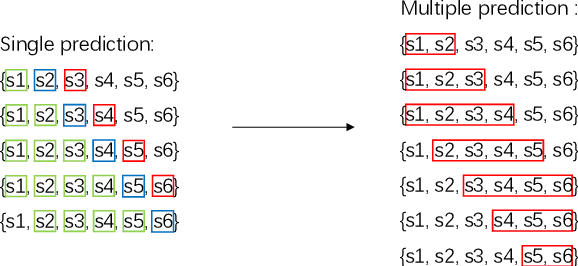
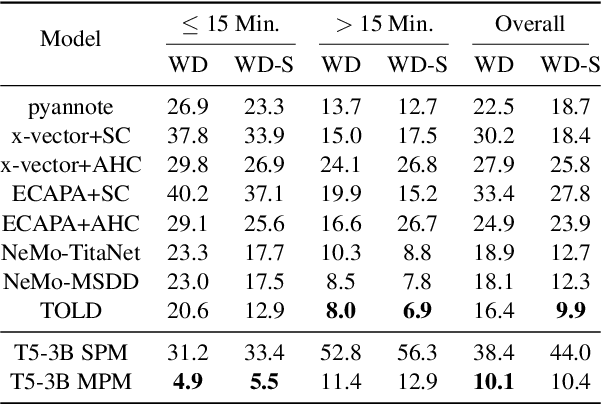
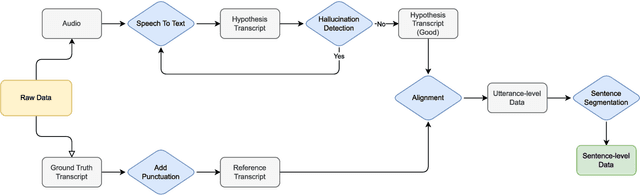
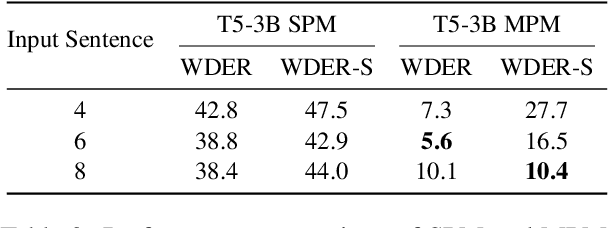
We present a novel approach to Speaker Diarization (SD) by leveraging text-based methods focused on Sentence-level Speaker Change Detection within dialogues. Unlike audio-based SD systems, which are often challenged by audio quality and speaker similarity, our approach utilizes the dialogue transcript alone. Two models are developed: the Single Prediction Model (SPM) and the Multiple Prediction Model (MPM), both of which demonstrate significant improvements in identifying speaker changes, particularly in short conversations. Our findings, based on a curated dataset encompassing diverse conversational scenarios, reveal that the text-based SD approach, especially the MPM, performs competitively against state-of-the-art audio-based SD systems, with superior performance in short conversational contexts. This paper not only showcases the potential of leveraging linguistic features for SD but also highlights the importance of integrating semantic understanding into SD systems, opening avenues for future research in multimodal and semantic feature-based diarization.
TRUST: An LLM-Based Dialogue System for Trauma Understanding and Structured Assessments
Apr 30, 2025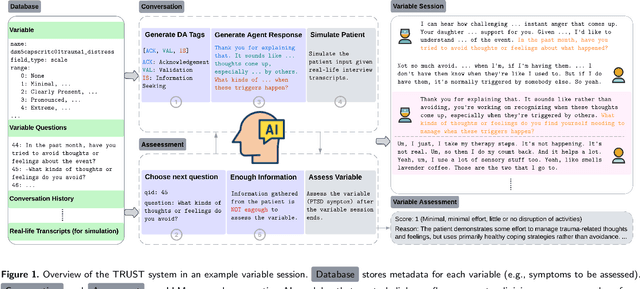
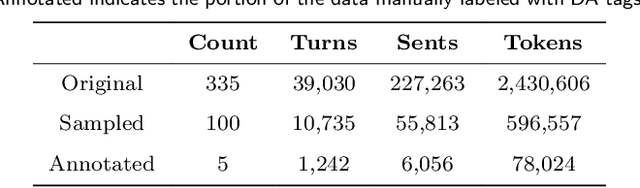
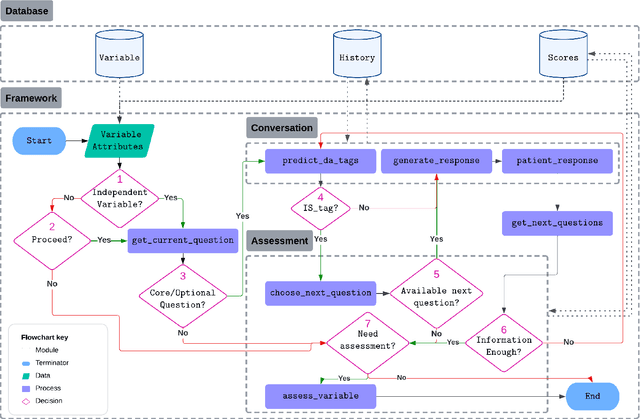
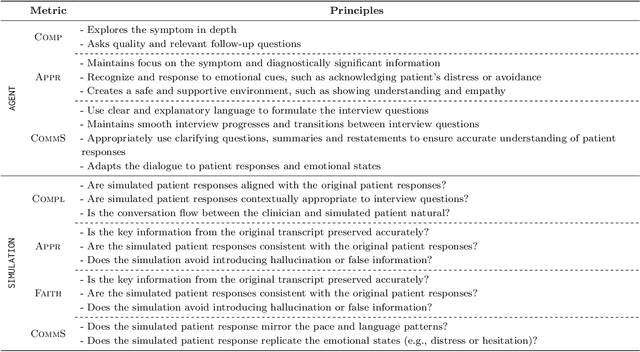
Objectives: While Large Language Models (LLMs) have been widely used to assist clinicians and support patients, no existing work has explored dialogue systems for standard diagnostic interviews and assessments. This study aims to bridge the gap in mental healthcare accessibility by developing an LLM-powered dialogue system that replicates clinician behavior. Materials and Methods: We introduce TRUST, a framework of cooperative LLM modules capable of conducting formal diagnostic interviews and assessments for Post-Traumatic Stress Disorder (PTSD). To guide the generation of appropriate clinical responses, we propose a Dialogue Acts schema specifically designed for clinical interviews. Additionally, we develop a patient simulation approach based on real-life interview transcripts to replace time-consuming and costly manual testing by clinicians. Results: A comprehensive set of evaluation metrics is designed to assess the dialogue system from both the agent and patient simulation perspectives. Expert evaluations by conversation and clinical specialists show that TRUST performs comparably to real-life clinical interviews. Discussion: Our system performs at the level of average clinicians, with room for future enhancements in communication styles and response appropriateness. Conclusions: Our TRUST framework shows its potential to facilitate mental healthcare availability.
Generative Induction of Dialogue Task Schemas with Streaming Refinement and Simulated Interactions
Apr 25, 2025In task-oriented dialogue (TOD) systems, Slot Schema Induction (SSI) is essential for automatically identifying key information slots from dialogue data without manual intervention. This paper presents a novel state-of-the-art (SoTA) approach that formulates SSI as a text generation task, where a language model incrementally constructs and refines a slot schema over a stream of dialogue data. To develop this approach, we present a fully automatic LLM-based TOD simulation method that creates data with high-quality state labels for novel task domains. Furthermore, we identify issues in SSI evaluation due to data leakage and poor metric alignment with human judgment. We resolve these by creating new evaluation data using our simulation method with human guidance and correction, as well as designing improved evaluation metrics. These contributions establish a foundation for future SSI research and advance the SoTA in dialogue understanding and system development.