 Add to Chrome
 Add to Firefox
 Add to Edge
UPDA: Unsupervised Progressive Domain Adaptation for No-Reference Point Cloud Quality Assessment
Feb 12, 2026
While no-reference point cloud quality assessment (NR-PCQA) approaches have achieved significant progress over the past decade, their performance often degrades substantially when a distribution gap exists between the training (source domain) and testing (target domain) data. However, to date, limited attention has been paid to transferring NR-PCQA models across domains. To address this challenge, we propose the first unsupervised progressive domain adaptation (UPDA) framework for NR-PCQA, which introduces a two-stage coarse-to-fine alignment paradigm to address domain shifts. At the coarse-grained stage, a discrepancy-aware coarse-grained alignment method is designed to capture relative quality relationships between cross-domain samples through a novel quality-discrepancy-aware hybrid loss, circumventing the challenges of direct absolute feature alignment. At the fine-grained stage, a perception fusion fine-grained alignment approach with symmetric feature fusion is developed to identify domain-invariant features, while a conditional discriminator selectively enhances the transfer of quality-relevant features. Extensive experiments demonstrate that the proposed UPDA effectively enhances the performance of NR-PCQA methods in cross-domain scenarios, validating its practical applicability. The code is available at https://github.com/yokeno1/UPDA-main.

The Worse The Better: Content-Aware Viewpoint Generation Network for Projection-related Point Cloud Quality Assessment
Feb 17, 2025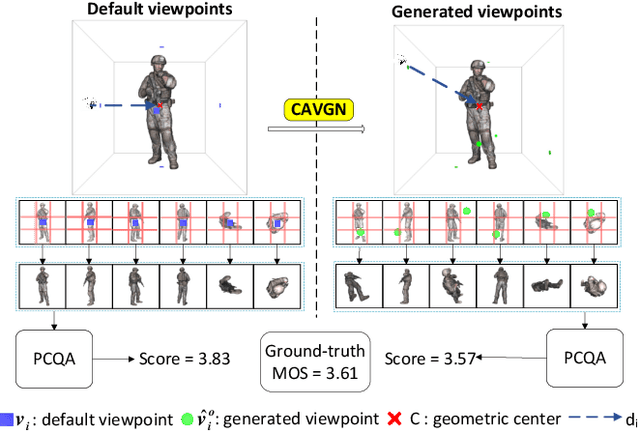

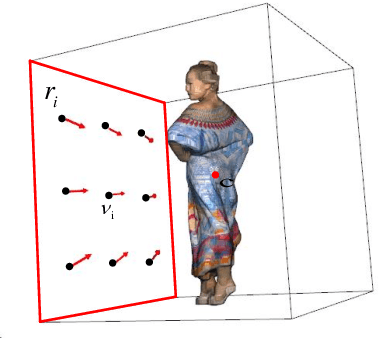
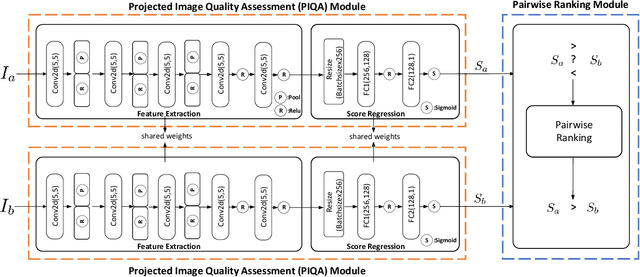
Through experimental studies, however, we observed the instability of final predicted quality scores, which change significantly over different viewpoint settings. Inspired by the "wooden barrel theory", given the default content-independent viewpoints of existing projection-related PCQA approaches, this paper presents a novel content-aware viewpoint generation network (CAVGN) to learn better viewpoints by taking the distribution of geometric and attribute features of degraded point clouds into consideration. Firstly, the proposed CAVGN extracts multi-scale geometric and texture features of the entire input point cloud, respectively. Then, for each default content-independent viewpoint, the extracted geometric and texture features are refined to focus on its corresponding visible part of the input point cloud. Finally, the refined geometric and texture features are concatenated to generate an optimized viewpoint. To train the proposed CAVGN, we present a self-supervised viewpoint ranking network (SSVRN) to select the viewpoint with the worst quality projected image to construct a default-optimized viewpoint dataset, which consists of thousands of paired default viewpoints and corresponding optimized viewpoints. Experimental results show that the projection-related PCQA methods can achieve higher performance using the viewpoints generated by the proposed CAVGN.