 Add to Chrome
 Add to Firefox
 Add to Edge
Wi-Spike: A Low-power WiFi Human Multi-action Recognition Model with Spiking Neural Networks
Mar 15, 2026
WiFi-based human action recognition (HAR) has gained significant attention due to its non-intrusive and privacy-preserving nature. However, most existing WiFi sensing models predominantly focus on improving recognition accuracy, while issues of power consumption and energy efficiency remain insufficiently discussed. In this work, we present Wi-Spike, a bio-inspired spiking neural network (SNN) framework for efficient and accurate action recognition using WiFi channel state information (CSI) signals. Specifically, leveraging the event-driven and low-power characteristics of SNNs, Wi-Spike introduces spiking convolutional layers for spatio-temporal feature extraction and a novel temporal attention mechanism to enhance discriminative representation. The extracted features are subsequently encoded and classified through spiking fully connected layers and a voting layer. Comprehensive experiments on three benchmark datasets (NTU-Fi-HAR, NTU-Fi-HumanID, and UT-HAR) demonstrate that Wi-Spike achieves competitive accuracy in single-action recognition and superior performance in multi-action recognition tasks. As for energy consumption, Wi-Spike reduces the energy cost by at least half compared with other methods, while still achieving 95.83% recognition accuracy in human activity recognition. More importantly, Wi-Spike establishes a new state-of-the-art in WiFi-based multi-action HAR, offering a promising solution for real-time, energy-efficient edge sensing applications.

Real-Time Spatio-Temporal Reconstruction of Dynamic Endoscopic Scenes with 4D Gaussian Splatting
Nov 02, 2024

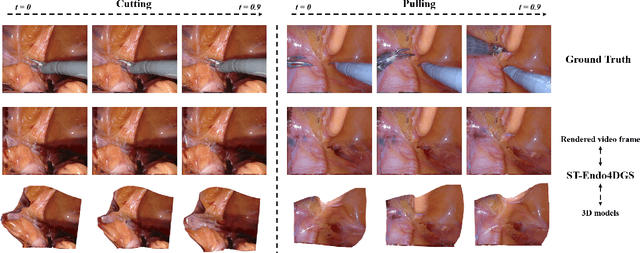
Dynamic scene reconstruction is essential in robotic minimally invasive surgery, providing crucial spatial information that enhances surgical precision and outcomes. However, existing methods struggle to address the complex, temporally dynamic nature of endoscopic scenes. This paper presents ST-Endo4DGS, a novel framework that models the spatio-temporal volume of dynamic endoscopic scenes using unbiased 4D Gaussian Splatting (4DGS) primitives, parameterized by anisotropic ellipses with flexible 4D rotations. This approach enables precise representation of deformable tissue dynamics, capturing intricate spatial and temporal correlations in real time. Additionally, we extend spherindrical harmonics to represent time-evolving appearance, achieving realistic adaptations to lighting and view changes. A new endoscopic normal alignment constraint (ENAC) further enhances geometric fidelity by aligning rendered normals with depth-derived geometry. Extensive evaluations show that ST-Endo4DGS outperforms existing methods in both visual quality and real-time performance, establishing a new state-of-the-art in dynamic scene reconstruction for endoscopic surgery.
Mirror-Yolo: An attention-based instance segmentation and detection model for mirrors
Feb 17, 2022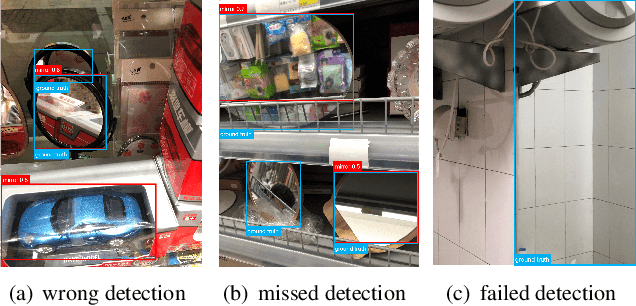
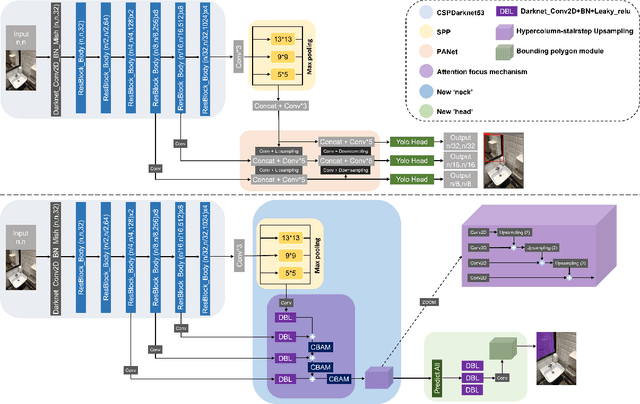
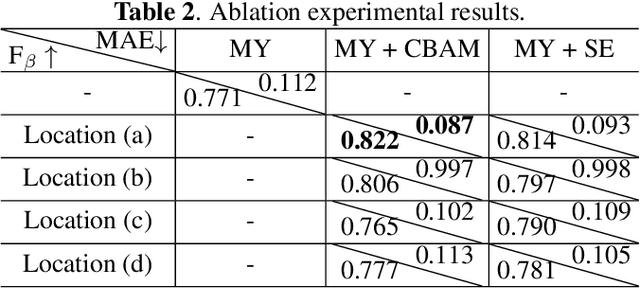
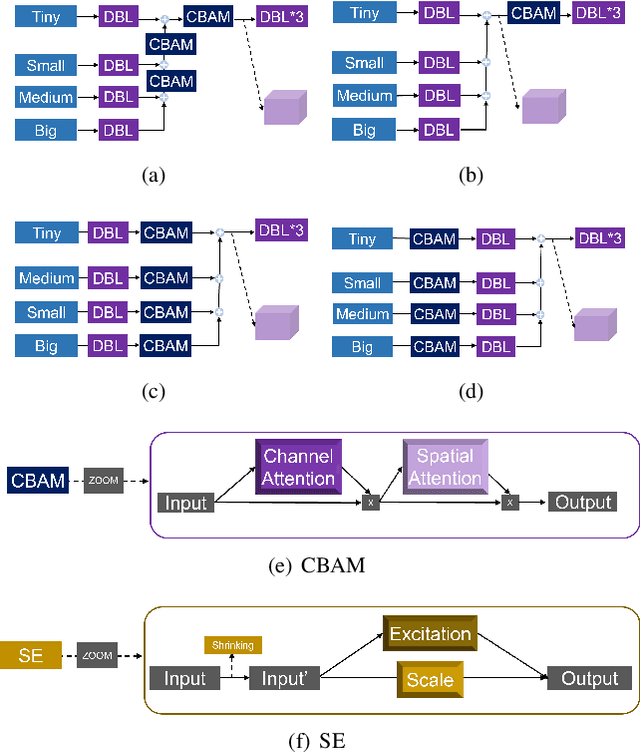
Mirrors can degrade the performance of computer vision models, however to accurately detect mirrors in images remains challenging. YOLOv4 achieves phenomenal results both in object detection accuracy and speed, nevertheless the model often fails in detecting mirrors. In this paper, a novel mirror detection method `Mirror-YOLO' is proposed, which mainly targets on mirror detection. Based on YOLOv4, the proposed model embeds an attention mechanism for better feature acquisition, and a hypercolumn-stairstep approach for feature map fusion. Mirror-YOLO can also produce accurate bounding polygons for instance segmentation. The effectiveness of our proposed model is demonstrated by our experiments, compared to the existing mirror detection methods, the proposed Mirror-YOLO achieves better performance in detection accuracy on the mirror image dataset.