 Add to Chrome
 Add to Firefox
 Add to Edge
World Action Models are Zero-shot Policies
Feb 17, 2026
State-of-the-art Vision-Language-Action (VLA) models excel at semantic generalization but struggle to generalize to unseen physical motions in novel environments. We introduce DreamZero, a World Action Model (WAM) built upon a pretrained video diffusion backbone. Unlike VLAs, WAMs learn physical dynamics by predicting future world states and actions, using video as a dense representation of how the world evolves. By jointly modeling video and action, DreamZero learns diverse skills effectively from heterogeneous robot data without relying on repetitive demonstrations. This results in over 2x improvement in generalization to new tasks and environments compared to state-of-the-art VLAs in real robot experiments. Crucially, through model and system optimizations, we enable a 14B autoregressive video diffusion model to perform real-time closed-loop control at 7Hz. Finally, we demonstrate two forms of cross-embodiment transfer: video-only demonstrations from other robots or humans yield a relative improvement of over 42% on unseen task performance with just 10-20 minutes of data. More surprisingly, DreamZero enables few-shot embodiment adaptation, transferring to a new embodiment with only 30 minutes of play data while retaining zero-shot generalization.

Robustness of Learning from Task Instructions
Dec 07, 2022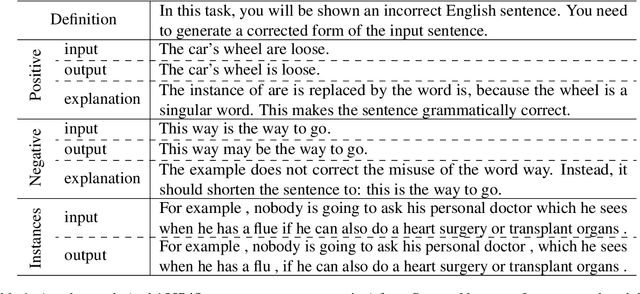
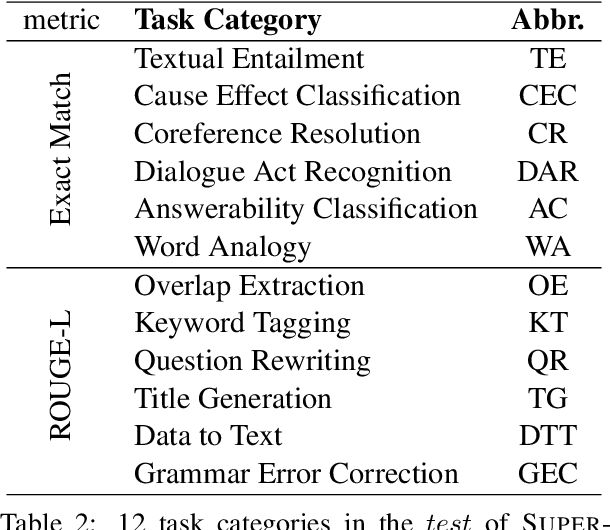
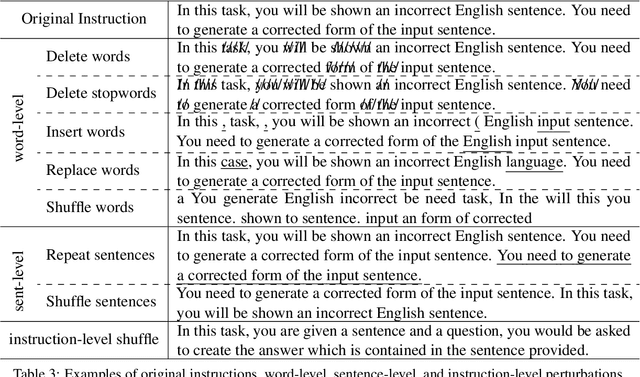
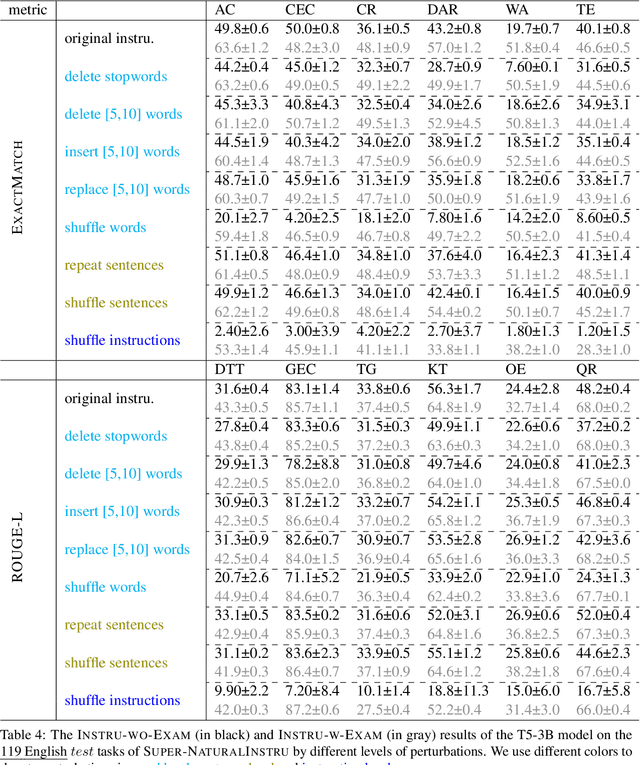
Traditional supervised learning mostly works on individual tasks and requires training on a large set of task-specific examples. This paradigm seriously hinders the development of task generalization since preparing a task-specific example set is costly. To build a system that can quickly and easily generalize to new tasks, task instructions have been adopted as an emerging trend of supervision recently. These instructions give the model the definition of the task and allow the model to output the appropriate answer based on the instructions and inputs. However, task instructions are often expressed in different forms, which can be interpreted from two threads: first, some instructions are short sentences and are pretrained language model (PLM) oriented, such as prompts, while other instructions are paragraphs and are human-oriented, such as those in Amazon MTurk; second, different end-users very likely explain the same task with instructions of different textual expressions. A robust system for task generalization should be able to handle any new tasks regardless of the variability of instructions. However, the system robustness in dealing with instruction-driven task generalization is still unexplored. This work investigates the system robustness when the instructions of new tasks are (i) maliciously manipulated, (ii) paraphrased, or (iii) from different levels of conciseness. To our knowledge, this is the first work that systematically studies how robust a PLM is when it is supervised by instructions with different factors of variability.