 Add to Chrome
 Add to Firefox
 Add to Edge
Human Identification at a Distance: Challenges, Methods and Results on the Competition HID 2025
Feb 07, 2026
Human identification at a distance (HID) is challenging because traditional biometric modalities such as face and fingerprints are often difficult to acquire in real-world scenarios. Gait recognition provides a practical alternative, as it can be captured reliably at a distance. To promote progress in gait recognition and provide a fair evaluation platform, the International Competition on Human Identification at a Distance (HID) has been organized annually since 2020. Since 2023, the competition has adopted the challenging SUSTech-Competition dataset, which features substantial variations in clothing, carried objects, and view angles. No dedicated training data are provided, requiring participants to train their models using external datasets. Each year, the competition applies a different random seed to generate distinct evaluation splits, which reduces the risk of overfitting and supports a fair assessment of cross-domain generalization. While HID 2023 and HID 2024 already used this dataset, HID 2025 explicitly examined whether algorithmic advances could surpass the accuracy limits observed previously. Despite the heightened difficulty, participants achieved further improvements, and the best-performing method reached 94.2% accuracy, setting a new benchmark on this dataset. We also analyze key technical trends and outline potential directions for future research in gait recognition.

CRTrack: Low-Light Semi-Supervised Multi-object Tracking Based on Consistency Regularization
Feb 24, 2025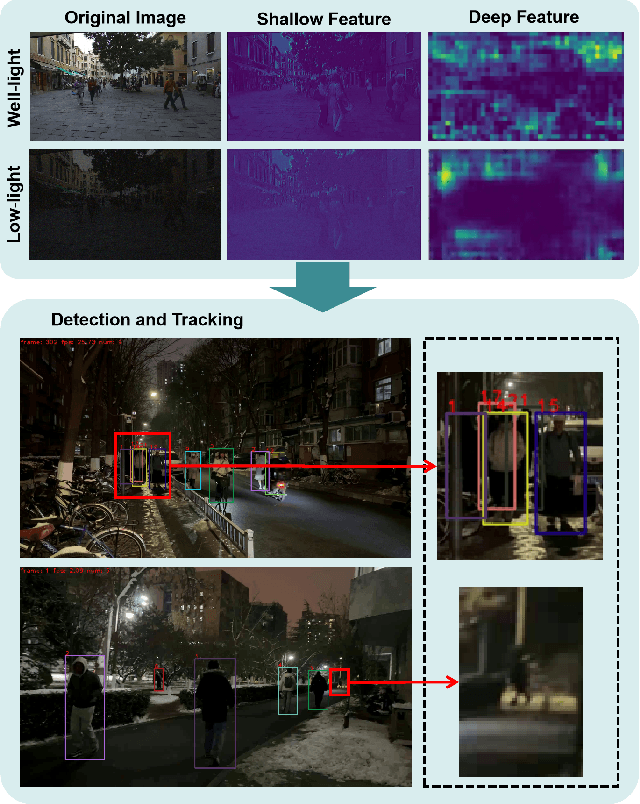

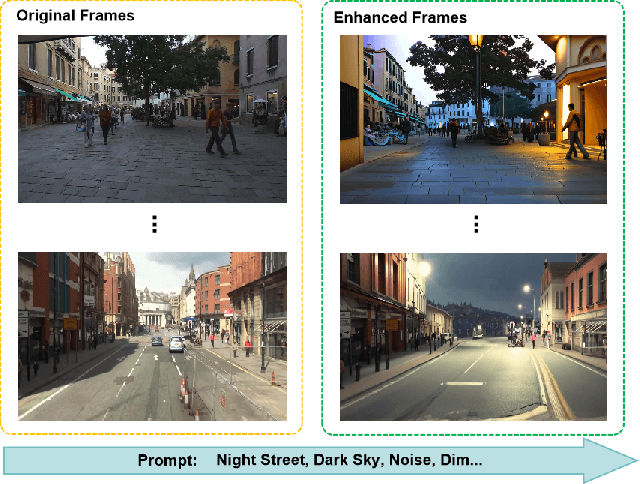
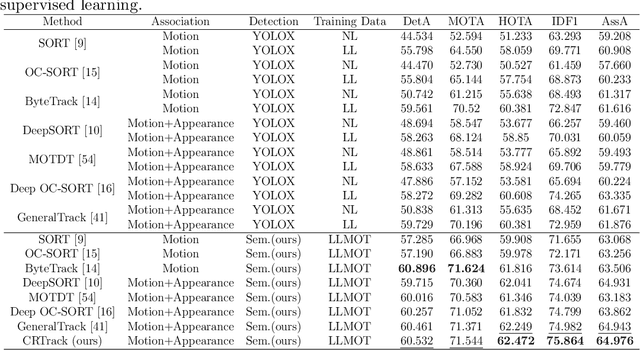
Multi-object tracking under low-light environments is prevalent in real life. Recent years have seen rapid development in the field of multi-object tracking. However, due to the lack of datasets and the high cost of annotations, multi-object tracking under low-light environments remains a persistent challenge. In this paper, we focus on multi-object tracking under low-light conditions. To address the issues of limited data and the lack of dataset, we first constructed a low-light multi-object tracking dataset (LLMOT). This dataset comprises data from MOT17 that has been enhanced for nighttime conditions as well as multiple unannotated low-light videos. Subsequently, to tackle the high annotation costs and address the issue of image quality degradation, we propose a semi-supervised multi-object tracking method based on consistency regularization named CRTrack. First, we calibrate a consistent adaptive sampling assignment to replace the static IoU-based strategy, enabling the semi-supervised tracking method to resist noisy pseudo-bounding boxes. Then, we design a adaptive semi-supervised network update method, which effectively leverages unannotated data to enhance model performance. Dataset and Code: https://github.com/ZJZhao123/CRTrack.