 Add to Chrome
 Add to Firefox
 Add to Edge
Opportunities in AI/ML for the Rubin LSST Dark Energy Science Collaboration
Jan 20, 2026
The Vera C. Rubin Observatory's Legacy Survey of Space and Time (LSST) will produce unprecedented volumes of heterogeneous astronomical data (images, catalogs, and alerts) that challenge traditional analysis pipelines. The LSST Dark Energy Science Collaboration (DESC) aims to derive robust constraints on dark energy and dark matter from these data, requiring methods that are statistically powerful, scalable, and operationally reliable. Artificial intelligence and machine learning (AI/ML) are already embedded across DESC science workflows, from photometric redshifts and transient classification to weak lensing inference and cosmological simulations. Yet their utility for precision cosmology hinges on trustworthy uncertainty quantification, robustness to covariate shift and model misspecification, and reproducible integration within scientific pipelines. This white paper surveys the current landscape of AI/ML across DESC's primary cosmological probes and cross-cutting analyses, revealing that the same core methodologies and fundamental challenges recur across disparate science cases. Since progress on these cross-cutting challenges would benefit multiple probes simultaneously, we identify key methodological research priorities, including Bayesian inference at scale, physics-informed methods, validation frameworks, and active learning for discovery. With an eye on emerging techniques, we also explore the potential of the latest foundation model methodologies and LLM-driven agentic AI systems to reshape DESC workflows, provided their deployment is coupled with rigorous evaluation and governance. Finally, we discuss critical software, computing, data infrastructure, and human capital requirements for the successful deployment of these new methodologies, and consider associated risks and opportunities for broader coordination with external actors.

Blind Deconvolution in Astronomy: How Does a Standalone U-Net Perform?
Jan 13, 2026Aims: This study investigates whether a U-Net architecture can perform standalone end-to-end blind deconvolution of astronomical images without any prior knowledge of the Point Spread Function (PSF) or noise characteristics. Our goal is to evaluate its performance against the number of training images, classical Tikhonov deconvolution and to assess its generalization capability under varying seeing conditions and noise levels. Methods: Realistic astronomical observations are simulated using the GalSim toolkit, incorporating random transformations, PSF convolution (accounting for both optical and atmospheric effects), and Gaussian white noise. A U-Net model is trained using a Mean Square Error (MSE) loss function on datasets of varying sizes, up to 40,000 images of size 48x48 from the COSMOS Real Galaxy Dataset. Performance is evaluated using PSNR, SSIM, and cosine similarity metrics, with the latter employed in a two-model framework to assess solution stability. Results: The U-Net model demonstrates effectiveness in blind deconvolution, with performance improving consistently as the training dataset size increases, saturating beyond 5,000 images. Cosine similarity analysis reveals convergence between independently trained models, indicating stable solutions. Remarkably, the U-Net outperforms the oracle-like Tikhonov method in challenging conditions (low PSNR/medium SSIM). The model also generalizes well to unseen seeing and noise conditions, although optimal performance is achieved when training parameters include validation conditions. Experiments on synthetic $C^α$ images further support the hypothesis that the U-Net learns a geometry-adaptive harmonic basis, akin to sparse representations observed in denoising tasks. These results align with recent mathematical insights into its adaptive learning capabilities.
Denoising: from classical methods to deep CNNs
Apr 27, 2024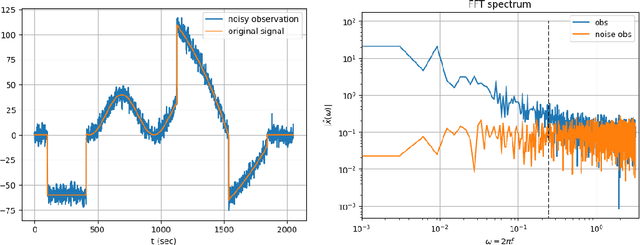
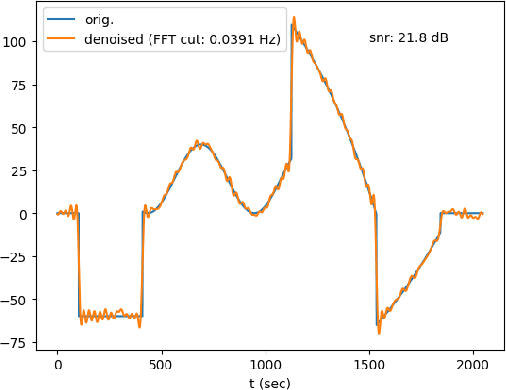
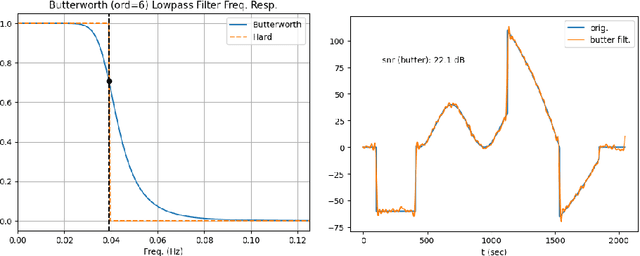
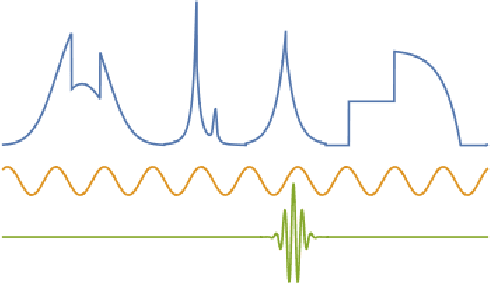
This paper aims to explore the evolution of image denoising in a pedagological way. We briefly review classical methods such as Fourier analysis and wavelet bases, highlighting the challenges they faced until the emergence of neural networks, notably the U-Net, in the 2010s. The remarkable performance of these networks has been demonstrated in studies such as Kadkhodaie et al. (2024). They exhibit adaptability to various image types, including those with fixed regularity, facial images, and bedroom scenes, achieving optimal results and biased towards geometry-adaptive harmonic basis. The introduction of score diffusion has played a crucial role in image generation. In this context, denoising becomes essential as it facilitates the estimation of probability density scores. We discuss the prerequisites for genuine learning of probability densities, offering insights that extend from mathematical research to the implications of universal structures.