 Add to Chrome
 Add to Firefox
 Add to Edge
Evaluating Histogram Matching for Robust Deep learning-Based Grapevine Disease Detection
Apr 21, 2026
Variability in illumination is a primary factor limiting deep learning robustness for field-based plant disease detection. This study evaluates Histogram Matching (HM), a technique that transforms the pixel intensity distribution of an image to match a reference profile, to mitigate this in grapevine classification, distinguishing among healthy leaves, downy mildew, and spider mite damage. We propose a dual-stage integration of HM: (i) as a preprocessing step for normalization, and (ii) as a data augmentation technique to introduce controlled training variability. Experiments using 1,469 RGB images (comprising homogeneous leaf-focused and heterogeneous canopy samples) to train ResNet-18 models demonstrate that this combination significantly enhances robustness on real-world canopy images. While leaf-focused samples showed marginal gains, the canopy subset improved markedly, indicating that balancing normalization with histogram-based diversification effectively bridges the domain gap caused by uncontrolled lighting.

Small data deep learning methodology for in-field disease detection
Sep 25, 2024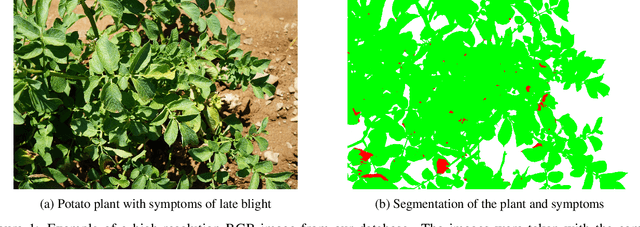
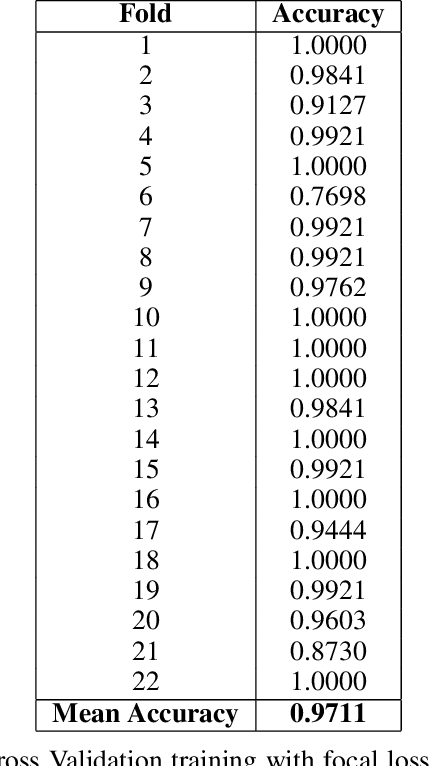
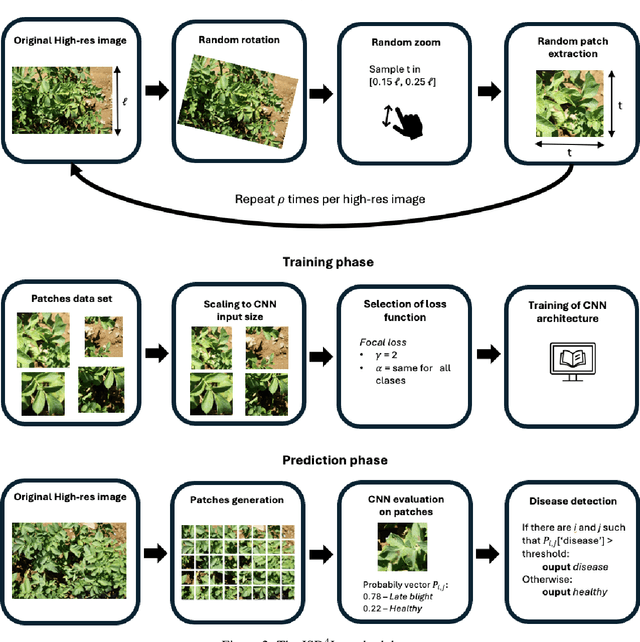

Early detection of diseases in crops is essential to prevent harvest losses and improve the quality of the final product. In this context, the combination of machine learning and proximity sensors is emerging as a technique capable of achieving this detection efficiently and effectively. For example, this machine learning approach has been applied to potato crops -- to detect late blight (Phytophthora infestans) -- and grapevine crops -- to detect downy mildew. However, most of these AI models found in the specialised literature have been developed using leaf-by-leaf images taken in the lab, which does not represent field conditions and limits their applicability. In this study, we present the first machine learning model capable of detecting mild symptoms of late blight in potato crops through the analysis of high-resolution RGB images captured directly in the field, overcoming the limitations of other publications in the literature and presenting real-world applicability. Our proposal exploits the availability of high-resolution images via the concept of patching, and is based on deep convolutional neural networks with a focal loss function, which makes the model to focus on the complex patterns that arise in field conditions. Additionally, we present a data augmentation scheme that facilitates the training of these neural networks with few high-resolution images, which allows for development of models under the small data paradigm. Our model correctly detects all cases of late blight in the test dataset, demonstrating a high level of accuracy and effectiveness in identifying early symptoms. These promising results reinforce the potential use of machine learning for the early detection of diseases and pests in agriculture, enabling better treatment and reducing their impact on crops.