 Add to Chrome
 Add to Firefox
 Add to Edge
Loop Closure via Maximal Cliques in 3D LiDAR-Based SLAM
Mar 05, 2026
Reliable loop closure detection remains a critical challenge in 3D LiDAR-based SLAM, especially under sensor noise, environmental ambiguity, and viewpoint variation conditions. RANSAC is often used in the context of loop closures for geometric model fitting in the presence of outliers. However, this approach may fail, leading to map inconsistency. We introduce a novel deterministic algorithm, CliReg, for loop closure validation that replaces RANSAC verification with a maximal clique search over a compatibility graph of feature correspondences. This formulation avoids random sampling and increases robustness in the presence of noise and outliers. We integrated our approach into a real- time pipeline employing binary 3D descriptors and a Hamming distance embedding binary search tree-based matching. We evaluated it on multiple real-world datasets featuring diverse LiDAR sensors. The results demonstrate that our proposed technique consistently achieves a lower pose error and more reliable loop closures than RANSAC, especially in sparse or ambiguous conditions. Additional experiments on 2D projection-based maps confirm its generality across spatial domains, making our approach a robust and efficient alternative for loop closure detection.

Thermal Vision for Soil Assessment in a Multipurpose Environmental Chamber under Martian Conditions towards Robot Navigation
Apr 26, 2023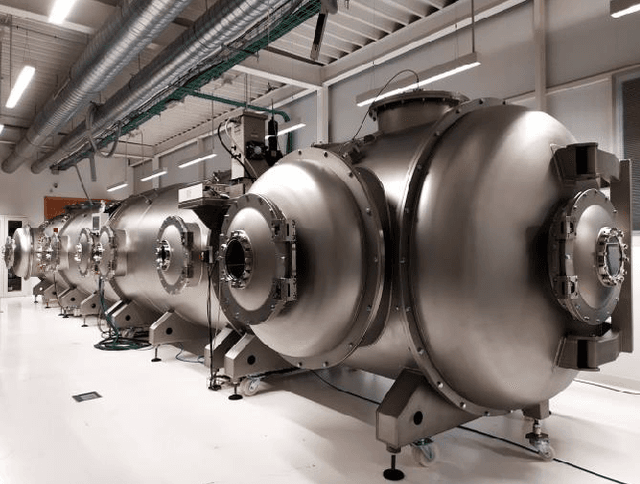
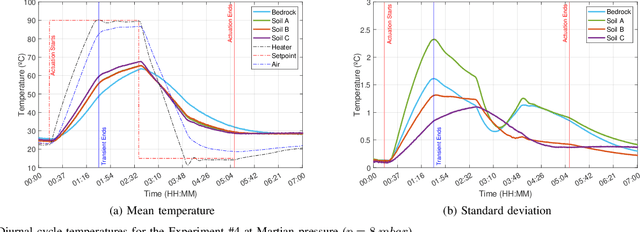
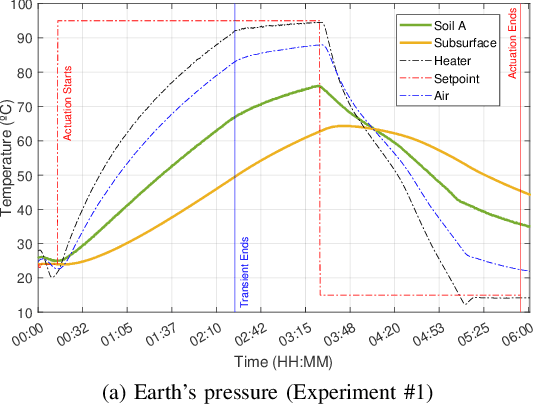
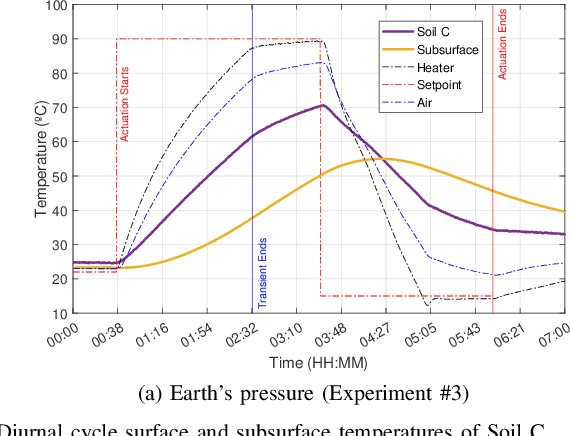
Soil assessment is important for mobile robot planning and navigation on natural and planetary environments. Terramechanic characteristics can be inferred from the thermal behaviour of soils under the influence of sunlight using remote sensors such as Long-Wave Infrared cameras. However, this behaviour is greatly affected by the low atmospheric pressures of planets such as Mars, so practical models are needed to relate robot remote sensing data on Earth to target planetary exploration conditions. This article proposes a general framework based on multipurpose environmental chambers to generate representative diurnal cycle dataset pairs that can be useful to relate the thermal behaviour of a soil on Earth to the corresponding behaviour under planetary pressure conditions using remote sensing. Furthermore, we present an application of the proposed framework to generate datasets using the UMA-Laserlab chamber, which can replicate the atmospheric \ch{CO2} composition of Mars. In particular, we analyze the thermal behaviour of four soil samples of different granularity by comparing replicated Martian surface conditions and their Earth's diurnal cycle equivalent. Results indicate a correlation between granularity and thermal inertia that is consistent with available Mars surface measurements recorded by rovers. The resulting dataset pairs, consisting of representative diurnal cycle thermal images with heater, air, and subsurface temperatures, have been made available for the scientific community.