 Add to Chrome
 Add to Firefox
 Add to Edge
The Deepfake Detective: Interpreting Neural Forensics Through Sparse Features and Manifolds
Dec 25, 2025
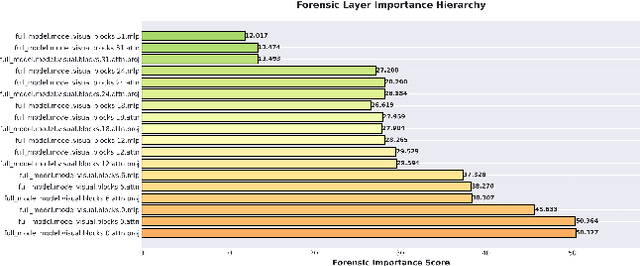
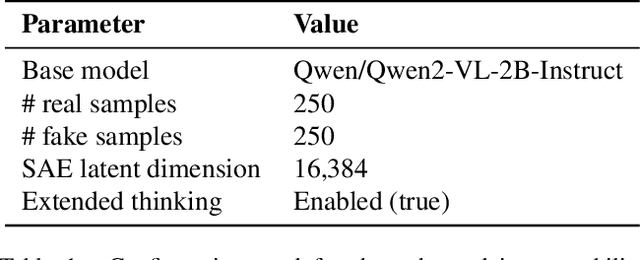
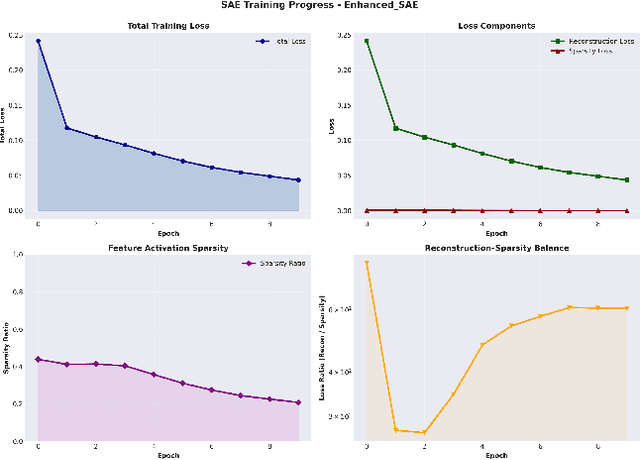
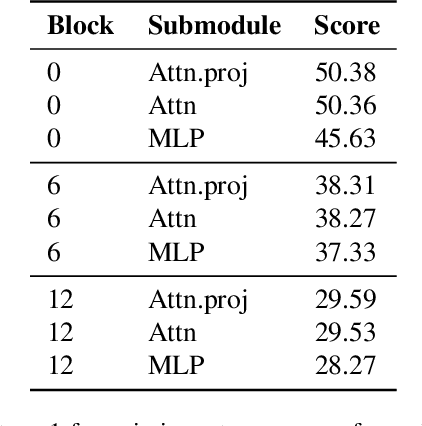
Deepfake detection models have achieved high accuracy in identifying synthetic media, but their decision processes remain largely opaque. In this paper we present a mechanistic interpretability framework for deepfake detection applied to a vision-language model. Our approach combines a sparse autoencoder (SAE) analysis of internal network representations with a novel forensic manifold analysis that probes how the model's features respond to controlled forensic artifact manipulations. We demonstrate that only a small fraction of latent features are actively used in each layer, and that the geometric properties of the model's feature manifold, including intrinsic dimensionality, curvature, and feature selectivity, vary systematically with different types of deepfake artifacts. These insights provide a first step toward opening the "black box" of deepfake detectors, allowing us to identify which learned features correspond to specific forensic artifacts and to guide the development of more interpretable and robust models.

The Double Life of Code World Models: Provably Unmasking Malicious Behavior Through Execution Traces
Dec 15, 2025Large language models (LLMs) increasingly generate code with minimal human oversight, raising critical concerns about backdoor injection and malicious behavior. We present Cross-Trace Verification Protocol (CTVP), a novel AI control framework that verifies untrusted code-generating models through semantic orbit analysis. Rather than directly executing potentially malicious code, CTVP leverages the model's own predictions of execution traces across semantically equivalent program transformations. By analyzing consistency patterns in these predicted traces, we detect behavioral anomalies indicative of backdoors. Our approach introduces the Adversarial Robustness Quotient (ARQ), which quantifies the computational cost of verification relative to baseline generation, demonstrating exponential growth with orbit size. Theoretical analysis establishes information-theoretic bounds showing non-gamifiability -- adversaries cannot improve through training due to fundamental space complexity constraints. This work demonstrates that semantic orbit analysis provides a scalable, theoretically grounded approach to AI control for code generation tasks.
AI Bill of Materials and Beyond: Systematizing Security Assurance through the AI Risk Scanning (AIRS) Framework
Nov 16, 2025Assurance for artificial intelligence (AI) systems remains fragmented across software supply-chain security, adversarial machine learning, and governance documentation. Existing transparency mechanisms - including Model Cards, Datasheets, and Software Bills of Materials (SBOMs) - advance provenance reporting but rarely provide verifiable, machine-readable evidence of model security. This paper introduces the AI Risk Scanning (AIRS) Framework, a threat-model-based, evidence-generating framework designed to operationalize AI assurance. The AIRS Framework evolved through three progressive pilot studies - Smurf (AIBOM schema design), OPAL (operational validation), and Pilot C (AIRS) - that reframed AI documentation from descriptive disclosure toward measurable, evidence-bound verification. The framework aligns its assurance fields to the MITRE ATLAS adversarial ML taxonomy and automatically produces structured artifacts capturing model integrity, packaging and serialization safety, structural adapters, and runtime behaviors. Currently, the AIRS Framework is scoped to provide model-level assurances for LLMs, but it could be expanded to include other modalities and cover system-level threats (e.g. application-layer abuses, tool-calling). A proof-of-concept on a quantized GPT-OSS-20B model demonstrates enforcement of safe loader policies, per-shard hash verification, and contamination and backdoor probes executed under controlled runtime conditions. Comparative analysis with SBOM standards of SPDX 3.0 and CycloneDX 1.6 reveals alignment on identity and evaluation metadata, but identifies critical gaps in representing AI-specific assurance fields. The AIRS Framework thus extends SBOM practice to the AI domain by coupling threat modeling with automated, auditable evidence generation, providing a principled foundation for standardized, trustworthy, and machine-verifiable AI risk documentation.
Causal Masking on Spatial Data: An Information-Theoretic Case for Learning Spatial Datasets with Unimodal Language Models
Oct 30, 2025Language models are traditionally designed around causal masking. In domains with spatial or relational structure, causal masking is often viewed as inappropriate, and sequential linearizations are instead used. Yet the question of whether it is viable to accept the information loss introduced by causal masking on nonsequential data has received little direct study, in part because few domains offer both spatial and sequential representations of the same dataset. In this work, we investigate this issue in the domain of chess, which naturally supports both representations. We train language models with bidirectional and causal self-attention mechanisms on both spatial (board-based) and sequential (move-based) data. Our results show that models trained on spatial board states - \textit{even with causal masking} - consistently achieve stronger playing strength than models trained on sequential data. While our experiments are conducted on chess, our results are methodological and may have broader implications: applying causal masking to spatial data is a viable procedure for training unimodal LLMs on spatial data, and in some domains is even preferable to sequentialization.