 Add to Chrome
 Add to Firefox
 Add to Edge
Interpretable Semantic Gradients in SSD: A PCA Sweep Approach and a Case Study on AI Discourse
Mar 13, 2026
Supervised Semantic Differential (SSD) is a mixed quantitative-interpretive method that models how text meaning varies with continuous individual-difference variables by estimating a semantic gradient in an embedding space and interpreting its poles through clustering and text retrieval. SSD applies PCA before regression, but currently no systematic method exists for choosing the number of retained components, introducing avoidable researcher degrees of freedom in the analysis pipeline. We propose a PCA sweep procedure that treats dimensionality selection as a joint criterion over representation capacity, gradient interpretability, and stability across nearby values of K. We illustrate the method on a corpus of short posts about artificial intelligence written by Prolific participants who also completed Admiration and Rivalry narcissism scales. The sweep yields a stable, interpretable Admiration-related gradient contrasting optimistic, collaborative framings of AI with distrustful and derisive discourse, while no robust alignment emerges for Rivalry. We also show that a counterfactual using a high-PCA dimension solution heuristic produces diffuse, weakly structured clusters instead, reinforcing the value of the sweep-based choice of K. The case study shows how the PCA sweep constrains researcher degrees of freedom while preserving SSD's interpretive aims, supporting transparent and psychologically meaningful analyses of connotative meaning.

EvoScientist: Towards Multi-Agent Evolving AI Scientists for End-to-End Scientific Discovery
Mar 09, 2026The increasing adoption of Large Language Models (LLMs) has enabled AI scientists to perform complex end-to-end scientific discovery tasks requiring coordination of specialized roles, including idea generation and experimental execution. However, most state-of-the-art AI scientist systems rely on static, hand-designed pipelines and fail to adapt based on accumulated interaction histories. As a result, these systems overlook promising research directions, repeat failed experiments, and pursue infeasible ideas. To address this, we introduce EvoScientist, an evolving multi-agent AI scientist framework that continuously improves research strategies through persistent memory and self-evolution. EvoScientist comprises three specialized agents: a Researcher Agent (RA) for scientific idea generation, an Engineer Agent (EA) for experiment implementation and execution, and an Evolution Manager Agent (EMA) that distills insights from prior interactions into reusable knowledge. EvoScientist contains two persistent memory modules: (i) an ideation memory, which summarizes feasible research directions from top-ranked ideas while recording previously unsuccessful directions; and (ii) an experimentation memory, which captures effective data processing and model training strategies derived from code search trajectories and best-performing implementations. These modules enable the RA and EA to retrieve relevant prior strategies, improving idea quality and code execution success rates over time. Experiments show that EvoScientist outperforms 7 open-source and commercial state-of-the-art systems in scientific idea generation, achieving higher novelty, feasibility, relevance, and clarity via automatic and human evaluation. EvoScientist also substantially improves code execution success rates through multi-agent evolution, demonstrating persistent memory's effectiveness for end-to-end scientific discovery.
Contrastive News and Social Media Linking using BERT for Articles and Tweets across Dual Platforms
Dec 11, 2023
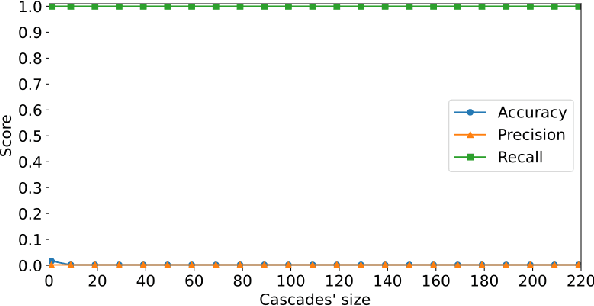
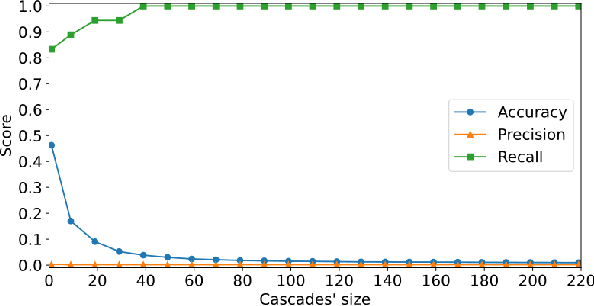

X (formerly Twitter) has evolved into a contemporary agora, offering a platform for individuals to express opinions and viewpoints on current events. The majority of the topics discussed on Twitter are directly related to ongoing events, making it an important source for monitoring public discourse. However, linking tweets to specific news presents a significant challenge due to their concise and informal nature. Previous approaches, including topic models, graph-based models, and supervised classifiers, have fallen short in effectively capturing the unique characteristics of tweets and articles. Inspired by the success of the CLIP model in computer vision, which employs contrastive learning to model similarities between images and captions, this paper introduces a contrastive learning approach for training a representation space where linked articles and tweets exhibit proximity. We present our contrastive learning approach, CATBERT (Contrastive Articles Tweets BERT), leveraging pre-trained BERT models. The model is trained and tested on a dataset containing manually labeled English and Polish tweets and articles related to the Russian-Ukrainian war. We evaluate CATBERT's performance against traditional approaches like LDA, and the novel method based on OpenAI embeddings, which has not been previously applied to this task. Our findings indicate that CATBERT demonstrates superior performance in associating tweets with relevant news articles. Furthermore, we demonstrate the performance of the models when applied to finding the main topic -- represented by an article -- of the whole cascade of tweets. In this new task, we report the performance of the different models in dependence on the cascade size.