 Add to Chrome
 Add to Firefox
 Add to Edge
UFAL-CUNI at SemEval-2026 Task 11: An Efficient Modular Neuro-symbolic Method for Syllogistic Reasoning
May 06, 2026
This paper describes our system submitted to SemEval-2026 Task 11: Disentangling Content and Formal Reasoning in Large Language Models. We present an efficient modular neuro-symbolic approach, combining a symbolic prover with small reasoning LLMs (4B parameters). The system consists of an LLM-based parser that translates natural language syllogisms to a first-order logic (FOL) representation, an automated theorem prover, and two optional modules: machine translation for multilingual inputs and a symbolic retrieval component for the identification of relevant premises. The system achieves competitive accuracy and relatively low content effect on most subtasks. Our ablations show that this approach outperforms LLM-based zero-shot baselines in this parameter size range, but also reveal limited multilingual capabilities of small LLMs. Finally, we include a discussion of the task's main ranking metric and analyze its limitations.

Atyaephyra at SemEval-2025 Task 4: Low-Rank NPO
Mar 17, 2025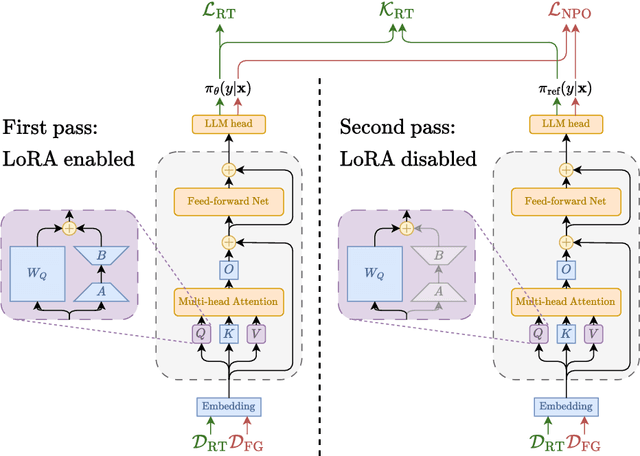
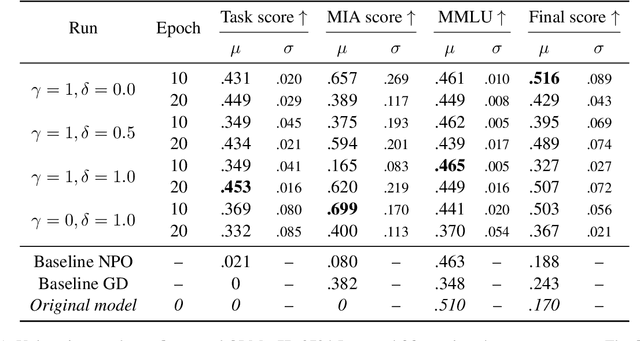
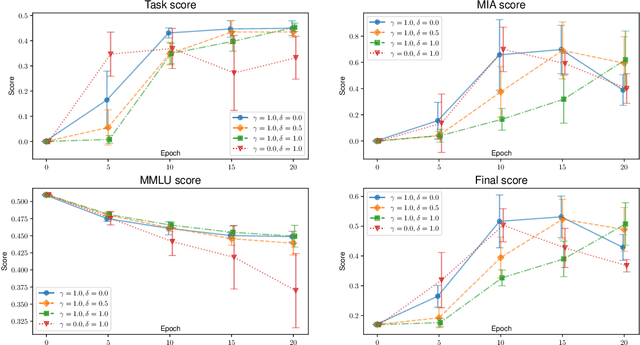
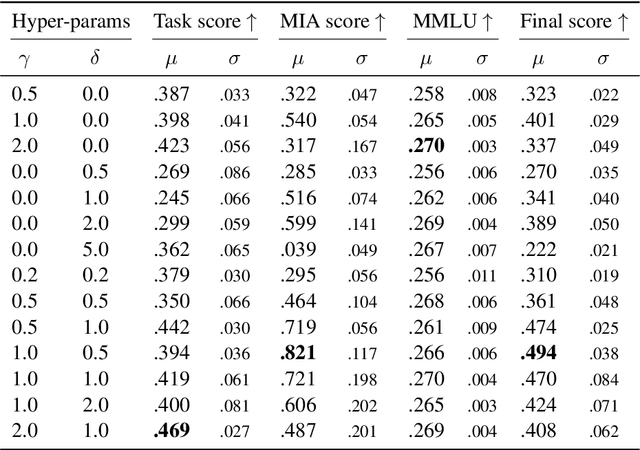
We present a submission to the SemEval 2025 shared task on unlearning sensitive content from LLMs. Our approach employs negative preference optimization using low-rank adaptation. We show that we can utilize this combination to cheaply compute additional regularization terms, which help with unlearning stabilization. The results of our approach significantly exceed the shared task baselines.