 Add to Chrome
 Add to Firefox
 Add to Edge
Velocity Prediction in Automatic Guitar Transcription
Jun 19, 2026
Automatic Music Transcription (AMT) models have achieved a high level of success in polyphonic transcription of various instruments. Velocity, typically a measure of note intensity, is less commonly predicted in these models due to the absence of velocity labels in available datasets and lack of a proper definition for instruments other than piano. We present a methodology and model for velocity prediction in Automatic Guitar Transcription (AGT) which uses virtual instruments to generate synthetic training data with velocity labels. We first pretrain a model on this synthetic data. These weights are then transferred to a different model and trained on real guitar audio, allowing the model to retain the working velocity prediction while also achieving high performance and generalisability from the real training data. The velocity prediction is shown to outperform a baseline model which does not use the pretrained velocity weights, when evaluated on synthetic data. In addition, using the pretrained velocity weights offers a small improvement in note transcription, though the magnitude of this improvement is limited and not always significant depending on the testing data. Overall the model achieves results comparable to the state of the art in guitar transcription, while also successfully predicting velocity.

Between the AI and Me: Analysing Listeners' Perspectives on AI- and Human-Composed Progressive Metal Music
Jul 31, 2024
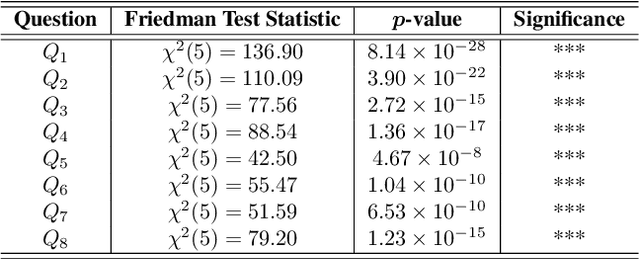
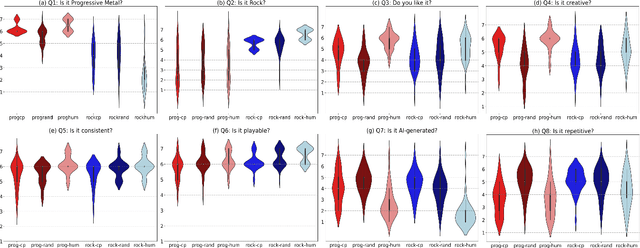
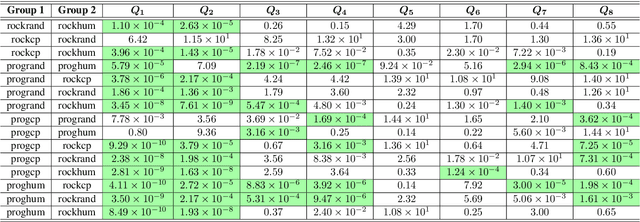
Generative AI models have recently blossomed, significantly impacting artistic and musical traditions. Research investigating how humans interact with and deem these models is therefore crucial. Through a listening and reflection study, we explore participants' perspectives on AI- vs human-generated progressive metal, in symbolic format, using rock music as a control group. AI-generated examples were produced by ProgGP, a Transformer-based model. We propose a mixed methods approach to assess the effects of generation type (human vs. AI), genre (progressive metal vs. rock), and curation process (random vs. cherry-picked). This combines quantitative feedback on genre congruence, preference, creativity, consistency, playability, humanness, and repeatability, and qualitative feedback to provide insights into listeners' experiences. A total of 32 progressive metal fans completed the study. Our findings validate the use of fine-tuning to achieve genre-specific specialization in AI music generation, as listeners could distinguish between AI-generated rock and progressive metal. Despite some AI-generated excerpts receiving similar ratings to human music, listeners exhibited a preference for human compositions. Thematic analysis identified key features for genre and AI vs. human distinctions. Finally, we consider the ethical implications of our work in promoting musical data diversity within MIR research by focusing on an under-explored genre.
ProgGP: From GuitarPro Tablature Neural Generation To Progressive Metal Production
Jul 11, 2023Recent work in the field of symbolic music generation has shown value in using a tokenization based on the GuitarPro format, a symbolic representation supporting guitar expressive attributes, as an input and output representation. We extend this work by fine-tuning a pre-trained Transformer model on ProgGP, a custom dataset of 173 progressive metal songs, for the purposes of creating compositions from that genre through a human-AI partnership. Our model is able to generate multiple guitar, bass guitar, drums, piano and orchestral parts. We examine the validity of the generated music using a mixed methods approach by combining quantitative analyses following a computational musicology paradigm and qualitative analyses following a practice-based research paradigm. Finally, we demonstrate the value of the model by using it as a tool to create a progressive metal song, fully produced and mixed by a human metal producer based on AI-generated music.