 Add to Chrome
 Add to Firefox
 Add to Edge
Transform-Invariant Generative Ray Path Sampling for Efficient Radio Propagation Modeling
Mar 02, 2026
Ray tracing has become a standard for accurate radio propagation modeling, but suffers from exponential computational complexity, as the number of candidate paths scales with the number of objects raised to the power of the interaction order. This bottleneck limits its use in large-scale or real-time applications, forcing traditional tools to rely on heuristics to reduce the number of path candidates at the cost of potentially reduced accuracy. To overcome this limitation, we propose a comprehensive machine-learning-assisted framework that replaces exhaustive path searching with intelligent sampling via Generative Flow Networks. Applying such generative models to this domain presents significant challenges, particularly sparse rewards due to the rarity of valid paths, which can lead to convergence failures and trivial solutions when evaluating high-order interactions in complex environments. To ensure robust learning and efficient exploration, our framework incorporates three key architectural components. First, we implement an \emph{experience replay buffer} to capture and retain rare valid paths. Second, we adopt a uniform exploratory policy to improve generalization and prevent the model from overfitting to simple geometries. Third, we apply a physics-based action masking strategy that filters out physically impossible paths before the model even considers them. As demonstrated in our experimental validation, the proposed model achieves substantial speedups over exhaustive search -- up to $10\times$ faster on GPU and $1000\times$ faster on CPU -- while maintaining high coverage accuracy and successfully uncovering complex propagation paths. The complete source code, tests, and tutorial are available at https://github.com/jeertmans/sampling-paths.

Towards Generative Ray Path Sampling for Faster Point-to-Point Ray Tracing
Oct 31, 2024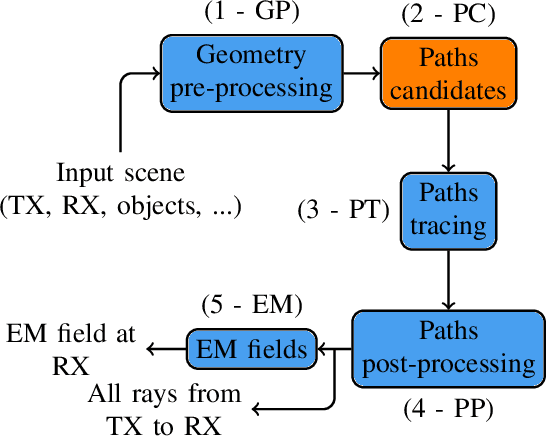
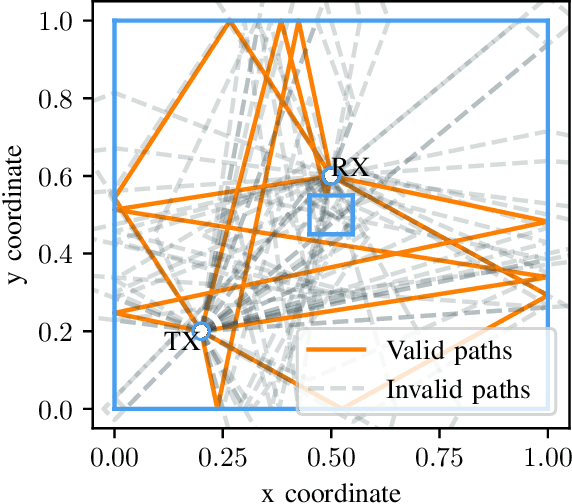
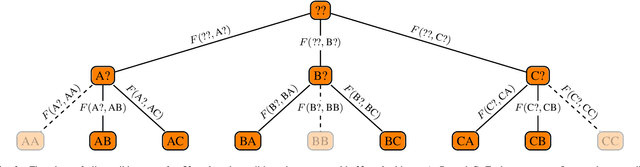

Radio propagation modeling is essential in telecommunication research, as radio channels result from complex interactions with environmental objects. Recently, Machine Learning has been attracting attention as a potential alternative to computationally demanding tools, like Ray Tracing, which can model these interactions in detail. However, existing Machine Learning approaches often attempt to learn directly specific channel characteristics, such as the coverage map, making them highly specific to the frequency and material properties and unable to fully capture the underlying propagation mechanisms. Hence, Ray Tracing, particularly the Point-to-Point variant, remains popular to accurately identify all possible paths between transmitter and receiver nodes. Still, path identification is computationally intensive because the number of paths to be tested grows exponentially while only a small fraction is valid. In this paper, we propose a Machine Learning-aided Ray Tracing approach to efficiently sample potential ray paths, significantly reducing the computational load while maintaining high accuracy. Our model dynamically learns to prioritize potentially valid paths among all possible paths and scales linearly with scene complexity. Unlike recent alternatives, our approach is invariant with translation, scaling, or rotation of the geometry, and avoids dependency on specific environment characteristics.
Comparing Differentiable and Dynamic Ray Tracing: Introducing the Multipath Lifetime Map
Oct 21, 2024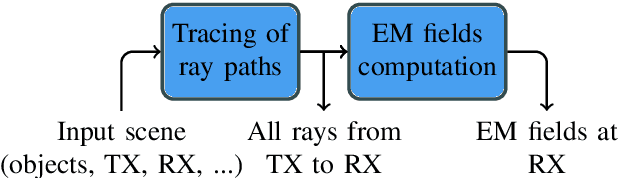
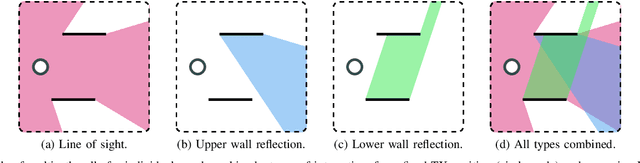
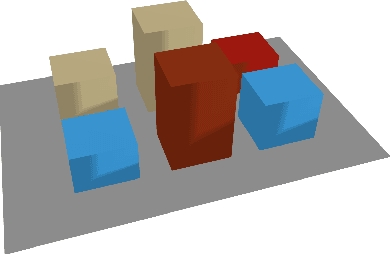
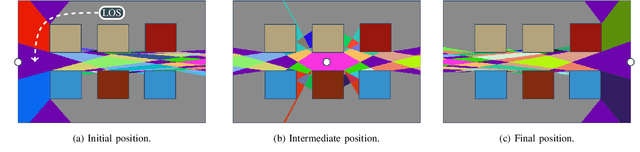
With the increasing presence of dynamic scenarios, such as Vehicle-to-Vehicle communications, radio propagation modeling tools must adapt to the rapidly changing nature of the radio channel. Recently, both Differentiable and Dynamic Ray Tracing frameworks have emerged to address these challenges. However, there is often confusion about how these approaches differ and which one should be used in specific contexts. In this paper, we provide an overview of these two techniques and a comparative analysis against two state-of-the-art tools: 3DSCAT from UniBo and Sionna from NVIDIA. To provide a more precise characterization of the scope of these methods, we introduce a novel simulation-based metric, the Multipath Lifetime Map, which enables the evaluation of spatial and temporal coherence in radio channels only based on the geometrical description of the environment. Finally, our metrics are evaluated on a classic urban street canyon scenario, yielding similar results to those obtained from measurement campaigns.
Min-Path-Tracing: A Diffraction Aware Alternative to Image Method in Ray Tracing
Jan 16, 2023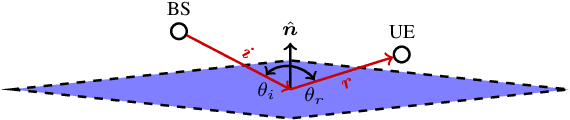
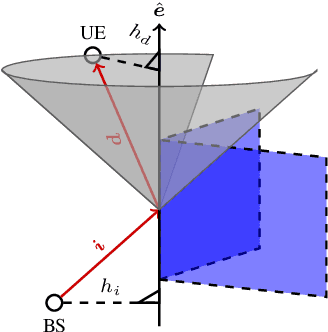
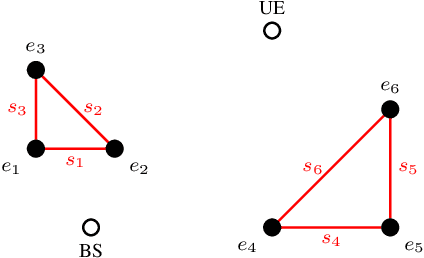
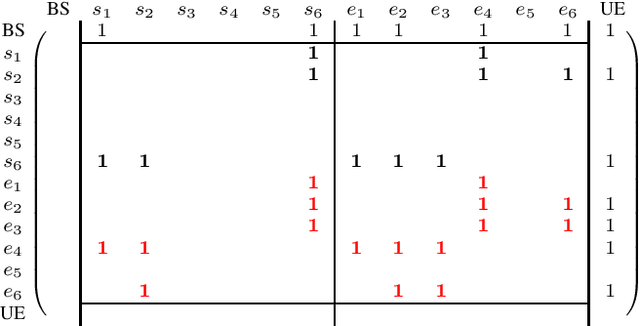
For more than twenty years, Ray Tracing methods have continued to improve on both accuracy and computational time aspects. However, most state-of-the-art image-based ray tracers still rely on a description of the environment that only contains planar surfaces. They are also limited by the number of diffractions they can simulate. We present Min-Path-Tracing (MPT), an alternative to the image method that can handle diffractions seamlessly, while also leveraging the possibility to use different geometries for surfaces or edges, such as parabolic mirrors. MPT uses implicit representations of objects to write the path finding challenge as a minimization problem. We further show that multiple diffractions can be important in some situations, which MPT is capable to simulate without increasing neither the computational nor the implementation complexity.