 Add to Chrome
 Add to Firefox
 Add to Edge
Synthetic Cardiac MRI Image Generation using Deep Generative Models
Mar 25, 2026
Synthetic cardiac MRI (CMRI) generation has emerged as a promising strategy to overcome the scarcity of annotated medical imaging data. Recent advances in GANs, VAEs, diffusion probabilistic models, and flow-matching techniques aim to generate anatomically accurate images while addressing challenges such as limited labeled datasets, vendor variability, and risks of privacy leakage through model memorization. Maskconditioned generation improves structural fidelity by guiding synthesis with segmentation maps, while diffusion and flowmatching models offer strong boundary preservation and efficient deterministic transformations. Cross-domain generalization is further supported through vendor-style conditioning and preprocessing steps like intensity normalization. To ensure privacy, studies increasingly incorporate membership inference attacks, nearest-neighbor analyses, and differential privacy mechanisms. Utility evaluations commonly measure downstream segmentation performance, with evidence showing that anatomically constrained synthetic data can enhance accuracy and robustness across multi-vendor settings. This review aims to compare existing CMRI generation approaches through the lenses of fidelity, utility, and privacy, highlighting current limitations and the need for integrated, evaluation-driven frameworks for reliable clinical workflows.

SNAP-V: A RISC-V SoC with Configurable Neuromorphic Acceleration for Small-Scale Spiking Neural Networks
Mar 12, 2026Spiking Neural Networks (SNNs) have gained significant attention in edge computing due to their low power consumption and computational efficiency. However, existing implementations either use conventional System on Chip (SoC) architectures that suffer from memory-processor bottlenecks, or large-scale neuromorphic hardware that is inefficient and wasteful for small-scale SNN applications. This work presents SNAP-V, a RISC-V-based neuromorphic SoC with two accelerator variants: Cerebra-S (bus-based) and Cerebra-H (Network-on-Chip (NoC)-based) which are optimized for small-scale SNN inference, integrating a RISC-V core for management tasks, with both accelerators featuring parallel processing nodes and distributed memory. Experimental results show close agreement between software and hardware inference, with an average accuracy deviation of 2.62% across multiple network configurations, and an average synaptic energy of 1.05 pJ per synaptic operation (SOP) in 45 nm CMOS technology. These results show that the proposed solution enables accurate, energy-efficient SNN inference suitable for real-time edge applications.
Balancing Fidelity, Utility, and Privacy in Synthetic Cardiac MRI Generation: A Comparative Study
Mar 04, 2026Deep learning in cardiac MRI (CMR) is fundamentally constrained by both data scarcity and privacy regulations. This study systematically benchmarks three generative architectures: Denoising Diffusion Probabilistic Models (DDPM), Latent Diffusion Models (LDM), and Flow Matching (FM) for synthetic CMR generation. Utilizing a two-stage pipeline where anatomical masks condition image synthesis, we evaluate generated data across three critical axes: fidelity, utility, and privacy. Our results show that diffusion-based models, particularly DDPM, provide the most effective balance between downstream segmentation utility, image fidelity, and privacy preservation under limited-data conditions, while FM demonstrates promising privacy characteristics with slightly lower task-level performance. These findings quantify the trade-offs between cross-domain generalization and patient confidentiality, establishing a framework for safe and effective synthetic data augmentation in medical imaging.
Non-contact Infant Sleep Apnea Detection
Oct 10, 2019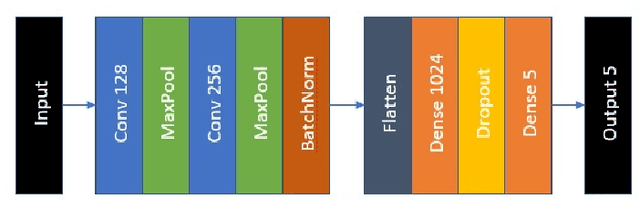
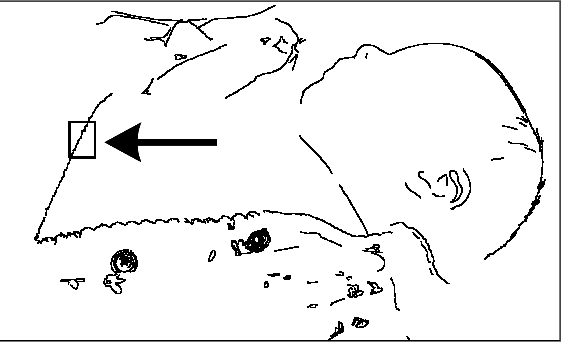
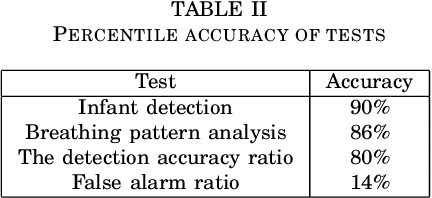
Sleep apnea is a breathing disorder where a person repeatedly stops breathing in sleep. Early detection is crucial for infants because it might bring long term adversities. The existing accurate detection mechanism (pulse oximetry) is a skin contact measurement. The existing non-contact mechanisms (acoustics, video processing) are not accurate enough. This paper presents a novel algorithm for the detection of sleep apnea with video processing. The solution is non-contact, accurate and lightweight enough to run on a single board computer. The paper discusses the accuracy of the algorithm on real data, advantages of the new algorithm, its limitations and suggests future improvements.