 Add to Chrome
 Add to Firefox
 Add to Edge
StarCraft II Build Order Optimization using Deep Reinforcement Learning and Monte-Carlo Tree Search
Jun 12, 2020
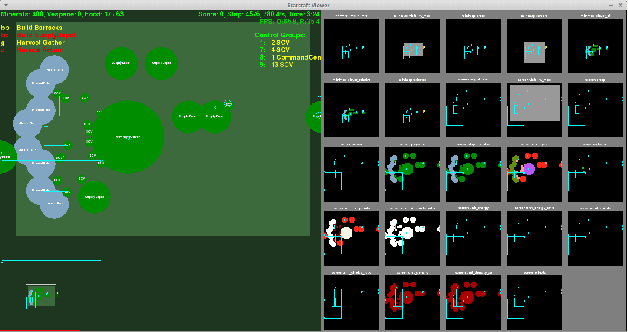
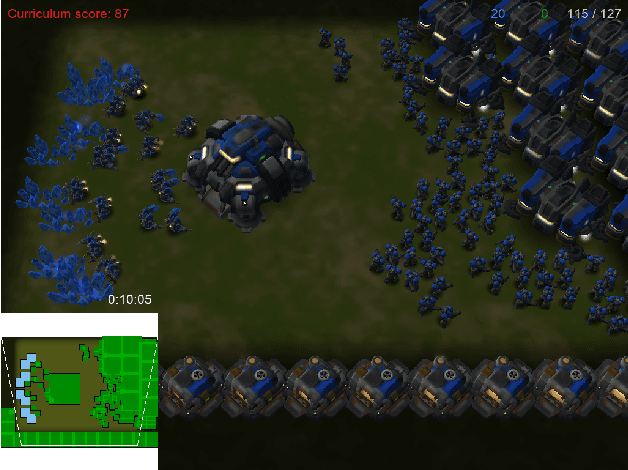
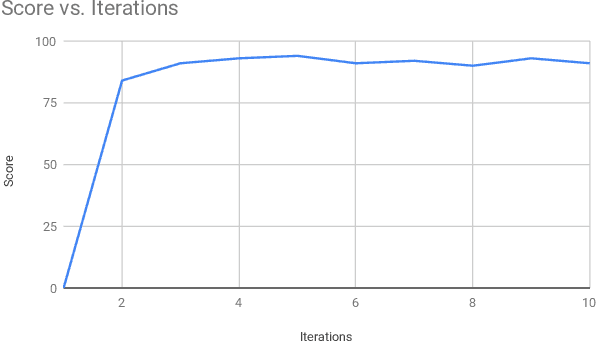
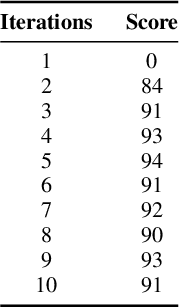
The real-time strategy game of StarCraft II has been posed as a challenge for reinforcement learning by Google's DeepMind. This study examines the use of an agent based on the Monte-Carlo Tree Search algorithm for optimizing the build order in StarCraft II, and discusses how its performance can be improved even further by combining it with a deep reinforcement learning neural network. The experimental results accomplished using Monte-Carlo Tree Search achieves a score similar to a novice human player by only using very limited time and computational resources, which paves the way to achieving scores comparable to those of a human expert by combining it with the use of deep reinforcement learning.

Survey of Privacy-Preserving Collaborative Filtering
Mar 18, 2020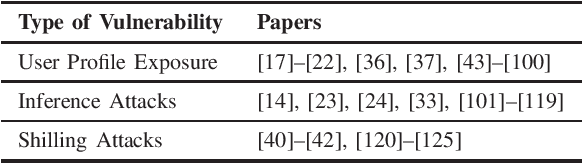
Collaborative filtering recommendation systems provide recommendations to users based on their own past preferences, as well as those of other users who share similar interests. The use of recommendation systems has grown widely in recent years, helping people choose which movies to watch, books to read, and items to buy. However, users are often concerned about their privacy when using such systems, and many users are reluctant to provide accurate information to most online services. Privacy-preserving collaborative filtering recommendation systems aim to provide users with accurate recommendations while maintaining certain guarantees about the privacy of their data. This survey examines the recent literature in privacy-preserving collaborative filtering, providing a broad perspective of the field and classifying the key contributions in the literature using two different criteria: the type of vulnerability they address and the type of approach they use to solve it.
A Survey of Adaptive Resonance Theory Neural Network Models for Engineering Applications
May 04, 2019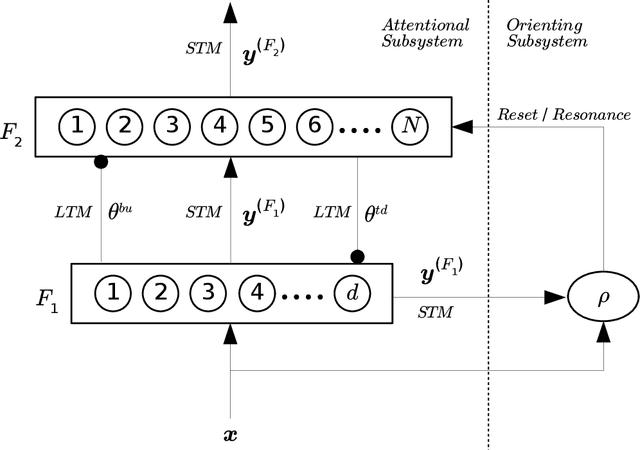
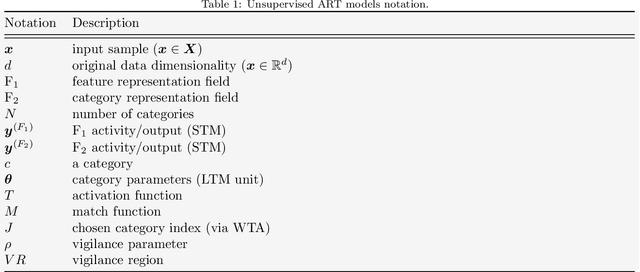
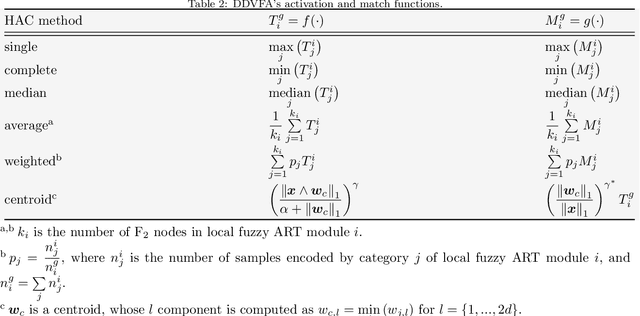
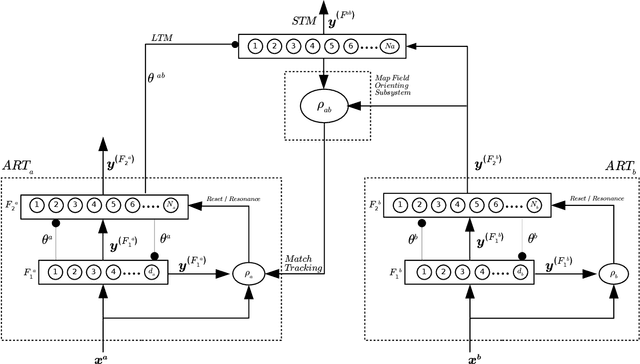
This survey samples from the ever-growing family of adaptive resonance theory (ART) neural network models used to perform the three primary machine learning modalities, namely, unsupervised, supervised and reinforcement learning. It comprises a representative list from classic to modern ART models, thereby painting a general picture of the architectures developed by researchers over the past 30 years. The learning dynamics of these ART models are briefly described, and their distinctive characteristics such as code representation, long-term memory and corresponding geometric interpretation are discussed. Useful engineering properties of ART (speed, configurability, explainability, parallelization and hardware implementation) are examined along with current challenges. Finally, a compilation of online software libraries is provided. It is expected that this overview will be helpful to new and seasoned ART researchers.