 Add to Chrome
 Add to Firefox
 Add to Edge
Inverse Control Constrained Optimization of Vessel Speed Decisions Under Environmental Risk: Evidence from Arctic Shipping
May 26, 2026
Understanding how decision makers balance operational efficiency with environmental and ecological risks is central to vessel navigation. We model vessel speed as a control variable in a constrained optimization framework in which vessel operators balance multiple competing objectives, including transit efficiency, ice related navigational risk, and whale related ecological risk. The underlying risk parameters are estimated using over 14 million Automatic Identification System (AIS) observations from the United States Arctic (2010-2019), together with environmental covariates and spatially explicit whale density estimates. The framework incorporates a nonlinear risk objective, vessel heterogeneity, and regularization to ensure stable and interpretable results. The inferred trade offs reveal distinct decision making patterns across vessel groups and navigational statuses. Vessel types such as Tug Tow and Cargo balance operational speed with environmental and ecological considerations. In contrast, several vessel groups, including Fishing, Passenger, and Unspecified vessels, are strongly influenced by ice related risk, while Pleasure Craft and Tankers exhibit higher sensitivity to whale related risk. Across navigational status categories, similar heterogeneity is observed. The dominant status, under way using engine, displays a clear trade off, whereas other statuses, such as aground and undefined, are strongly shaped by ice related constraints. Statuses including restricted maneuverability and engaged in fishing exhibit higher estimated sensitivity to whale related risk, though with substantial uncertainty. Sensitivity analysis indicates that increasing whale-related risk weighting produces limited changes in model-implied optimal speed, whereas increasing ice-related risk leads to more consistent reductions.

Probabilistic Classification and Uncertainty Quantification of Sahara Desert Climate Using Feedforward Neural Networks
May 05, 2026Climate classification plays a vital role in agricultural planning, hydrological studies, and climate science. One of the most widely used systems for classifying global climate zones is the Köppen-Trewartha (KT) classification. However, the KT classification is fundamentally deterministic, offering discrete labels to spatial locations without accounting for uncertainties in classification. In this paper, we provide a framework for probabilistic modeling of climatic zones. We implement a feedforward artificial neural network (ANN) for classification, allowing for efficient, uncertainty-aware categorization of climatic regions, thereby offering a more nuanced understanding of transitional climate zones compared to traditional deterministic methods. We apply this method to the Sahara Desert region over the 30-year period of 1960 - 1989, using data at more than 400,000 space-time locations from the first 11 years to train our model. We assess the model's short- and long-term classification capabilities to evaluate its stability and accuracy over time. We also compare the probabilistic classification from our model with the traditional KT classification. In addition, we use fluctuation analysis methods to highlight the temporal evolution of climatic zones across the Sahara region and identify areas undergoing significant flux of probabilities of their climate classes, providing insights into broader trends in desertification.
A Statistical Framework for Spatial Boundary Estimation and Change Detection: Application to the Sahel Sahara Climate Transition
Dec 17, 2025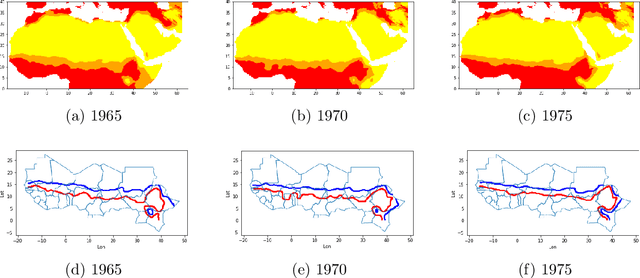
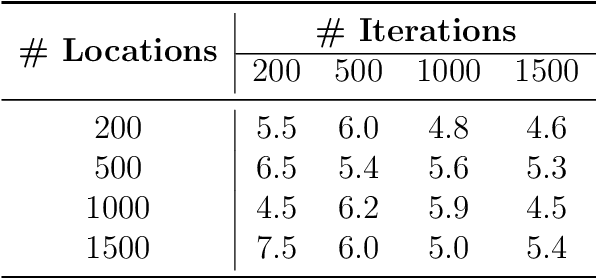
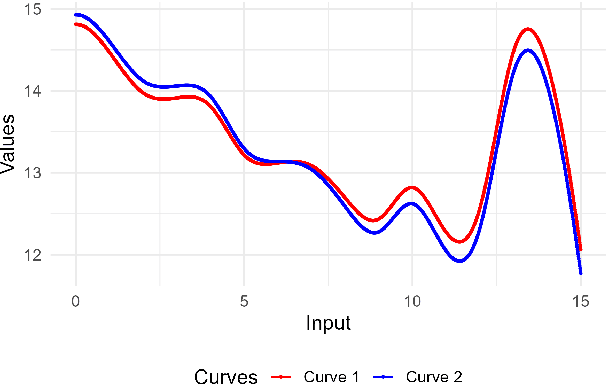
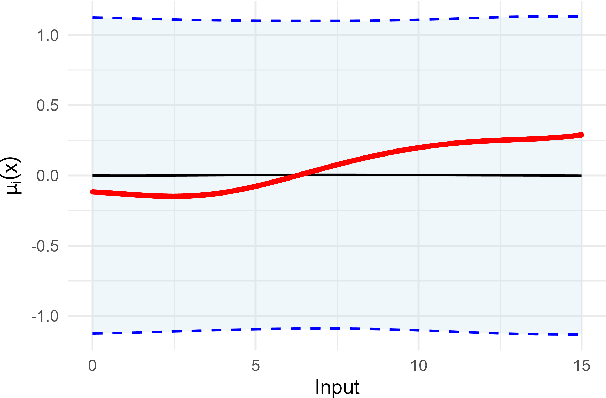
Spatial boundaries, such as ecological transitions or climatic regime interfaces, capture steep environmental gradients, and shifts in their structure can signal emerging environmental changes. Quantifying uncertainty in spatial boundary locations and formally testing for temporal shifts remains challenging, especially when boundaries are derived from noisy, gridded environmental data. We present a unified framework that combines heteroskedastic Gaussian process (GP) regression with a scaled Maximum Absolute Difference (MAD) Global Envelope Test (GET) to estimate spatial boundary curves and assess whether they evolve over time. The heteroskedastic GP provides a flexible probabilistic reconstruction of boundary lines, capturing spatially varying mean structure and location specific variability, while the test offers a rigorous hypothesis testing tool for detecting departures from expected boundary behaviors. Simulation studies show that the proposed method achieves the correct size under the null and high power for detecting local boundary shifts. Applying our framework to the Sahel Sahara transition zone, using annual Koppen Trewartha climate classifications from 1960 to 1989, we find no statistically significant decade scale changes in the arid and semi arid or semi arid and non arid interfaces. However, the method successfully identifies localized boundary shifts during the extreme drought years of 1983 and 1984, consistent with climate studies documenting regional anomalies in these interfaces during that period.
Decision Tree-Based Predictive Models for Academic Achievement Using College Students' Support Networks
Aug 31, 2021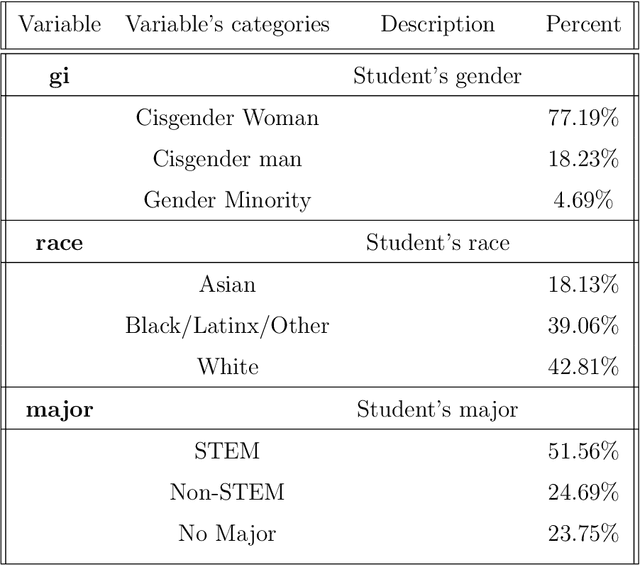
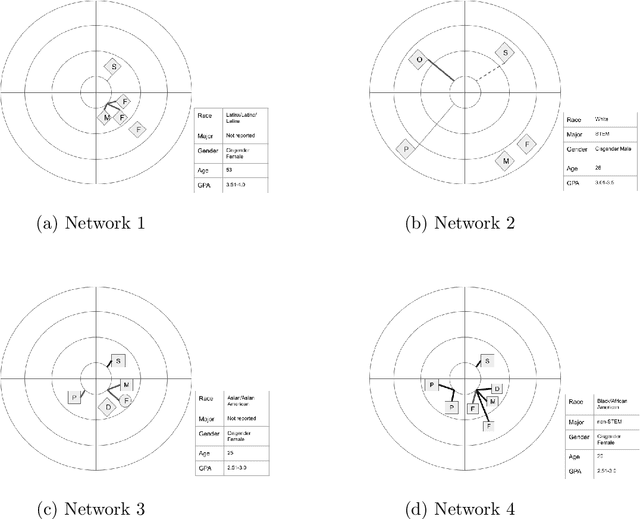
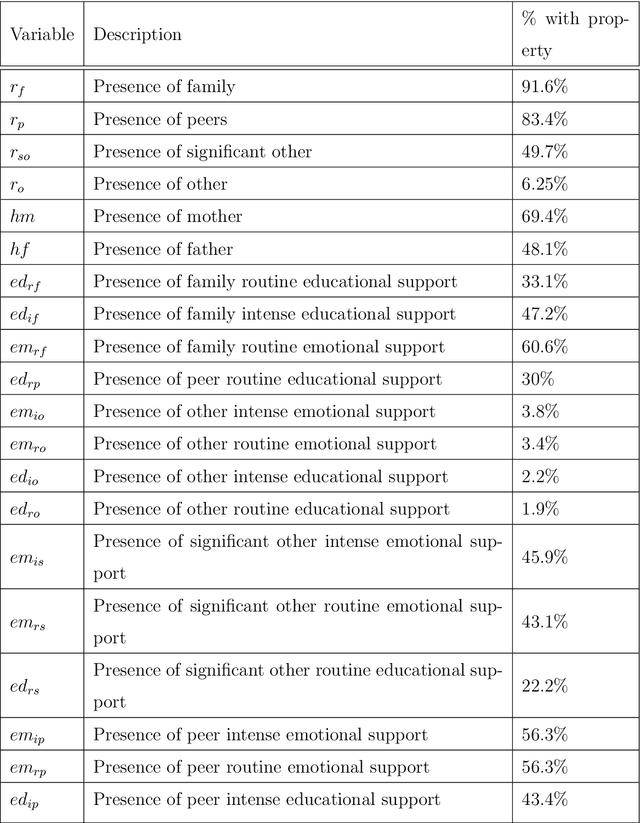

In this study, we examine a set of primary data collected from 484 students enrolled in a large public university in the Mid-Atlantic United States region during the early stages of the COVID-19 pandemic. The data, called Ties data, included students' demographic and support network information. The support network data comprised of information that highlighted the type of support, (i.e. emotional or educational; routine or intense). Using this data set, models for predicting students' academic achievement, quantified by their self-reported GPA, were created using Chi-Square Automatic Interaction Detection (CHAID), a decision tree algorithm, and cforest, a random forest algorithm that uses conditional inference trees. We compare the methods' accuracy and variation in the set of important variables suggested by each algorithm. Each algorithm found different variables important for different student demographics with some overlap. For White students, different types of educational support were important in predicting academic achievement, while for non-White students, different types of emotional support were important in predicting academic achievement. The presence of differing types of routine support were important in predicting academic achievement for cisgender women, while differing types of intense support were important in predicting academic achievement for cisgender men.