 Add to Chrome
 Add to Firefox
 Add to Edge
Probabilistic Classification and Uncertainty Quantification of Sahara Desert Climate Using Feedforward Neural Networks
May 05, 2026
Climate classification plays a vital role in agricultural planning, hydrological studies, and climate science. One of the most widely used systems for classifying global climate zones is the Köppen-Trewartha (KT) classification. However, the KT classification is fundamentally deterministic, offering discrete labels to spatial locations without accounting for uncertainties in classification. In this paper, we provide a framework for probabilistic modeling of climatic zones. We implement a feedforward artificial neural network (ANN) for classification, allowing for efficient, uncertainty-aware categorization of climatic regions, thereby offering a more nuanced understanding of transitional climate zones compared to traditional deterministic methods. We apply this method to the Sahara Desert region over the 30-year period of 1960 - 1989, using data at more than 400,000 space-time locations from the first 11 years to train our model. We assess the model's short- and long-term classification capabilities to evaluate its stability and accuracy over time. We also compare the probabilistic classification from our model with the traditional KT classification. In addition, we use fluctuation analysis methods to highlight the temporal evolution of climatic zones across the Sahara region and identify areas undergoing significant flux of probabilities of their climate classes, providing insights into broader trends in desertification.

A Statistical Framework for Spatial Boundary Estimation and Change Detection: Application to the Sahel Sahara Climate Transition
Dec 17, 2025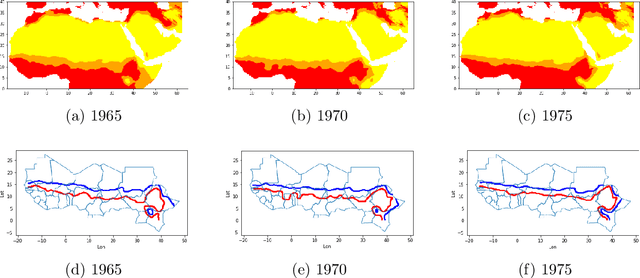
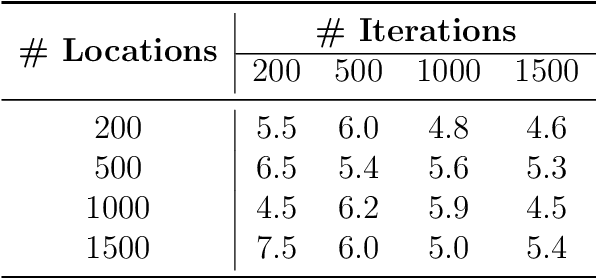
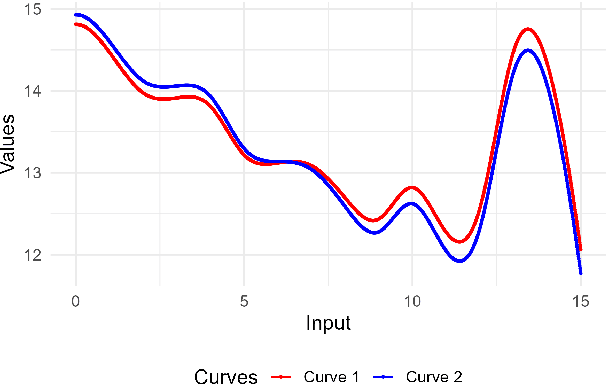
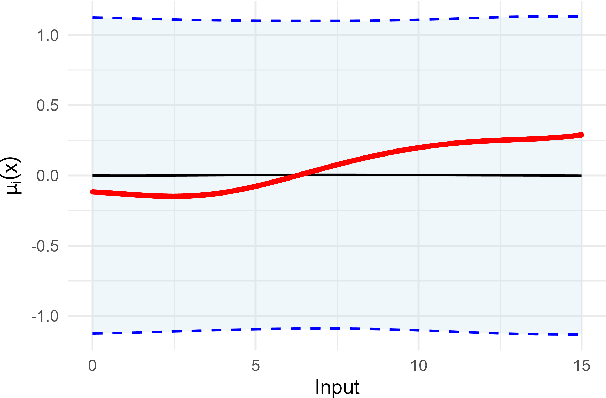
Spatial boundaries, such as ecological transitions or climatic regime interfaces, capture steep environmental gradients, and shifts in their structure can signal emerging environmental changes. Quantifying uncertainty in spatial boundary locations and formally testing for temporal shifts remains challenging, especially when boundaries are derived from noisy, gridded environmental data. We present a unified framework that combines heteroskedastic Gaussian process (GP) regression with a scaled Maximum Absolute Difference (MAD) Global Envelope Test (GET) to estimate spatial boundary curves and assess whether they evolve over time. The heteroskedastic GP provides a flexible probabilistic reconstruction of boundary lines, capturing spatially varying mean structure and location specific variability, while the test offers a rigorous hypothesis testing tool for detecting departures from expected boundary behaviors. Simulation studies show that the proposed method achieves the correct size under the null and high power for detecting local boundary shifts. Applying our framework to the Sahel Sahara transition zone, using annual Koppen Trewartha climate classifications from 1960 to 1989, we find no statistically significant decade scale changes in the arid and semi arid or semi arid and non arid interfaces. However, the method successfully identifies localized boundary shifts during the extreme drought years of 1983 and 1984, consistent with climate studies documenting regional anomalies in these interfaces during that period.