 Add to Chrome
 Add to Firefox
 Add to Edge
Spectrum Aware Illumination Estimation Using Multispectral Image
Jun 12, 2026
Multispectral (MS) imaging extends beyond conventional RGB imaging by capturing more spectral bands, thereby improving illuminant spectrum estimation (ISE). However, existing methods often fail to fully exploit spectral information, resulting in suboptimal performance under diverse lighting conditions and across different sensor domains. Hence, we propose a deep learning framework with a spatio-spectral feature extraction block, which incorporates spectral attention mechanisms to enhance spectral correlation and preserve illuminant-relevant spatial features. Through the inclusion of an illuminant prior (IP), our approach prioritizes specific channels that provide more meaningful information in an MS image. We also propose a spectral-domain transform across different MS sensor spaces. The results demonstrate that illuminant spectra learned in high-dimensional sensor spaces can be effectively transformed to various lower-dimensional camera sensor spaces without any additional training. To facilitate evaluation, we introduce a real-world MS dataset containing high-dimensional ground-truth illumination spectra captured under diverse lighting conditions. Through extensive experiments, we demonstrate that our method achieves superior accuracy compared to existing models, thus providing a practical solution for real-world ISE. The code and dataset are available at https://github.com/hyejin5/Spectrum-Aware-Illumination-Estimation-Using-Multispectral-Image.

Deep Unsupervised Domain Adaptation: A Review of Recent Advances and Perspectives
Aug 15, 2022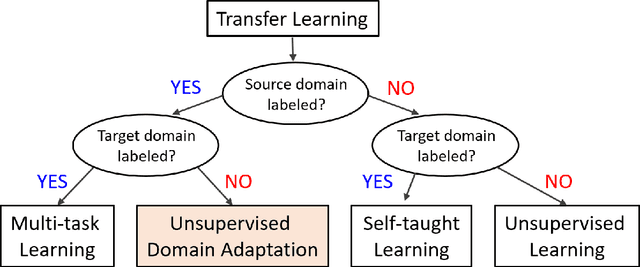
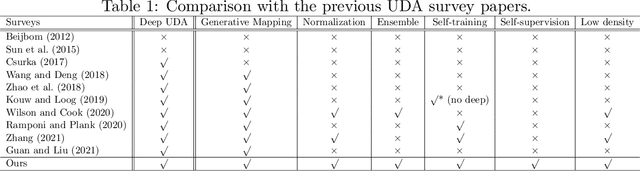
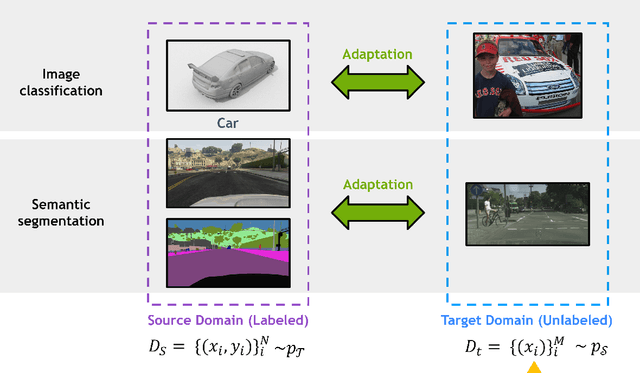
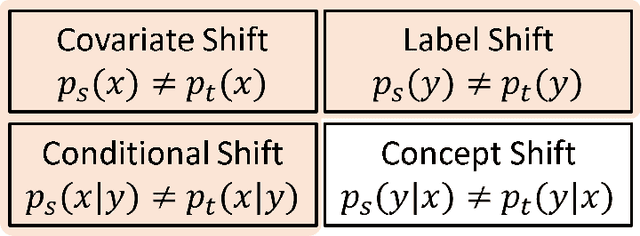
Deep learning has become the method of choice to tackle real-world problems in different domains, partly because of its ability to learn from data and achieve impressive performance on a wide range of applications. However, its success usually relies on two assumptions: (i) vast troves of labeled datasets are required for accurate model fitting, and (ii) training and testing data are independent and identically distributed. Its performance on unseen target domains, thus, is not guaranteed, especially when encountering out-of-distribution data at the adaptation stage. The performance drop on data in a target domain is a critical problem in deploying deep neural networks that are successfully trained on data in a source domain. Unsupervised domain adaptation (UDA) is proposed to counter this, by leveraging both labeled source domain data and unlabeled target domain data to carry out various tasks in the target domain. UDA has yielded promising results on natural image processing, video analysis, natural language processing, time-series data analysis, medical image analysis, etc. In this review, as a rapidly evolving topic, we provide a systematic comparison of its methods and applications. In addition, the connection of UDA with its closely related tasks, e.g., domain generalization and out-of-distribution detection, has also been discussed. Furthermore, deficiencies in current methods and possible promising directions are highlighted.