 Add to Chrome
 Add to Firefox
 Add to Edge
Octree-based Learned Point Cloud Geometry Compression: A Lossy Perspective
Mar 30, 2026
Octree-based context learning has recently become a leading method in point cloud compression. However, its potential on lossy compression remains undiscovered. The traditional lossy compression paradigm using lossless octree representation with quantization step adjustment may result in severe distortions due to massive missing points in quantization. Therefore, we analyze data characteristics of different point clouds and propose lossy approaches specifically. For object point clouds that suffer from quantization step adjustment, we propose a new leaf nodes lossy compression method, which achieves lossy compression by performing bit-wise coding and binary prediction on leaf nodes. For LiDAR point clouds, we explore variable rate approaches and propose a simple but effective rate control method. Experimental results demonstrate that the proposed leaf nodes lossy compression method significantly outperforms the previous octree-based method on object point clouds, and the proposed rate control method achieves about 1% bit error without finetuning on LiDAR point clouds.

Label-Informed Outlier Detection Based on Granule Density
Dec 21, 2025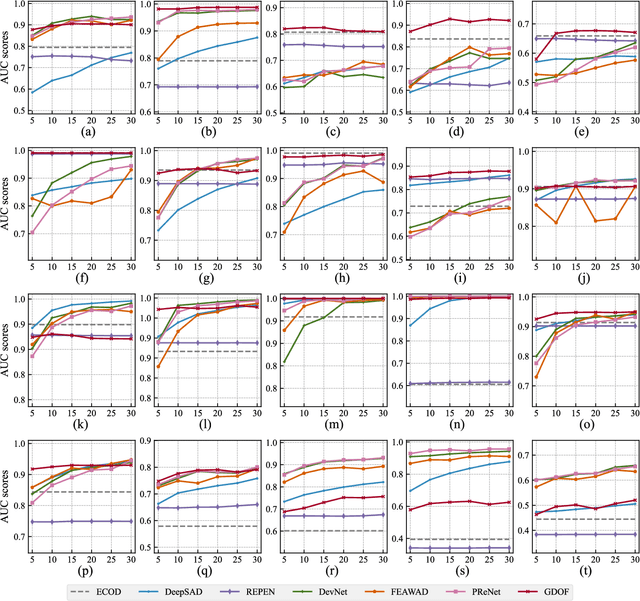
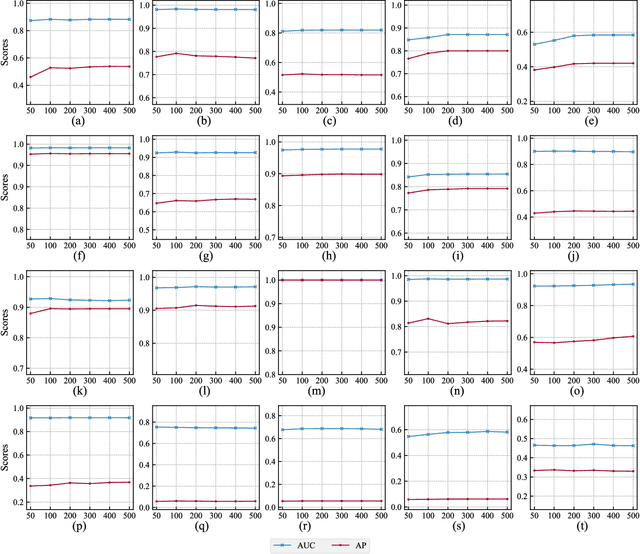
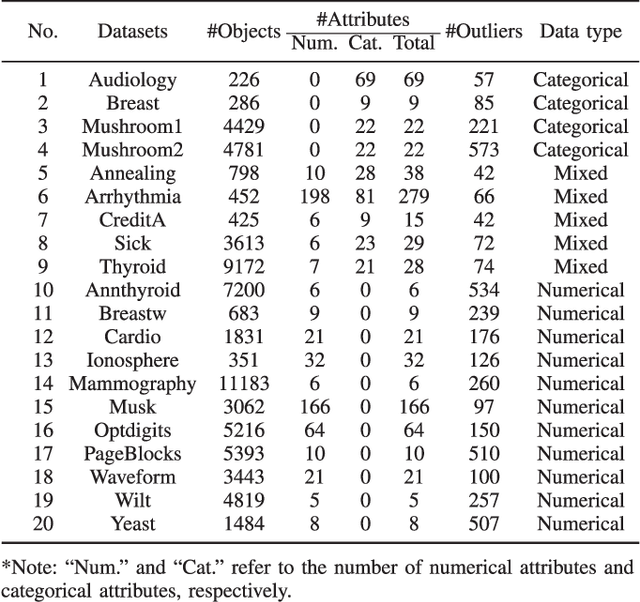
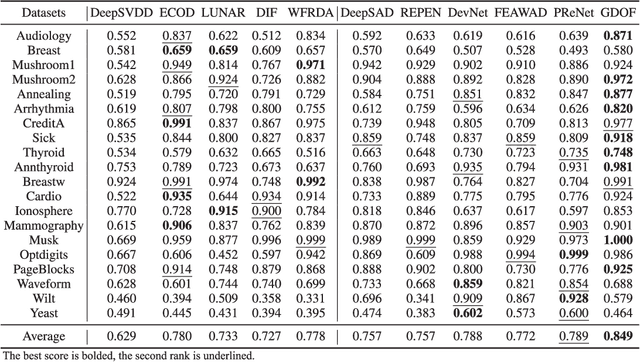
Outlier detection, crucial for identifying unusual patterns with significant implications across numerous applications, has drawn considerable research interest. Existing semi-supervised methods typically treat data as purely numerical and} in a deterministic manner, thereby neglecting the heterogeneity and uncertainty inherent in complex, real-world datasets. This paper introduces a label-informed outlier detection method for heterogeneous data based on Granular Computing and Fuzzy Sets, namely Granule Density-based Outlier Factor (GDOF). Specifically, GDOF first employs label-informed fuzzy granulation to effectively represent various data types and develops granule density for precise density estimation. Subsequently, granule densities from individual attributes are integrated for outlier scoring by assessing attribute relevance with a limited number of labeled outliers. Experimental results on various real-world datasets show that GDOF stands out in detecting outliers in heterogeneous data with a minimal number of labeled outliers. The integration of Fuzzy Sets and Granular Computing in GDOF offers a practical framework for outlier detection in complex and diverse data types. All relevant datasets and source codes are publicly available for further research. This is the author's accepted manuscript of a paper published in IEEE Transactions on Fuzzy Systems. The final version is available at https://doi.org/10.1109/TFUZZ.2024.3514853
* Author's Accepted Manuscript
Deep Reversible Consistency Learning for Cross-modal Retrieval
Jan 10, 2025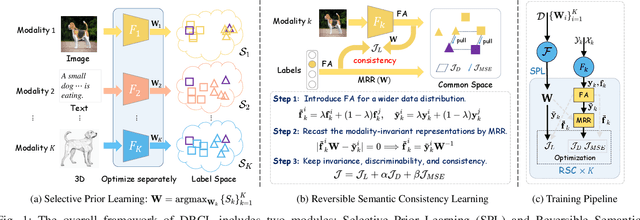
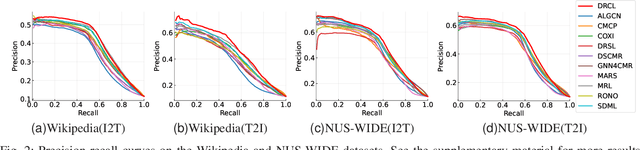
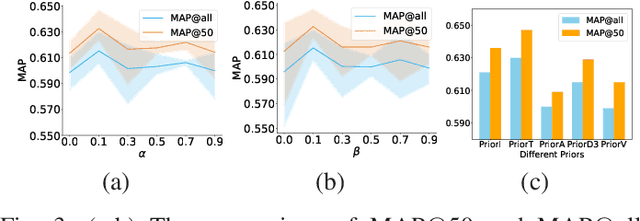
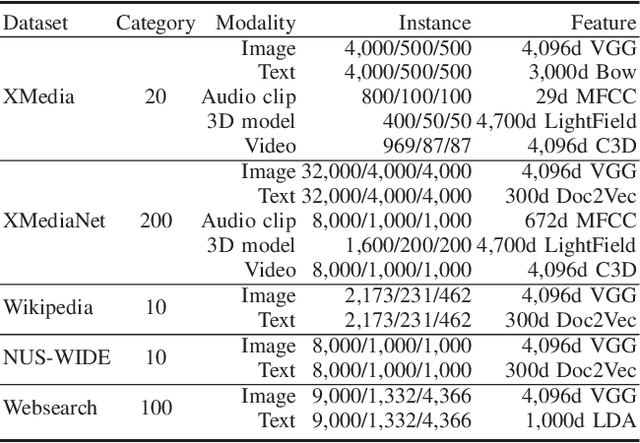
Cross-modal retrieval (CMR) typically involves learning common representations to directly measure similarities between multimodal samples. Most existing CMR methods commonly assume multimodal samples in pairs and employ joint training to learn common representations, limiting the flexibility of CMR. Although some methods adopt independent training strategies for each modality to improve flexibility in CMR, they utilize the randomly initialized orthogonal matrices to guide representation learning, which is suboptimal since they assume inter-class samples are independent of each other, limiting the potential of semantic alignments between sample representations and ground-truth labels. To address these issues, we propose a novel method termed Deep Reversible Consistency Learning (DRCL) for cross-modal retrieval. DRCL includes two core modules, \ie Selective Prior Learning (SPL) and Reversible Semantic Consistency learning (RSC). More specifically, SPL first learns a transformation weight matrix on each modality and selects the best one based on the quality score as the Prior, which greatly avoids blind selection of priors learned from low-quality modalities. Then, RSC employs a Modality-invariant Representation Recasting mechanism (MRR) to recast the potential modality-invariant representations from sample semantic labels by the generalized inverse matrix of the prior. Since labels are devoid of modal-specific information, we utilize the recast features to guide the representation learning, thus maintaining semantic consistency to the fullest extent possible. In addition, a feature augmentation mechanism (FA) is introduced in RSC to encourage the model to learn over a wider data distribution for diversity. Finally, extensive experiments conducted on five widely used datasets and comparisons with 15 state-of-the-art baselines demonstrate the effectiveness and superiority of our DRCL.
Robust Self-Paced Hashing for Cross-Modal Retrieval with Noisy Labels
Jan 03, 2025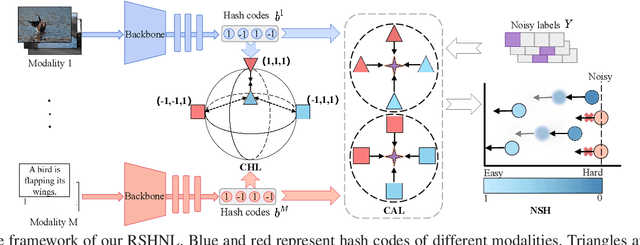
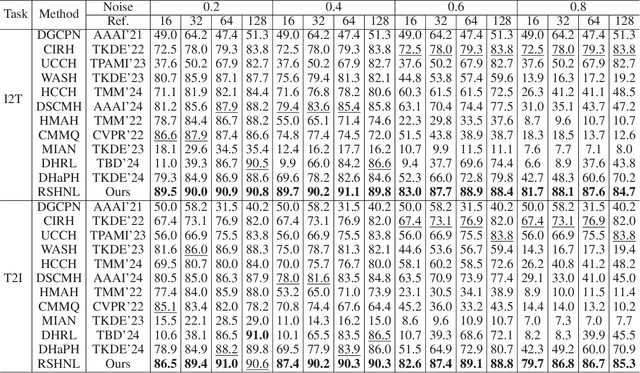
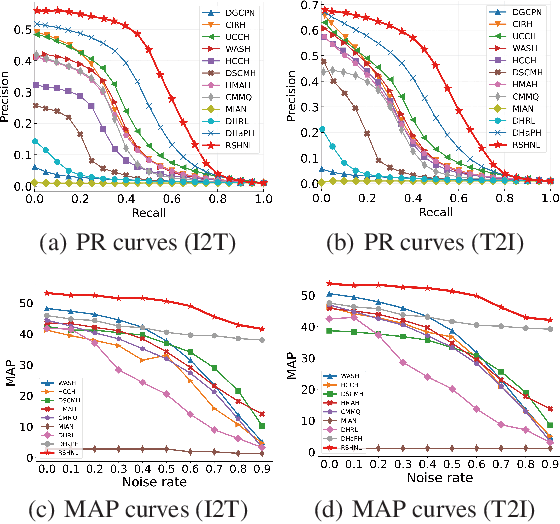
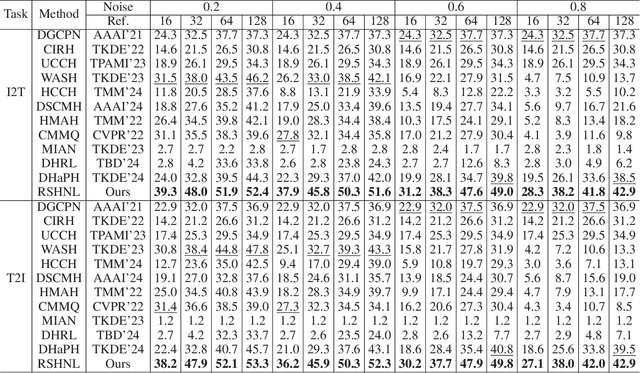
Cross-modal hashing (CMH) has appeared as a popular technique for cross-modal retrieval due to its low storage cost and high computational efficiency in large-scale data. Most existing methods implicitly assume that multi-modal data is correctly labeled, which is expensive and even unattainable due to the inevitable imperfect annotations (i.e., noisy labels) in real-world scenarios. Inspired by human cognitive learning, a few methods introduce self-paced learning (SPL) to gradually train the model from easy to hard samples, which is often used to mitigate the effects of feature noise or outliers. It is a less-touched problem that how to utilize SPL to alleviate the misleading of noisy labels on the hash model. To tackle this problem, we propose a new cognitive cross-modal retrieval method called Robust Self-paced Hashing with Noisy Labels (RSHNL), which can mimic the human cognitive process to identify the noise while embracing robustness against noisy labels. Specifically, we first propose a contrastive hashing learning (CHL) scheme to improve multi-modal consistency, thereby reducing the inherent semantic gap. Afterward, we propose center aggregation learning (CAL) to mitigate the intra-class variations. Finally, we propose Noise-tolerance Self-paced Hashing (NSH) that dynamically estimates the learning difficulty for each instance and distinguishes noisy labels through the difficulty level. For all estimated clean pairs, we further adopt a self-paced regularizer to gradually learn hash codes from easy to hard. Extensive experiments demonstrate that the proposed RSHNL performs remarkably well over the state-of-the-art CMH methods.