 Add to Chrome
 Add to Firefox
 Add to Edge
OpenQlaw: An Agentic AI Assistant for Analysis of 2D Quantum Materials
Mar 17, 2026
The transition from optical identification of 2D quantum materials to practical device fabrication requires dynamic reasoning beyond the detection accuracy. While recent domain-specific Multimodal Large Language Models (MLLMs) successfully ground visual features using physics-informed reasoning, their outputs are optimized for step-by-step cognitive transparency. This yields verbose candidate enumerations followed by dense reasoning that, while accurate, may induce cognitive overload and lack immediate utility for real-world interaction with researchers. To address this challenge, we introduce OpenQlaw, an agentic orchestration system for analyzing 2D materials. The architecture is built upon NanoBot, a lightweight agentic framework inspired by OpenClaw, and QuPAINT, one of the first Physics-Aware Instruction Multi-modal platforms for Quantum Material Discovery. This allows accessibility to the lab floor via a variety of messaging channels. OpenQlaw allows the core Large Language Model (LLM) agent to orchestrate a domain-expert MLLM,with QuPAINT, as a specialized node, successfully decoupling visual identification from reasoning and deterministic image rendering. By parsing spatial data from the expert, the agent can dynamically process user queries, such as performing scale-aware physical computation or generating isolated visual annotations, and answer in a naturalistic manner. Crucially, the system features a persistent memory that enables the agent to save physical scale ratios (e.g., 1 pixel = 0.25 μm) for area computations and store sample preparation methods for efficacy comparison. The application of an agentic architecture, together with the extension that uses the core agent as an orchestrator for domain-specific experts, transforms isolated inferences into a context-aware assistant capable of accelerating high-throughput device fabrication.

QuPAINT: Physics-Aware Instruction Tuning Approach to Quantum Material Discovery
Feb 19, 2026Characterizing two-dimensional quantum materials from optical microscopy images is challenging due to the subtle layer-dependent contrast, limited labeled data, and significant variation across laboratories and imaging setups. Existing vision models struggle in this domain since they lack physical priors and cannot generalize to new materials or hardware conditions. This work presents a new physics-aware multimodal framework that addresses these limitations from both the data and model perspectives. We first present Synthia, a physics-based synthetic data generator that simulates realistic optical responses of quantum material flakes under thin-film interference. Synthia produces diverse and high-quality samples, helping reduce the dependence on expert manual annotation. We introduce QMat-Instruct, the first large-scale instruction dataset for quantum materials, comprising multimodal, physics-informed question-answer pairs designed to teach Multimodal Large Language Models (MLLMs) to understand the appearance and thickness of flakes. Then, we propose Physics-Aware Instruction Tuning (QuPAINT), a multimodal architecture that incorporates a Physics-Informed Attention module to fuse visual embeddings with optical priors, enabling more robust and discriminative flake representations. Finally, we establish QF-Bench, a comprehensive benchmark spanning multiple materials, substrates, and imaging settings, offering standardized protocols for fair and reproducible evaluation.
CLIFF: Continual Learning for Incremental Flake Features in 2D Material Identification
Aug 24, 2025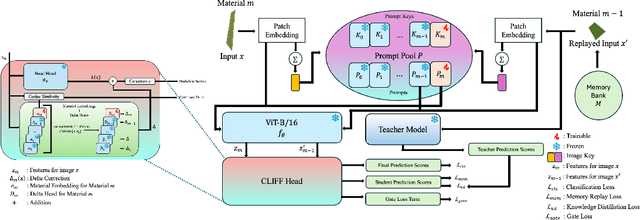
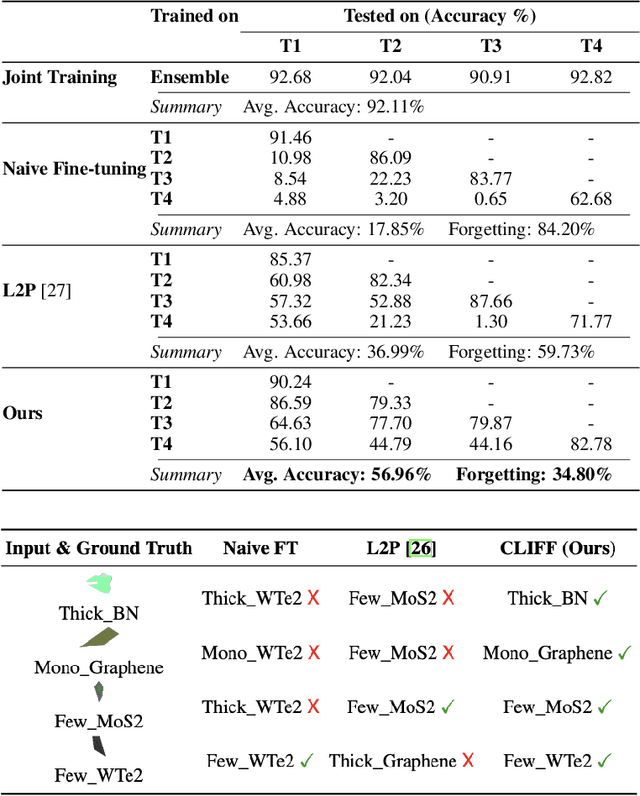
Identifying quantum flakes is crucial for scalable quantum hardware; however, automated layer classification from optical microscopy remains challenging due to substantial appearance shifts across different materials. In this paper, we propose a new Continual-Learning Framework for Flake Layer Classification (CLIFF). To our knowledge, this is the first systematic study of continual learning in the domain of two-dimensional (2D) materials. Our method enables the model to differentiate between materials and their physical and optical properties by freezing a backbone and base head trained on a reference material. For each new material, it learns a material-specific prompt, embedding, and a delta head. A prompt pool and a cosine-similarity gate modulate features and compute material-specific corrections. Additionally, we incorporate memory replay with knowledge distillation. CLIFF achieves competitive accuracy with significantly lower forgetting than naive fine-tuning and a prompt-based baseline.
Quantum-Brain: Quantum-Inspired Neural Network Approach to Vision-Brain Understanding
Nov 20, 2024


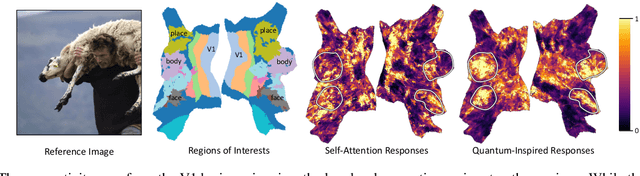
Vision-brain understanding aims to extract semantic information about brain signals from human perceptions. Existing deep learning methods for vision-brain understanding are usually introduced in a traditional learning paradigm missing the ability to learn the connectivities between brain regions. Meanwhile, the quantum computing theory offers a new paradigm for designing deep learning models. Motivated by the connectivities in the brain signals and the entanglement properties in quantum computing, we propose a novel Quantum-Brain approach, a quantum-inspired neural network, to tackle the vision-brain understanding problem. To compute the connectivity between areas in brain signals, we introduce a new Quantum-Inspired Voxel-Controlling module to learn the impact of a brain voxel on others represented in the Hilbert space. To effectively learn connectivity, a novel Phase-Shifting module is presented to calibrate the value of the brain signals. Finally, we introduce a new Measurement-like Projection module to present the connectivity information from the Hilbert space into the feature space. The proposed approach can learn to find the connectivities between fMRI voxels and enhance the semantic information obtained from human perceptions. Our experimental results on the Natural Scene Dataset benchmarks illustrate the effectiveness of the proposed method with Top-1 accuracies of 95.1% and 95.6% on image and brain retrieval tasks and an Inception score of 95.3% on fMRI-to-image reconstruction task. Our proposed quantum-inspired network brings a potential paradigm to solving the vision-brain problems via the quantum computing theory.
Hierarchical Quantum Control Gates for Functional MRI Understanding
Aug 07, 2024


Quantum computing has emerged as a powerful tool for solving complex problems intractable for classical computers, particularly in popular fields such as cryptography, optimization, and neurocomputing. In this paper, we present a new quantum-based approach named the Hierarchical Quantum Control Gates (HQCG) method for efficient understanding of Functional Magnetic Resonance Imaging (fMRI) data. This approach includes two novel modules: the Local Quantum Control Gate (LQCG) and the Global Quantum Control Gate (GQCG), which are designed to extract local and global features of fMRI signals, respectively. Our method operates end-to-end on a quantum machine, leveraging quantum mechanics to learn patterns within extremely high-dimensional fMRI signals, such as 30,000 samples which is a challenge for classical computers. Empirical results demonstrate that our approach significantly outperforms classical methods. Additionally, we found that the proposed quantum model is more stable and less prone to overfitting than the classical methods.
Diffusion-Inspired Quantum Noise Mitigation in Parameterized Quantum Circuits
Jun 02, 2024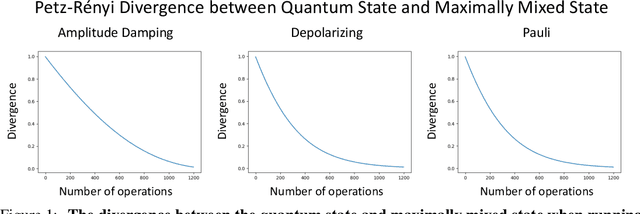
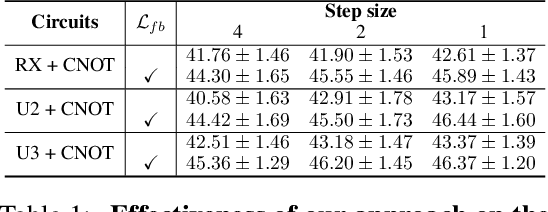
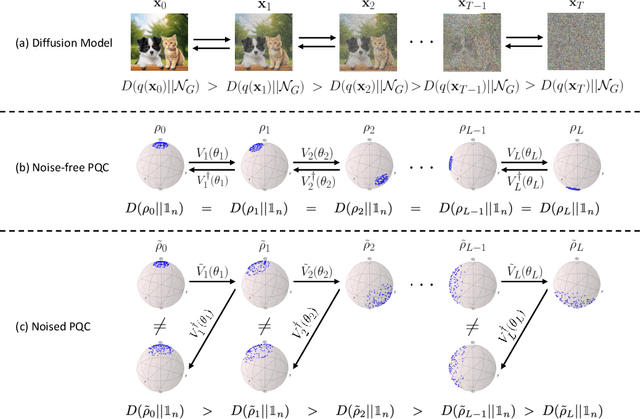
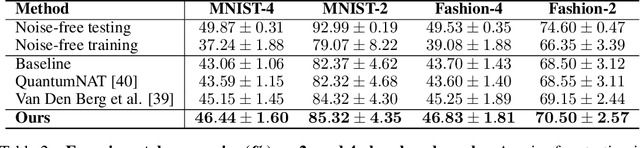
Parameterized Quantum Circuits (PQCs) have been acknowledged as a leading strategy to utilize near-term quantum advantages in multiple problems, including machine learning and combinatorial optimization. When applied to specific tasks, the parameters in the quantum circuits are trained to minimize the target function. Although there have been comprehensive studies to improve the performance of the PQCs on practical tasks, the errors caused by the quantum noise downgrade the performance when running on real quantum computers. In particular, when the quantum state is transformed through multiple quantum circuit layers, the effect of the quantum noise happens cumulatively and becomes closer to the maximally mixed state or complete noise. This paper studies the relationship between the quantum noise and the diffusion model. Then, we propose a novel diffusion-inspired learning approach to mitigate the quantum noise in the PQCs and reduce the error for specific tasks. Through our experiments, we illustrate the efficiency of the learning strategy and achieve state-of-the-art performance on classification tasks in the quantum noise scenarios.
Quantum Visual Feature Encoding Revisited
May 30, 2024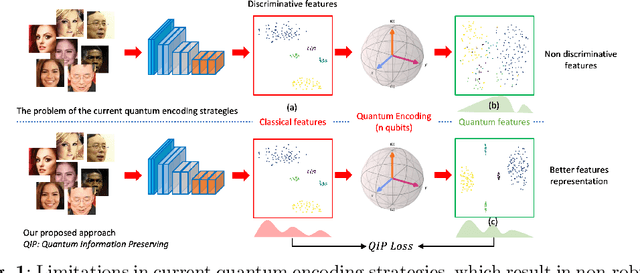
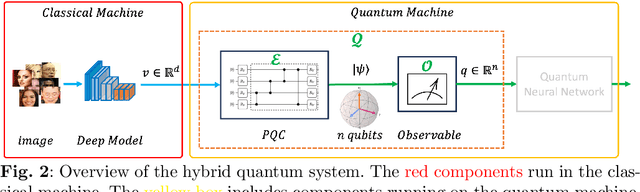
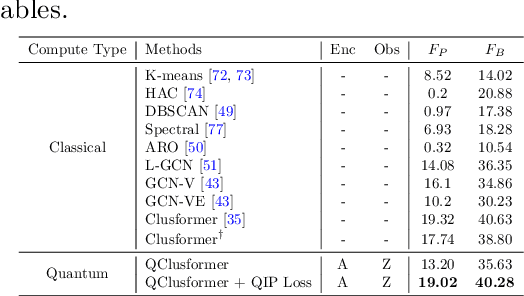
Although quantum machine learning has been introduced for a while, its applications in computer vision are still limited. This paper, therefore, revisits the quantum visual encoding strategies, the initial step in quantum machine learning. Investigating the root cause, we uncover that the existing quantum encoding design fails to ensure information preservation of the visual features after the encoding process, thus complicating the learning process of the quantum machine learning models. In particular, the problem, termed "Quantum Information Gap" (QIG), leads to a gap of information between classical and corresponding quantum features. We provide theoretical proof and practical demonstrations of that found and underscore the significance of QIG, as it directly impacts the performance of quantum machine learning algorithms. To tackle this challenge, we introduce a simple but efficient new loss function named Quantum Information Preserving (QIP) to minimize this gap, resulting in enhanced performance of quantum machine learning algorithms. Extensive experiments validate the effectiveness of our approach, showcasing superior performance compared to current methodologies and consistently achieving state-of-the-art results in quantum modeling.
QClusformer: A Quantum Transformer-based Framework for Unsupervised Visual Clustering
May 30, 2024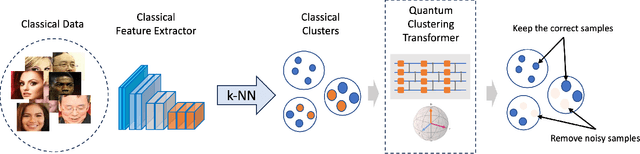
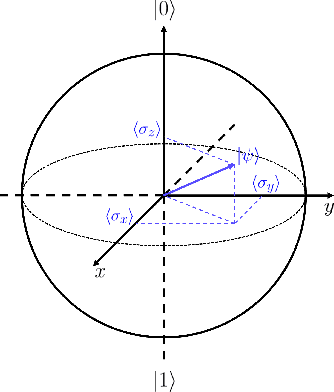
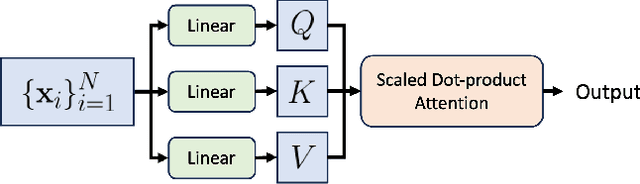
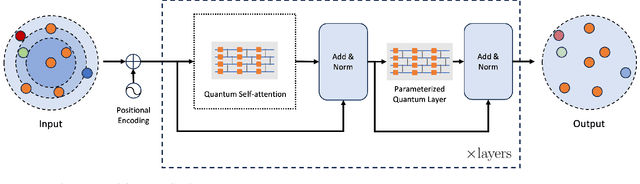
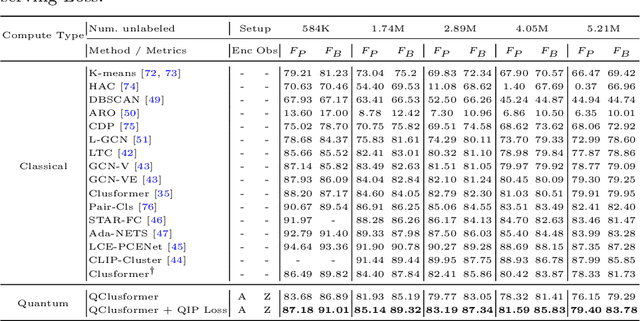
Unsupervised vision clustering, a cornerstone in computer vision, has been studied for decades, yielding significant outcomes across numerous vision tasks. However, these algorithms involve substantial computational demands when confronted with vast amounts of unlabeled data. Conversely, Quantum computing holds promise in expediting unsupervised algorithms when handling large-scale databases. In this study, we introduce QClusformer, a pioneering Transformer-based framework leveraging Quantum machines to tackle unsupervised vision clustering challenges. Specifically, we design the Transformer architecture, including the self-attention module and transformer blocks, from a Quantum perspective to enable execution on Quantum hardware. In addition, we present QClusformer, a variant based on the Transformer architecture, tailored for unsupervised vision clustering tasks. By integrating these elements into an end-to-end framework, QClusformer consistently outperforms previous methods running on classical computers. Empirical evaluations across diverse benchmarks, including MS-Celeb-1M and DeepFashion, underscore the superior performance of QClusformer compared to state-of-the-art methods.
Quantum Vision Clustering
Sep 18, 2023Unsupervised visual clustering has recently received considerable attention. It aims to explain distributions of unlabeled visual images by clustering them via a parameterized appearance model. From a different perspective, the clustering algorithms can be treated as assignment problems, often NP-hard. They can be solved precisely for small instances on current hardware. Adiabatic quantum computing (AQC) offers a solution, as it can soon provide a considerable speedup on a range of NP-hard optimization problems. However, current clustering formulations are unsuitable for quantum computing due to their scaling properties. Consequently, in this work, we propose the first clustering formulation designed to be solved with AQC. We employ an Ising model representing the quantum mechanical system implemented on the AQC. Our approach is competitive compared to state-of-the-art optimization-based approaches, even using of-the-shelf integer programming solvers. Finally, we demonstrate that our clustering problem is already solvable on the current generation of real quantum computers for small examples and analyze the properties of the measured solutions.
Two-Dimensional Quantum Material Identification via Self-Attention and Soft-labeling in Deep Learning
May 31, 2022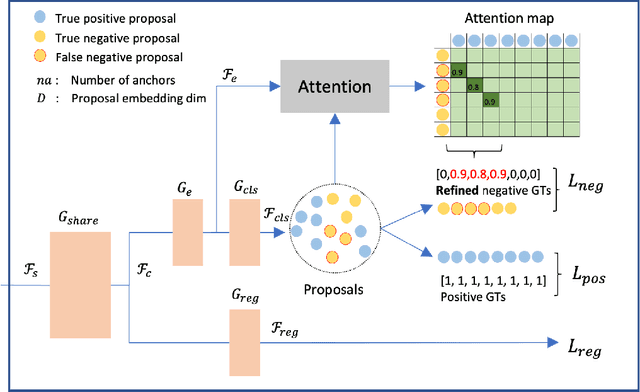
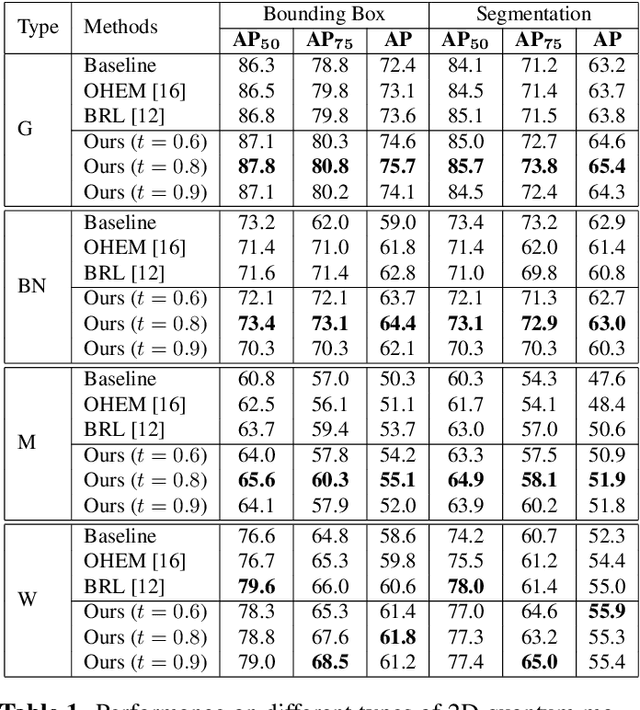
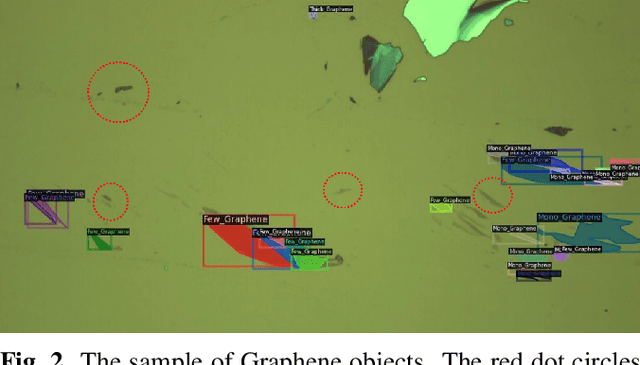
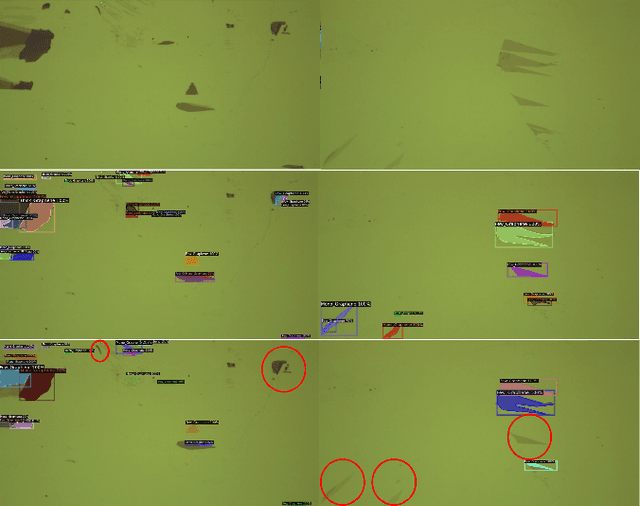
In quantum machine field, detecting two-dimensional (2D) materials in Silicon chips is one of the most critical problems. Instance segmentation can be considered as a potential approach to solve this problem. However, similar to other deep learning methods, the instance segmentation requires a large scale training dataset and high quality annotation in order to achieve a considerable performance. In practice, preparing the training dataset is a challenge since annotators have to deal with a large image, e.g 2K resolution, and extremely dense objects in this problem. In this work, we present a novel method to tackle the problem of missing annotation in instance segmentation in 2D quantum material identification. We propose a new mechanism for automatically detecting false negative objects and an attention based loss strategy to reduce the negative impact of these objects contributing to the overall loss function. We experiment on the 2D material detection datasets, and the experiments show our method outperforms previous works.