 Add to Chrome
 Add to Firefox
 Add to Edge
Advancing Multi-Robot Networks via MLLM-Driven Sensing, Communication, and Computation: A Comprehensive Survey
Mar 31, 2026
Imagine advanced humanoid robots, powered by multimodal large language models (MLLMs), coordinating missions across industries like warehouse logistics, manufacturing, and safety rescue. While individual robots show local autonomy, realistic tasks demand coordination among multiple agents sharing vast streams of sensor data. Communication is indispensable, yet transmitting comprehensive data can overwhelm networks, especially when a system-level orchestrator or cloud-based MLLM fuses multimodal inputs for route planning or anomaly detection. These tasks are often initiated by high-level natural language instructions. This intent serves as a filter for resource optimization: by understanding the goal via MLLMs, the system can selectively activate relevant sensing modalities, dynamically allocate bandwidth, and determine computation placement. Thus, R2X is fundamentally an intent-to-resource orchestration problem where sensing, communication, and computation are jointly optimized to maximize task-level success under resource constraints. This survey examines how integrated design paves the way for multi-robot coordination under MLLM guidance. We review state-of-the-art sensing modalities, communication strategies, and computing approaches, highlighting how reasoning is split between on-device models and powerful edge/cloud servers. We present four end-to-end demonstrations (sense -> communicate -> compute -> act): (i) digital-twin warehouse navigation with predictive link context, (ii) mobility-driven proactive MCS control, (iii) a FollowMe robot with a semantic-sensing switch, and (iv) real-hardware open-vocabulary trash sorting via edge-assisted MLLM grounding. We emphasize system-level metrics -- payload, latency, and success -- to show why R2X orchestration outperforms purely on-device baselines.

On Task-Relevant Loss Functions in Meta-Reinforcement Learning and Online LQR
Dec 09, 2023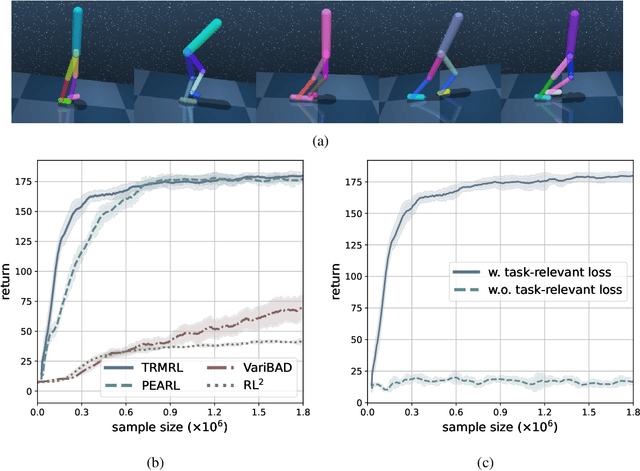
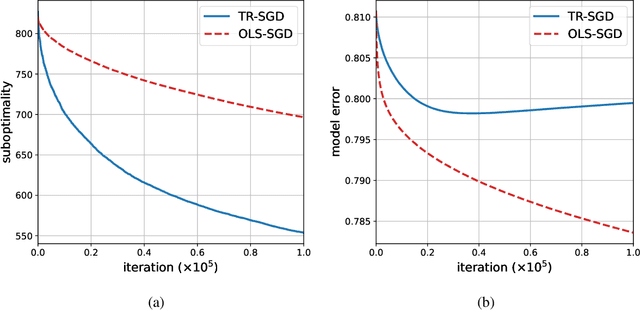
Designing a competent meta-reinforcement learning (meta-RL) algorithm in terms of data usage remains a central challenge to be tackled for its successful real-world applications. In this paper, we propose a sample-efficient meta-RL algorithm that learns a model of the system or environment at hand in a task-directed manner. As opposed to the standard model-based approaches to meta-RL, our method exploits the value information in order to rapidly capture the decision-critical part of the environment. The key component of our method is the loss function for learning the task inference module and the system model that systematically couples the model discrepancy and the value estimate, thereby facilitating the learning of the policy and the task inference module with a significantly smaller amount of data compared to the existing meta-RL algorithms. The idea is also extended to a non-meta-RL setting, namely an online linear quadratic regulator (LQR) problem, where our method can be simplified to reveal the essence of the strategy. The proposed method is evaluated in high-dimensional robotic control and online LQR problems, empirically verifying its effectiveness in extracting information indispensable for solving the tasks from observations in a sample efficient manner.
FiFo: Fishbone Forwarding in Massive IoT Networks
Nov 02, 2022Massive Internet of Things (IoT) networks have a wide range of applications, including but not limited to the rapid delivery of emergency and disaster messages. Although various benchmark algorithms have been developed to date for message delivery in such applications, they pose several practical challenges such as insufficient network coverage and/or highly redundant transmissions to expand the coverage area, resulting in considerable energy consumption for each IoT device. To overcome this problem, we first characterize a new performance metric, forwarding efficiency, which is defined as the ratio of the coverage probability to the average number of transmissions per device, to evaluate the data dissemination performance more appropriately. Then, we propose a novel and effective forwarding method, fishbone forwarding (FiFo), which aims to improve the forwarding efficiency with acceptable computational complexity. Our FiFo method completes two tasks: 1) it clusters devices based on the unweighted pair group method with the arithmetic average; and 2) it creates the main axis and sub axes of each cluster using both the expectation-maximization algorithm for the Gaussian mixture model and principal component analysis. We demonstrate the superiority of FiFo by using a real-world dataset. Through intensive and comprehensive simulations, we show that the proposed FiFo method outperforms benchmark algorithms in terms of the forwarding efficiency.