 Add to Chrome
 Add to Firefox
 Add to Edge
Possible or Definite? A Benchmark for Evaluating Diagnostic Uncertainty Preservation in Clinical Text
Jun 16, 2026
Large language models (LLMs) are increasingly used for clinical text tasks such as summarization and revision. While most studies evaluate the fluency and coherence of LLM-generated text, whether LLMs correctly preserve diagnostic uncertainty remains underexplored. In clinical practice, phrases such as ``possible pneumonia'' communicate the strength of available evidence and directly guide decisions about follow-up testing and treatment. Altering these uncertainty expressions can change the clinical meaning entirely. In this paper, we systematically evaluated this problem in two steps. First, we constructed a benchmark of 1,200 clinical documents with 9,184 uncertainty annotations across five levels. Second, we evaluated three LLMs on this benchmark. Our results show that (1) LLMs preserve the original uncertainty cues poorly, often less than half the time; (2) LLMs struggle with nuanced distinctions between adjacent levels. This work reveals a failure mode not captured by standard evaluation metrics and provides implications for the safe deployment of LLMs in clinical workflows.

An ENAS Based Approach for Constructing Deep Learning Models for Breast Cancer Recognition from Ultrasound Images
May 27, 2020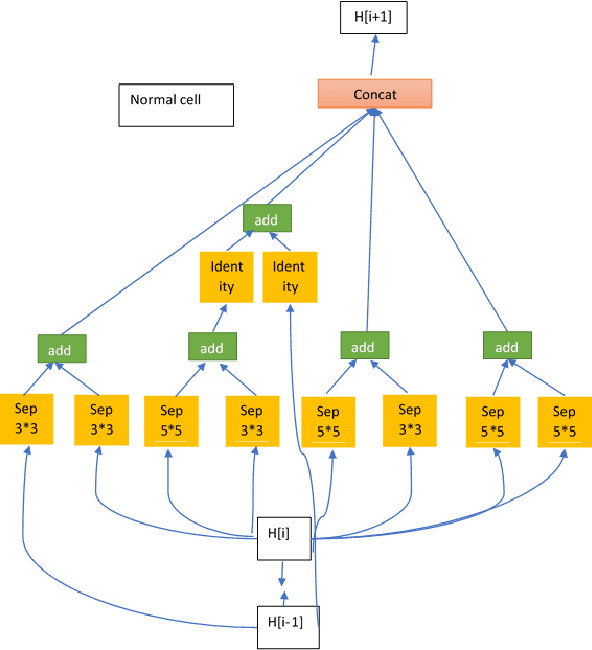
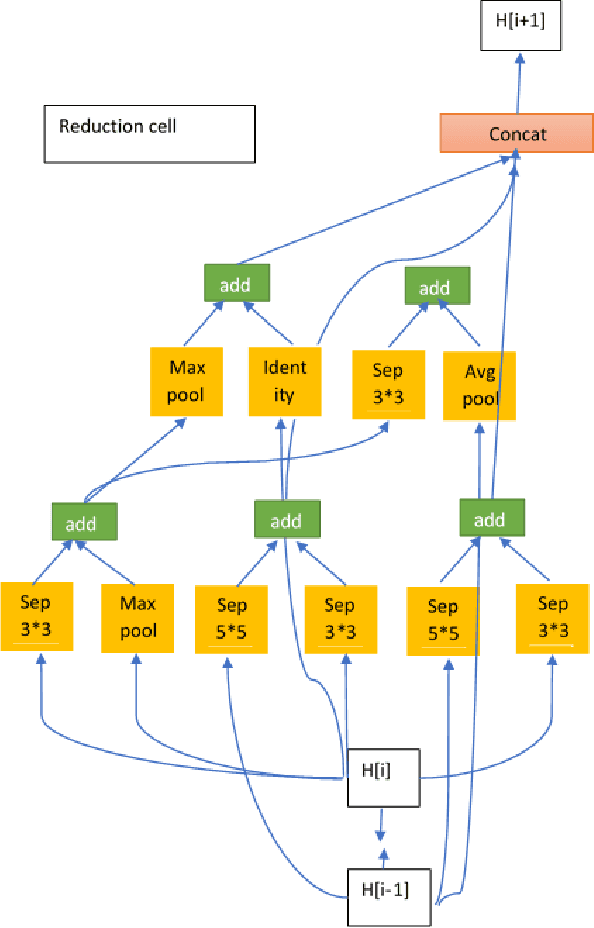
Deep Convolutional Neural Networks (CNN) provides an "end-to-end" solution for image pattern recognition with impressive performance in many areas of application including medical imaging. Most CNN models of high performance use hand-crafted network architectures that require expertise in CNNs to utilise their potentials. In this paper, we applied the Efficient Neural Architecture Search (ENAS) method to find optimal CNN architectures for classifying breast lesions from ultrasound (US) images. Our empirical study with a dataset of 524 US images shows that the optimal models generated by using ENAS achieve an average accuracy of 89.3%, surpassing other hand-crafted alternatives. Furthermore, the models are simpler in complexity and more efficient. Our study demonstrates that the ENAS approach to CNN model design is a promising direction for classifying ultrasound images of breast lesions.