 Add to Chrome
 Add to Firefox
 Add to Edge
M-DAIGT: A Shared Task on Multi-Domain Detection of AI-Generated Text
Nov 14, 2025
The generation of highly fluent text by Large Language Models (LLMs) poses a significant challenge to information integrity and academic research. In this paper, we introduce the Multi-Domain Detection of AI-Generated Text (M-DAIGT) shared task, which focuses on detecting AI-generated text across multiple domains, particularly in news articles and academic writing. M-DAIGT comprises two binary classification subtasks: News Article Detection (NAD) (Subtask 1) and Academic Writing Detection (AWD) (Subtask 2). To support this task, we developed and released a new large-scale benchmark dataset of 30,000 samples, balanced between human-written and AI-generated texts. The AI-generated content was produced using a variety of modern LLMs (e.g., GPT-4, Claude) and diverse prompting strategies. A total of 46 unique teams registered for the shared task, of which four teams submitted final results. All four teams participated in both Subtask 1 and Subtask 2. We describe the methods employed by these participating teams and briefly discuss future directions for M-DAIGT.

STRisk: A Socio-Technical Approach to Assess Hacking Breaches Risk
Nov 19, 2024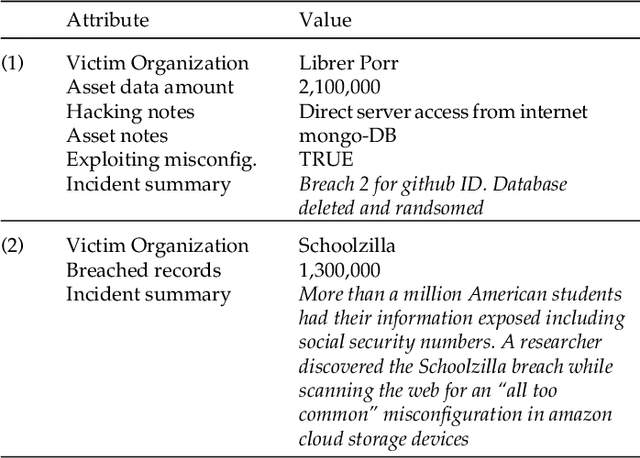
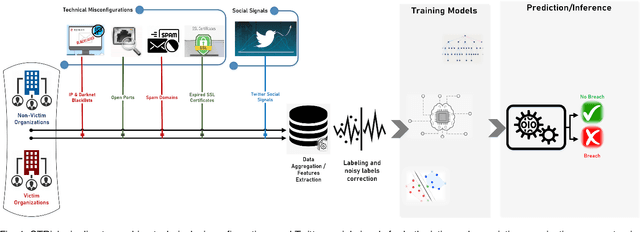
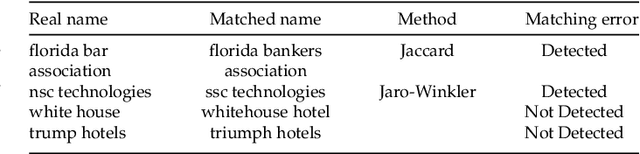
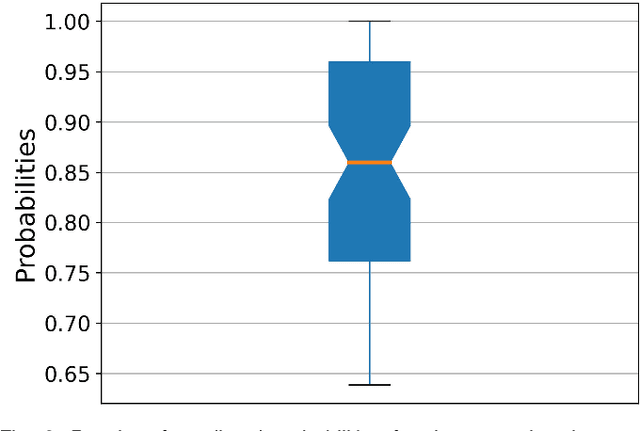
Data breaches have begun to take on new dimensions and their prediction is becoming of great importance to organizations. Prior work has addressed this issue mainly from a technical perspective and neglected other interfering aspects such as the social media dimension. To fill this gap, we propose STRisk which is a predictive system where we expand the scope of the prediction task by bringing into play the social media dimension. We study over 3800 US organizations including both victim and non-victim organizations. For each organization, we design a profile composed of a variety of externally measured technical indicators and social factors. In addition, to account for unreported incidents, we consider the non-victim sample to be noisy and propose a noise correction approach to correct mislabeled organizations. We then build several machine learning models to predict whether an organization is exposed to experience a hacking breach. By exploiting both technical and social features, we achieve a Area Under Curve (AUC) score exceeding 98%, which is 12% higher than the AUC achieved using only technical features. Furthermore, our feature importance analysis reveals that open ports and expired certificates are the best technical predictors, while spreadability and agreeability are the best social predictors.