 Add to Chrome
 Add to Firefox
 Add to Edge
EdgeLPR: On the Deep Neural Network trade-off between Precision and Performance in LiDAR Place Recognition
May 04, 2026
Place recognition is essential for long-term autonomous navigation, enabling loop closure and consistent mapping. Although deep learning has improved performance, deploying such models on resource-constrained platforms remains challenging. This work explores efficient LiDAR-based place recognition for EdgeAI by leveraging Bird's Eye View representations to enable lightweight image-based networks. We benchmark representative architectures without aggregation heads using a unified descriptor scheme based on global pooling and linear projection, and evaluate performance under FP32, FP16, and INT8 quantization. Experiments reveal trade-offs between accuracy, robustness, and efficiency: FP16 matches FP32 with lower cost, while INT8 introduces architecture-dependent degradation. Overall, the presented results are a strong basis for future research on 'use-case'-aware quantisation of Neural Networks for Edge deployment.

Noise-reducing attention cross fusion learning transformer for histological image classification of osteosarcoma
Apr 29, 2022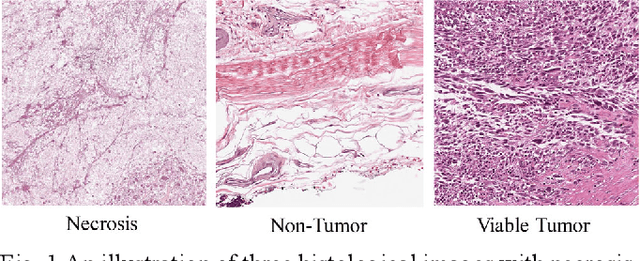
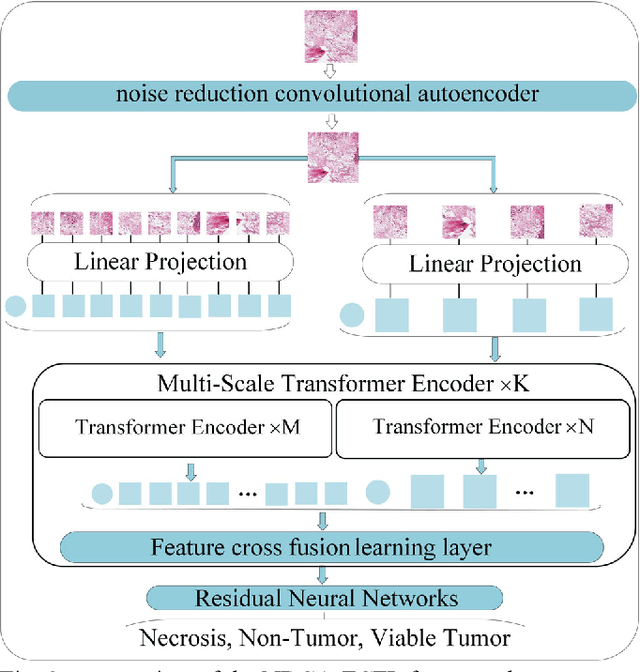
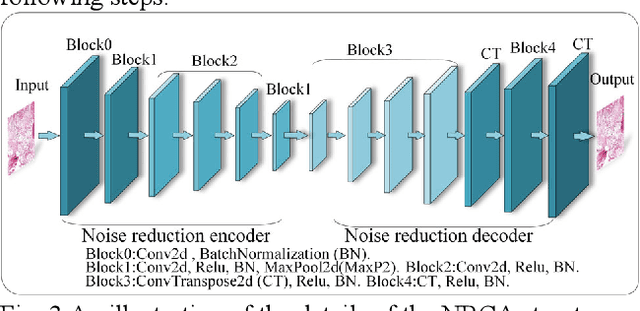
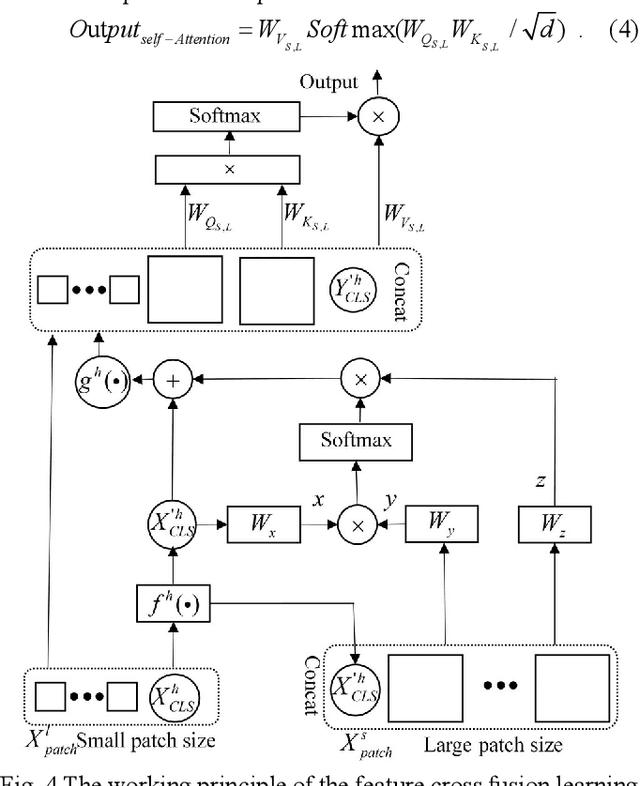
The degree of malignancy of osteosarcoma and its tendency to metastasize/spread mainly depend on the pathological grade (determined by observing the morphology of the tumor under a microscope). The purpose of this study is to use artificial intelligence to classify osteosarcoma histological images and to assess tumor survival and necrosis, which will help doctors reduce their workload, improve the accuracy of osteosarcoma cancer detection, and make a better prognosis for patients. The study proposes a typical transformer image classification framework by integrating noise reduction convolutional autoencoder and feature cross fusion learning (NRCA-FCFL) to classify osteosarcoma histological images. Noise reduction convolutional autoencoder could well denoise histological images of osteosarcoma, resulting in more pure images for osteosarcoma classification. Moreover, we introduce feature cross fusion learning, which integrates two scale image patches, to sufficiently explore their interactions by using additional classification tokens. As a result, a refined fusion feature is generated, which is fed to the residual neural network for label predictions. We conduct extensive experiments to evaluate the performance of the proposed approach. The experimental results demonstrate that our method outperforms the traditional and deep learning approaches on various evaluation metrics, with an accuracy of 99.17% to support osteosarcoma diagnosis.