 Add to Chrome
 Add to Firefox
 Add to Edge
Security Risks in Tool-Enabled AI Agents: A Systematic Analysis of Privileged Execution Environments
May 10, 2026
Tool-enabled AI agents are increasingly deployed in cloud-hosted environments and offered as services, where they perform side-effecting operations through privileged tools within execution environments. While such agents enable powerful automation, the security implications of hosting autonomous agents in privileged execution environments are not yet fully explored. This paper presents a structured analysis of security risks associated with cloud-hosted AI agents. We introduce a taxonomy of risk categories, illustrate these risks through three representative agent scenarios, and discuss mitigation strategies along with their tradeoffs. A small controlled experiment empirically illustrates risk manifestation and the effect of lightweight mitigations in this setup. Our analysis suggests that many risks in autonomous cloud agents arise not from novel vulnerabilities, but from over-privileged tools, capability-intent mismatches, and ambient authority leakage in execution environments. Based on these findings, we derive practical design guidelines for deploying AI agents in the cloud more securely.

Time Series Deinterleaving of DNS Traffic
Jul 16, 2018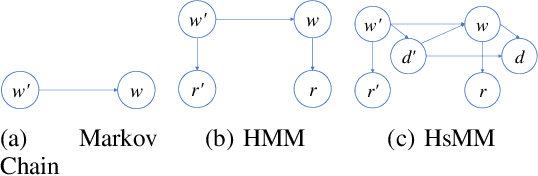
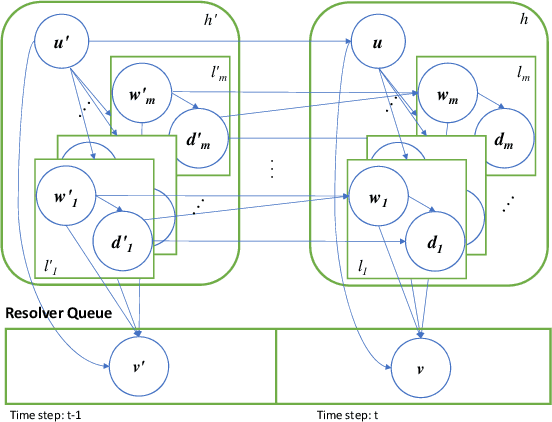
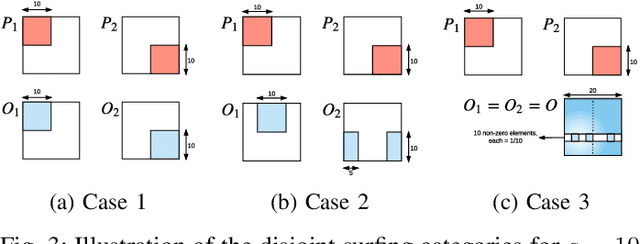

Stream deinterleaving is an important problem with various applications in the cybersecurity domain. In this paper, we consider the specific problem of deinterleaving DNS data streams using machine-learning techniques, with the objective of automating the extraction of malware domain sequences. We first develop a generative model for user request generation and DNS stream interleaving. Based on these we evaluate various inference strategies for deinterleaving including augmented HMMs and LSTMs on synthetic datasets. Our results demonstrate that state-of-the-art LSTMs outperform more traditional augmented HMMs in this application domain.
R2N2: Residual Recurrent Neural Networks for Multivariate Time Series Forecasting
Sep 10, 2017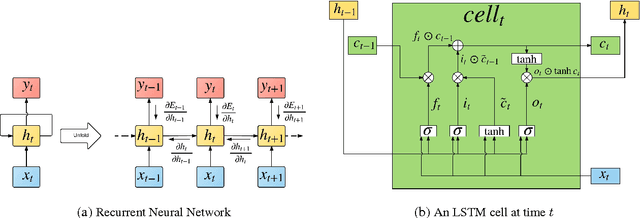
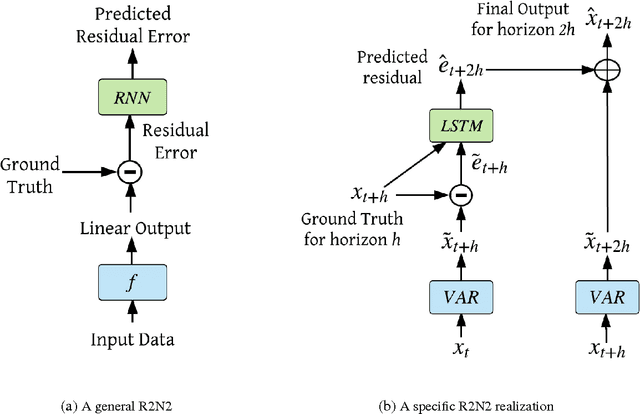
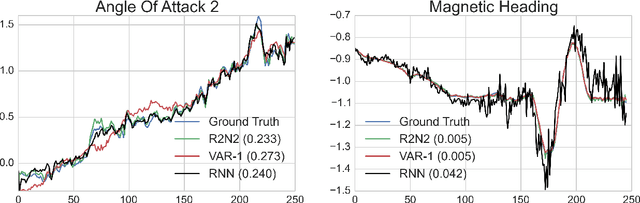
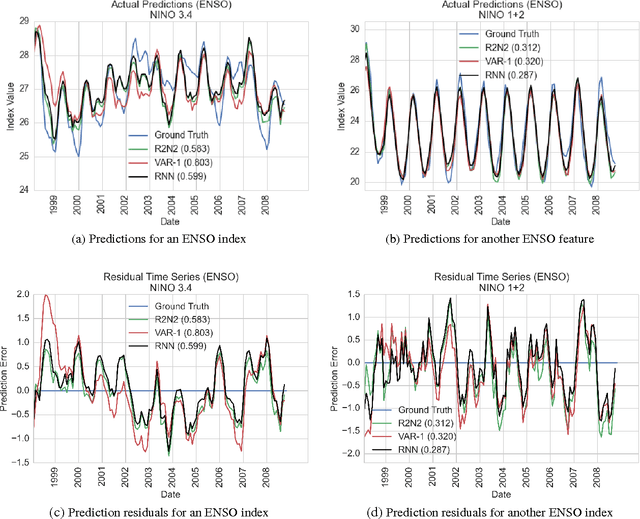
Multivariate time-series modeling and forecasting is an important problem with numerous applications. Traditional approaches such as VAR (vector auto-regressive) models and more recent approaches such as RNNs (recurrent neural networks) are indispensable tools in modeling time-series data. In many multivariate time series modeling problems, there is usually a significant linear dependency component, for which VARs are suitable, and a nonlinear component, for which RNNs are suitable. Modeling such times series with only VAR or only RNNs can lead to poor predictive performance or complex models with large training times. In this work, we propose a hybrid model called R2N2 (Residual RNN), which first models the time series with a simple linear model (like VAR) and then models its residual errors using RNNs. R2N2s can be trained using existing algorithms for VARs and RNNs. Through an extensive empirical evaluation on two real world datasets (aviation and climate domains), we show that R2N2 is competitive, usually better than VAR or RNN, used alone. We also show that R2N2 is faster to train as compared to an RNN, while requiring less number of hidden units.