 Add to Chrome
 Add to Firefox
 Add to Edge
AnchorFold: A Focus-Then-Fold Framework via Recursive Attention Propagation for Efficient Multi-Vector Visual Document Retrieval
Aug 09, 2026
Multi-vector vision-language retrievers enable fine-grained Visual Document Retrieval (VDR) through late interaction, but storing and scoring hundreds of visual patch embeddings per page incurs substantial overhead. Existing training-free methods rely on pruning or merging: pruning degrades sharply under aggressive compression, whereas merging does not explicitly prioritize important regions when forming representatives. We introduce AnchorFold, a training-free focus-then-fold framework for document-side index compression. AnchorFold applies Recursive Attention Propagation over visual self-attention graphs, performing multi-step propagation within each attention head and integrating scores across heads and layers. The focus stage selects the highest-centrality tokens as anchors. The fold stage assigns remaining tokens to their most similar anchors in the normalized retrieval space and summarizes each anchor-centered group through centrality-weighted aggregation. This preserves non-anchor contributions while concentrating capacity on structurally important tokens. Across ViDoRe v1/v2 and REAL-MM-RAG with three diverse retrieval backbones, AnchorFold consistently outperforms all evaluated training-free baselines at $γ\leq 0.20$. On ViDoRe v1/v2, it retains 98.3% of full-index NDCG@5 on average at $5\times$ compression, achieving near-lossless compression, and 92.4% at $20\times$ compression.

WikiLink: an encyclopedia-based semantic network for design innovation
Aug 30, 2022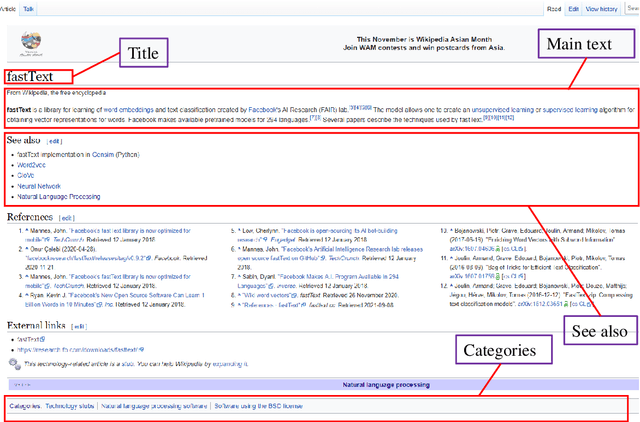
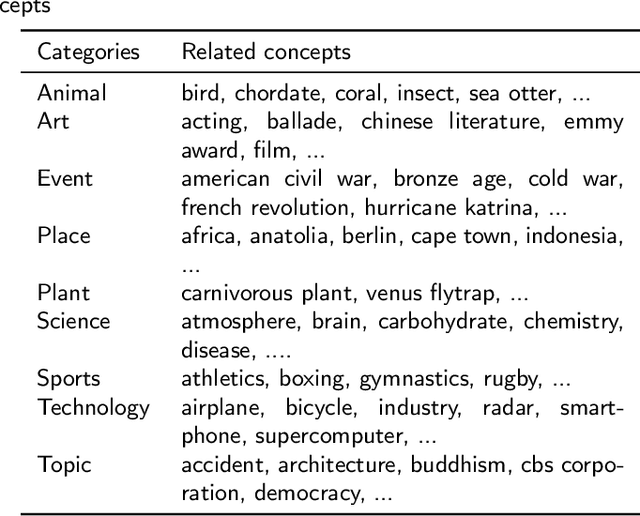
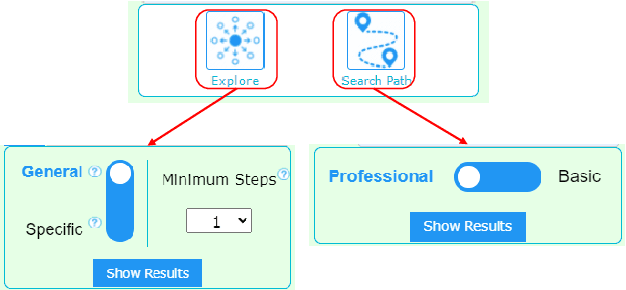
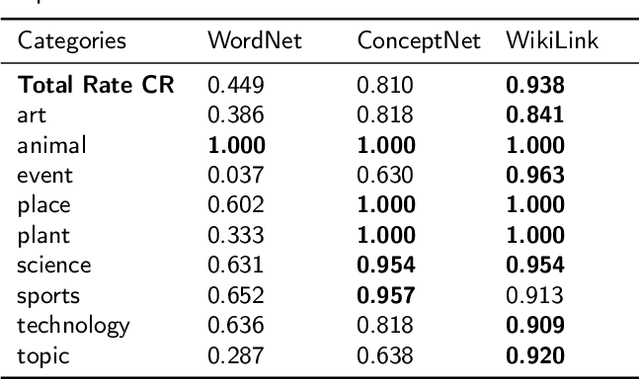
Data-driven design and innovation is a process to reuse and provide valuable and useful information. However, existing semantic networks for design innovation is built on data source restricted to technological and scientific information. Besides, existing studies build the edges of a semantic network only on either statistical or semantic relationships, which is less likely to make full use of the benefits from both types of relationships and discover implicit knowledge for design innovation. Therefore, we constructed WikiLink, a semantic network based on Wikipedia. Combined weight which fuses both the statistic and semantic weights between concepts is introduced in WikiLink, and four algorithms are developed for inspiring new ideas. Evaluation experiments are undertaken and results show that the network is characterised by high coverage of terms, relationships and disciplines, which proves the network's effectiveness and usefulness. Then a demonstration and case study results indicate that WikiLink can serve as an idea generation tool for innovation in conceptual design. The source code of WikiLink and the backend data are provided open-source for more users to explore and build on.
Patent-KG: A Patent Knowledge Graph for Engineering Design
Sep 06, 2021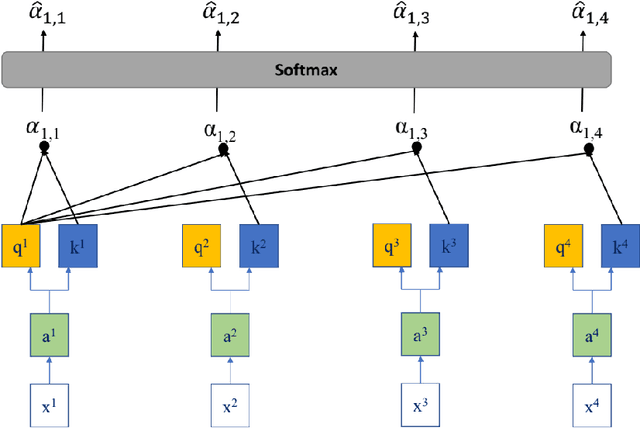
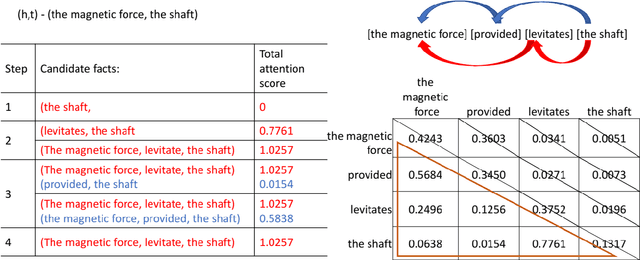
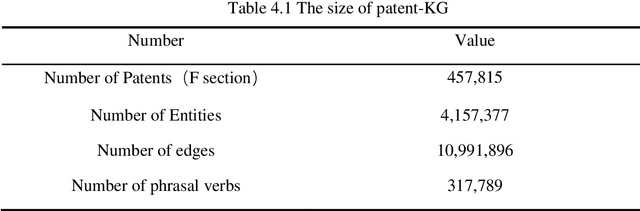
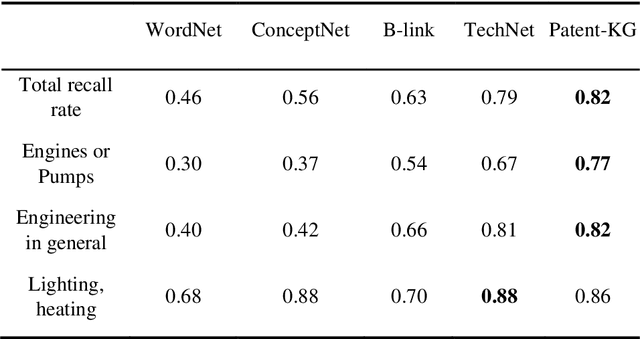
To facilitate the knowledge reuse in engineering design, several dataset approaches have been proposed and applied by designers. This paper builds a patent-based knowledge graph, patent-KG, to represent the knowledge facts in patents for engineering design. The arising patent-KG approach proposes a new unsupervised mechanism to extract the knowledge facts in patent, by searching the attention graph in language models. This method avoids using expensive labelled data in supervised learning or listing complex syntactic rules in rule-based extraction. The extracted entities are compared with other benchmarks and shows a higher coverage of engineering words. The extracted relationships are also compared with other benchmarks, and the result shows meaningful advantages.