 Add to Chrome
 Add to Firefox
 Add to Edge
Dual-Selective Network for Domain-Incremental Change Detection
Jul 02, 2026
Domain-incremental change detection (DICD) continuously adapts models to new geographic domains while preserving prior knowledge. However, a structural mismatch exists: the label space remains fixed while domain characteristics vary drastically. Consequently, incremental models struggle to maintain stable spatial change representations across domains. Existing strategies, such as replay-based or regularization-based methods, often fail to scale to long domain sequences, leading to knowledge degradation or increased computational cost. We propose Dual-Selective Incremental Network (DSINet), a unified framework built on visual state space models. DSINet leverages Mamba's input-dependent selective mechanism through a selective spatial state unit (S3U). This unit preserves stable spatial change structures while filtering domain-specific variations during feature propagation. As a result, spatial representations remain stable across domains, preventing the accumulation of feature confusion over incremental steps. Additionally, we employ a concentration-balanced distillation (CBD) strategy to stabilize knowledge transfer across domains. It balances hardness and confidence concentration effects during incremental updates. This ensures reliable probability mass allocation and prevents over-smoothing or mode collapse during distillation. Together, these mechanisms maintain stable learning dynamics throughout incremental stages. Experimental results demonstrate that DSINet mitigates knowledge degradation across long domain sequences while maintaining the linear computational efficiency of state space models.

Security Consideration For Deep Learning-Based Image Forensics
Apr 03, 2018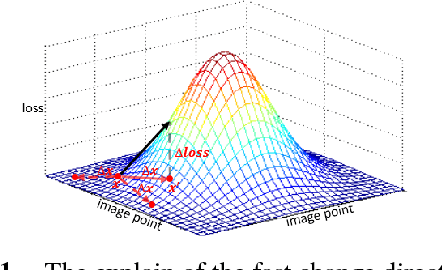

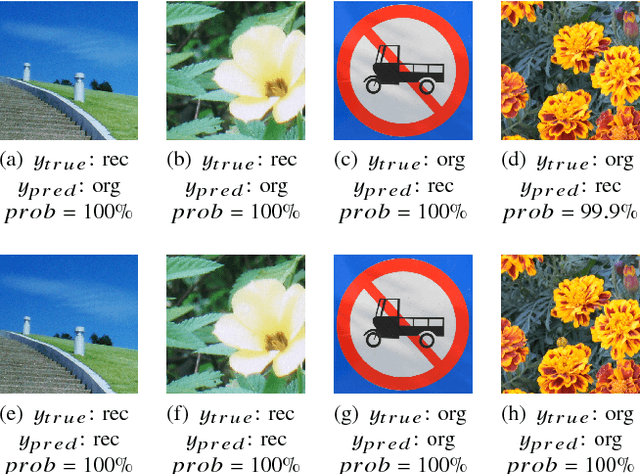
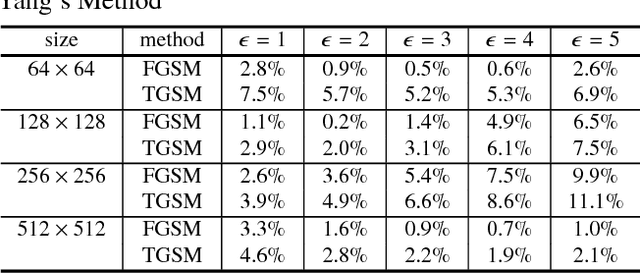
Recently, image forensics community has paied attention to the research on the design of effective algorithms based on deep learning technology and facts proved that combining the domain knowledge of image forensics and deep learning would achieve more robust and better performance than the traditional schemes. Instead of improving it, in this paper, the safety of deep learning based methods in the field of image forensics is taken into account. To the best of our knowledge, this is a first work focusing on this topic. Specifically, we experimentally find that the method using deep learning would fail when adding the slight noise into the images (adversarial images). Furthermore, two kinds of strategys are proposed to enforce security of deep learning-based method. Firstly, an extra penalty term to the loss function is added, which is referred to the 2-norm of the gradient of the loss with respect to the input images, and then an novel training method are adopt to train the model by fusing the normal and adversarial images. Experimental results show that the proposed algorithm can achieve good performance even in the case of adversarial images and provide a safety consideration for deep learning-based image forensics