 Add to Chrome
 Add to Firefox
 Add to Edge
Robust Multi-view Clustering against Imperfect Information
Jun 03, 2026
Real-world multi-view data always suffer from imperfect information problem, where the view-specific observations are absent (i.e., Incomplete Views, IV) and cross-view correspondences are mismatched (i.e., Noisy Correspondences, NC) for certain instances. As a remedy, numerous IV- and NC-oriented multi-view clustering (MvC) methods have been proposed, which however require either reliable correspondences or sufficiently complete instances, thus stopping short of addressing the imperfect information problem. In contrast, we observe that both IV and NC challenges originate from the same issue of imperfect cross-view counterpart information, where the counterpart of an anchor instance in another view might be either unavailable or unreliable. Based on the observation, we propose a novel robust MvC framework, termed Posterior-guided Latent Counterpart Inference (PLCI), which could handle both IV and NC in a unified manner. Specifically, PLCI formulates the desired cross-view counterpart of each anchor instance as a latent variable, and integrates both instance-level reliability and prototype-level semantic transport to infer the posterior distribution of the latent counterpart. Extensive experiments on six widely-used multi-view datasets against 10 state-of-the-art MvC methods demonstrate the effectiveness of PLCI for tackling the imperfect information problem. The code will be released upon acceptance.

ARK: A Dual-Axis Multimodal Retrieval Benchmark along Reasoning and Knowledge
Feb 10, 2026Existing multimodal retrieval benchmarks largely emphasize semantic matching on daily-life images and offer limited diagnostics of professional knowledge and complex reasoning. To address this gap, we introduce ARK, a benchmark designed to analyze multimodal retrieval from two complementary perspectives: (i) knowledge domains (five domains with 17 subtypes), which characterize the content and expertise retrieval relies on, and (ii) reasoning skills (six categories), which characterize the type of inference over multimodal evidence required to identify the correct candidate. Specifically, ARK evaluates retrieval with both unimodal and multimodal queries and candidates, covering 16 heterogeneous visual data types. To avoid shortcut matching during evaluation, most queries are paired with targeted hard negatives that require multi-step reasoning. We evaluate 23 representative text-based and multimodal retrievers on ARK and observe a pronounced gap between knowledge-intensive and reasoning-intensive retrieval, with fine-grained visual and spatial reasoning emerging as persistent bottlenecks. We further show that simple enhancements such as re-ranking and rewriting yield consistent improvements, but substantial headroom remains.
Review of deep learning models for crypto price prediction: implementation and evaluation
May 19, 2024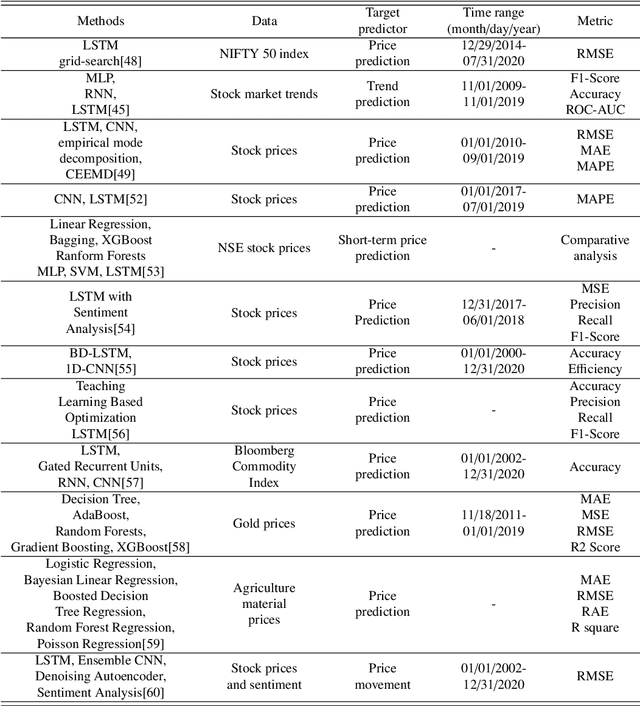
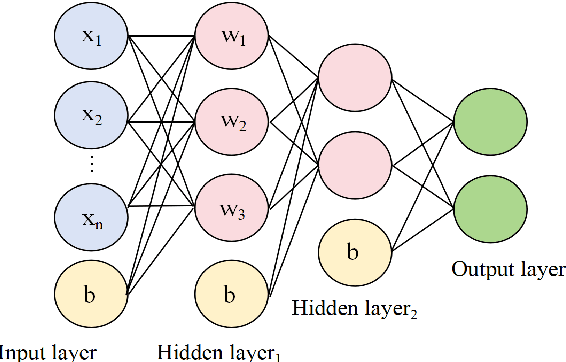
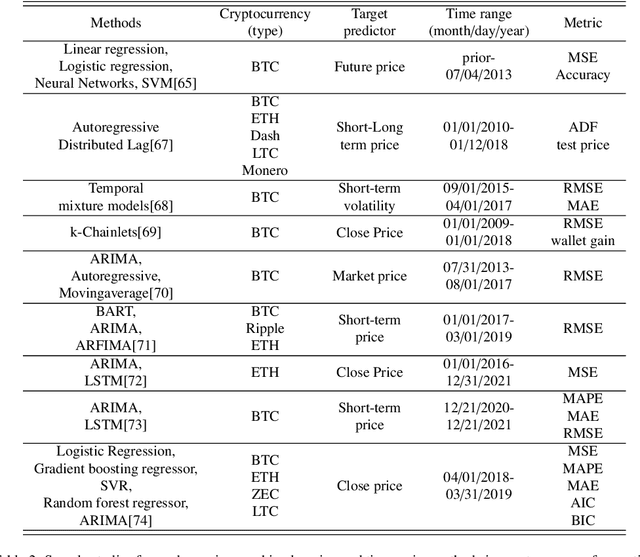
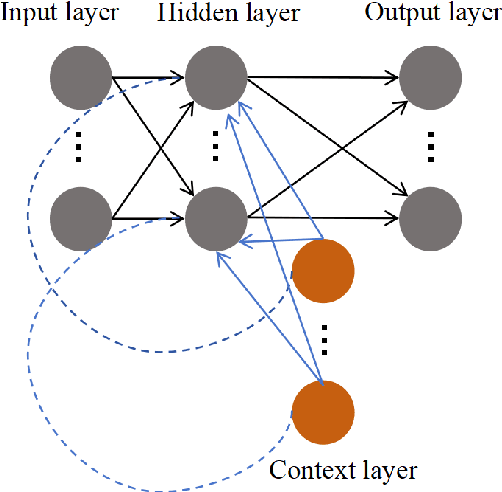
There has been much interest in accurate cryptocurrency price forecast models by investors and researchers. Deep Learning models are prominent machine learning techniques that have transformed various fields and have shown potential for finance and economics. Although various deep learning models have been explored for cryptocurrency price forecasting, it is not clear which models are suitable due to high market volatility. In this study, we review the literature about deep learning for cryptocurrency price forecasting and evaluate novel deep learning models for cryptocurrency stock price prediction. Our deep learning models include variants of long short-term memory (LSTM) recurrent neural networks, variants of convolutional neural networks (CNNs), and the Transformer model. We evaluate univariate and multivariate approaches for multi-step ahead predicting of cryptocurrencies close-price. Our results show that the univariate LSTM model variants perform best for cryptocurrency predictions. We also carry out volatility analysis on the four cryptocurrencies which reveals significant fluctuations in their prices throughout the COVID-19 pandemic. Additionally, we investigate the prediction accuracy of two scenarios identified by different training sets for the models. First, we use the pre-COVID-19 datasets to model cryptocurrency close-price forecasting during the early period of COVID-19. Secondly, we utilise data from the COVID-19 period to predict prices for 2023 to 2024.