 Add to Chrome
 Add to Firefox
 Add to Edge
Same Question, Different Answer? Measuring and Mitigating Prompt Privilege for Equitable AI Access
Aug 09, 2026
Large language models (LLMs) are increasingly integrated into healthcare, education, public services, and everyday decision making. They should provide comparable assistance regardless of a user's literacy, communication style, or prompt-engineering expertise. However, existing research on prompt robustness primarily focuses on adversarial attacks, prompt injection, and prompt optimization, while overlooking whether semantically equivalent requests receive different responses simply because they are phrased differently. We refer to this accessibility challenge as "Prompt Privilege": users with greater prompting expertise systematically obtain better model performance despite expressing the same underlying intent. To address this problem, we present a unified framework for measuring and mitigating accessibility disparities in LLM interactions. We introduce Prompt Equity Score (PES), a quantitative metric for evaluating performance consistency across user populations, and Prompt Equity Transformer (PET), an LLM-based agent that automatically transforms user requests into semantically equivalent, accessibility-oriented prompts while preserving their intent. PET shifts prompt optimization from the user to the AI system, functioning as an intelligent accessibility layer between users and foundation models. Experiments on the MedQA benchmark demonstrate measurable prompt privilege, with statistically significant performance disparities between low-literacy and expert-prompting cohorts. Applying PET eliminates these disparities while preserving semantic fidelity, demonstrating that accessibility-oriented prompt normalization can improve equitable AI access. By introducing prompt privilege as a new dimension of AI accessibility and PET as a practical solution, this work advances system-centered accessibility and provides a foundation for more fair, trustworthy, and inclusive AI systems.

DriftGuard: Safety-Aware Multi-Monitor Detection and Selective Adaptation for Evolving Toxicity Moderation
Jun 27, 2026Automated toxicity moderation systems operate in dynamic online environments where harmful behavior evolves through coded language, shifting targets, and strategic adaptation to enforcement. Existing drift detection methods often focus on global distributional change, but such signals may miss safety-relevant shifts that emerge in localized harm subspaces or high-risk model-error regions. This paper introduces DriftGuard, a safety-aware adaptive moderation framework that combines multi-monitor drift detection with selective model updating. The framework tracks global text drift, identity-harm drift, model uncertainty, toxic-risk drift, and false-negative-risk drift. When safety-relevant change is detected, the model is updated using a hard-mix adaptation set that prioritizes likely false negatives, identity-related high-risk examples, false-positive-risk examples, and uncertain boundary cases. Experiments on Civil Comments temporal shift and Jigsaw-to-DynaHate cross-dataset shift show that safety-aware monitors detect risks missed by global drift alone. Hard-mix adaptation improves toxic recall and accuracy over no-update and random-balanced baselines, raising toxic recall to 0.8777 on Civil Comments and from 0.7107 to 0.8523 on DynaHate. Bootstrap analysis further shows stable DynaHate safety gains, with toxic recall increasing by 0.1418 and false-negative prevalence decreasing by 0.0781. Overall, DriftGuard links safety-aware drift detection to targeted, lightweight model updating for more robust adaptive toxicity moderation.
The Efficiency Frontier: A Unified Framework for Cost-Performance Optimization in LLM Context Management
May 21, 2026Large language models (LLMs) increasingly rely on long-context processing, but expanding context windows introduces substantial computational and financial costs. Existing context reduction approaches, including retrieval and memory compression methods, are typically evaluated using performance and efficiency metrics independently, limiting systematic comparison and deployment-aware decision-making. This paper introduces The Efficiency Frontier, a unified framework for cost-performance optimization in LLM context management. The framework models context strategy selection as a deployment-aware optimization problem that jointly accounts for task performance, token cost, and preprocessing reuse through amortized cost modeling. Unlike existing evaluations that compare methods in isolation, the proposed framework enables decision-oriented analysis of when different context management strategies become preferable under varying operational conditions. Evaluated on 5,000 HotpotQA instances, the framework reveals distinct operational regimes and transition boundaries between retrieval-based and preprocessing-based strategies. Results show that deployment-aware optimization reduces effective token usage by approximately 25% at comparable performance ($F1 \approx 0.78$), while amortized memory compression achieves over 50% lower token cost relative to full-context prompting in higher-performance settings. Overall, the proposed framework provides a principled and practical foundation for evaluating and deploying scalable, efficient, and sustainable LLM systems.
Does Tone Change the Answer? Evaluating Prompt Politeness Effects on Modern LLMs: GPT, Gemini, LLaMA
Dec 14, 2025Prompt engineering has emerged as a critical factor influencing large language model (LLM) performance, yet the impact of pragmatic elements such as linguistic tone and politeness remains underexplored, particularly across different model families. In this work, we propose a systematic evaluation framework to examine how interaction tone affects model accuracy and apply it to three recently released and widely available LLMs: GPT-4o mini (OpenAI), Gemini 2.0 Flash (Google DeepMind), and Llama 4 Scout (Meta). Using the MMMLU benchmark, we evaluate model performance under Very Friendly, Neutral, and Very Rude prompt variants across six tasks spanning STEM and Humanities domains, and analyze pairwise accuracy differences with statistical significance testing. Our results show that tone sensitivity is both model-dependent and domain-specific. Neutral or Very Friendly prompts generally yield higher accuracy than Very Rude prompts, but statistically significant effects appear only in a subset of Humanities tasks, where rude tone reduces accuracy for GPT and Llama, while Gemini remains comparatively tone-insensitive. When performance is aggregated across tasks within each domain, tone effects diminish and largely lose statistical significance. Compared with earlier researches, these findings suggest that dataset scale and coverage materially influence the detection of tone effects. Overall, our study indicates that while interaction tone can matter in specific interpretive settings, modern LLMs are broadly robust to tonal variation in typical mixed-domain use, providing practical guidance for prompt design and model selection in real-world deployments.
Visual-LiDAR Odometry and Mapping with Monocular Scale Correction and Motion Compensation
Apr 18, 2023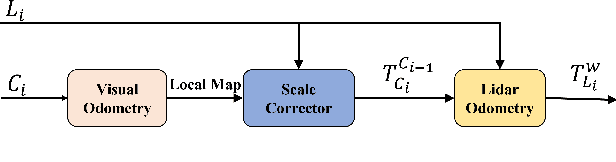
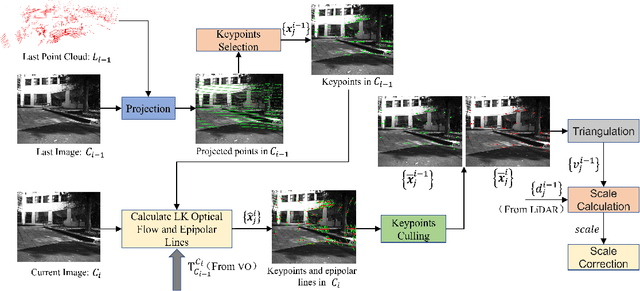
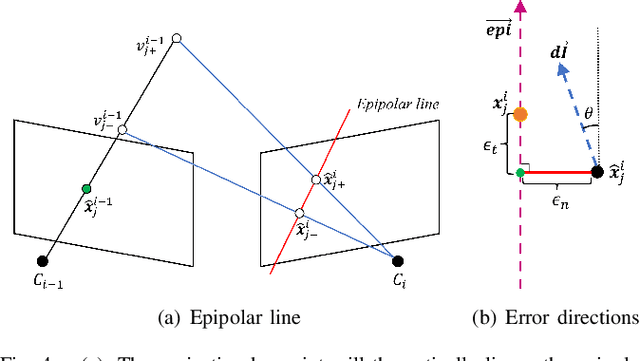
This paper presents a novel visual-LiDAR odometry and mapping method with low-drift characteristics. The proposed method is based on two popular approaches, ORB-SLAM and A-LOAM, with monocular scale correction and visual-assisted LiDAR motion compensation modifications. The scale corrector calculates the proportion between the depth of image keypoints recovered by triangulation and that provided by LiDAR, using an outlier rejection process for accuracy improvement. Concerning LiDAR motion compensation, the visual odometry approach gives the initial guesses of LiDAR motions for better performance. This methodology is not only applicable to high-resolution LiDAR but can also adapt to low-resolution LiDAR. To evaluate the proposed SLAM system's robustness and accuracy, we conducted experiments on the KITTI Odometry and S3E datasets. Experimental results illustrate that our method significantly outperforms standalone ORB-SLAM2 and A-LOAM. Furthermore, regarding the accuracy of visual odometry with scale correction, our method performs similarly to the stereo-mode ORB-SLAM2.