 Add to Chrome
 Add to Firefox
 Add to Edge
How Do Instructions Shape Speech? Cross-Attention Attribution for Style-Captioned Text-to-Speech
Jun 18, 2026
Style-captioned text-to-speech systems use natural language to control voice characteristics, but how individual words influence acoustic output remains unclear. Understanding this is critical for diagnosing failure modes and improving controllability in expressive TTS. We propose cross-attention attribution for speech diffusion models, adapting the DAAM framework to the speech domain for the first time, and apply it to CapSpeech-TTS. Our method extracts per-token heatmaps across 25 layers and 24 ODE steps. We analyze 3,600 (style caption, text transcript) combinations comprising 120 style captions conditioning the generation of 30 text transcripts each, revealing how caption tokens shape waveforms. Results show: (1) style tokens have lower temporal variance than content/function tokens, confirming global conditioning; (2) style attention correlates with F0 and energy; (3) style conditioning peaks in early steps and deep layers; (4) attention entropy reaches its minimum at layer 17, co-occurring with the style importance peak, indicating maximal network selectivity at the most style-critical stage. This is the first study of how natural language influences cross-attention in speech diffusion models

FlowLensing: Simulating Gravitational Lensing with Flow Matching
Oct 09, 2025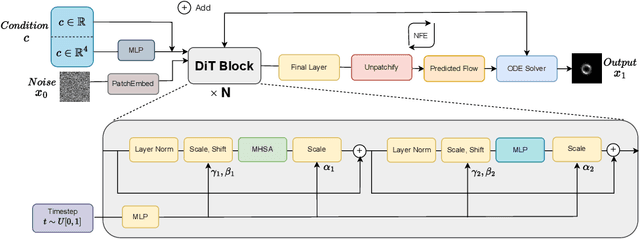
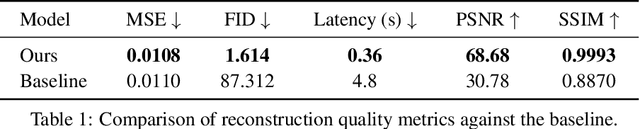

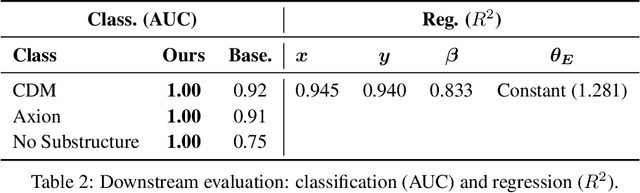
Gravitational lensing is one of the most powerful probes of dark matter, yet creating high-fidelity lensed images at scale remains a bottleneck. Existing tools rely on ray-tracing or forward-modeling pipelines that, while precise, are prohibitively slow. We introduce FlowLensing, a Diffusion Transformer-based compact and efficient flow-matching model for strong gravitational lensing simulation. FlowLensing operates in both discrete and continuous regimes, handling classes such as different dark matter models as well as continuous model parameters ensuring physical consistency. By enabling scalable simulations, our model can advance dark matter studies, specifically for probing dark matter substructure in cosmological surveys. We find that our model achieves a speedup of over 200$\times$ compared to classical simulators for intensive dark matter models, with high fidelity and low inference latency. FlowLensing enables rapid, scalable, and physically consistent image synthesis, offering a practical alternative to traditional forward-modeling pipelines.
SPRING Lab IITM's submission to Low Resource Indic Language Translation Shared Task
Nov 01, 2024We develop a robust translation model for four low-resource Indic languages: Khasi, Mizo, Manipuri, and Assamese. Our approach includes a comprehensive pipeline from data collection and preprocessing to training and evaluation, leveraging data from WMT task datasets, BPCC, PMIndia, and OpenLanguageData. To address the scarcity of bilingual data, we use back-translation techniques on monolingual datasets for Mizo and Khasi, significantly expanding our training corpus. We fine-tune the pre-trained NLLB 3.3B model for Assamese, Mizo, and Manipuri, achieving improved performance over the baseline. For Khasi, which is not supported by the NLLB model, we introduce special tokens and train the model on our Khasi corpus. Our training involves masked language modelling, followed by fine-tuning for English-to-Indic and Indic-to-English translations.