 Add to Chrome
 Add to Firefox
 Add to Edge
Quantum Kernel Estimation for the Discovery of Early Lung Cancer Detection
Aug 19, 2026
Lung cancer screening with low-dose chest computed tomography reduces mortality, but its impact is limited by uptake, adherence, and management challenges. Blood-based cell-free DNA (cfDNA) biomarkers offer a complementary approach, although early detection remains difficult because of lung cancer heterogeneity and high-dimensional, nonlinear molecular signals. We evaluated quantum-classical hybrid machine learning for lung cancer detection using DNA fragmentomics and DNA methylation. After feature selection, models were trained using 20- and 40-feature subsets. Features were encoded into quantum Hilbert space using angle and dense-angle feature maps with multiple entanglement strategies. Fidelity-based quantum kernels were computed with exact statevector simulation and integrated with precomputed-kernel SVM and kernel-PCA logistic regression and compared with an SVM model trained on the original features. This framework enabled systematic evaluation of how encoding and entanglement design affect classification. Across repeated held-out evaluations, quantum-kernel models achieved competitive performance on both datasets. For fragmentomics, several 20-feature configurations improved AUC relative to a classical SVM baseline, suggesting effective capture of nonlinear cfDNA fragmentation structure. For methylation, the classical SVM achieved the highest AUC, although selected quantum models remained competitive and improved specificity in some cases. Increasing features from 20 to 40 did not consistently improve performance and often increased variability. Overall, these results support quantum kernel methods as a promising approach for cfDNA-based lung cancer detection.

A multi-objective optimization framework for on-line ridesharing systems
Dec 07, 2020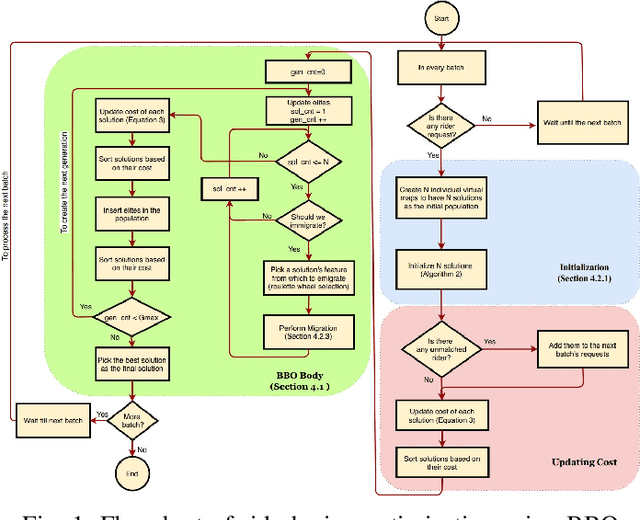
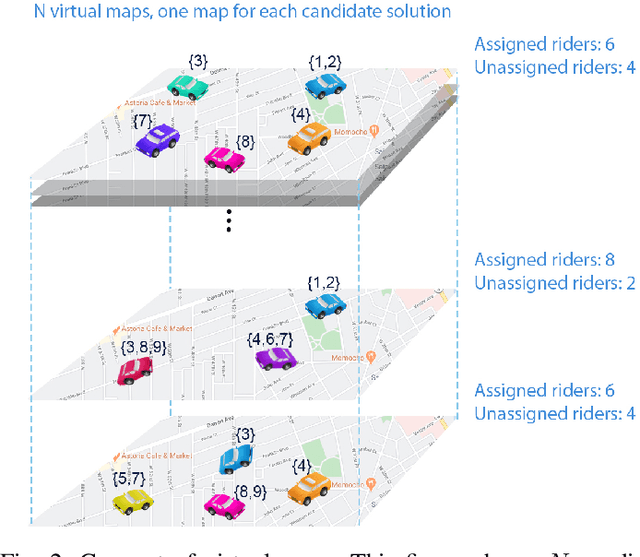
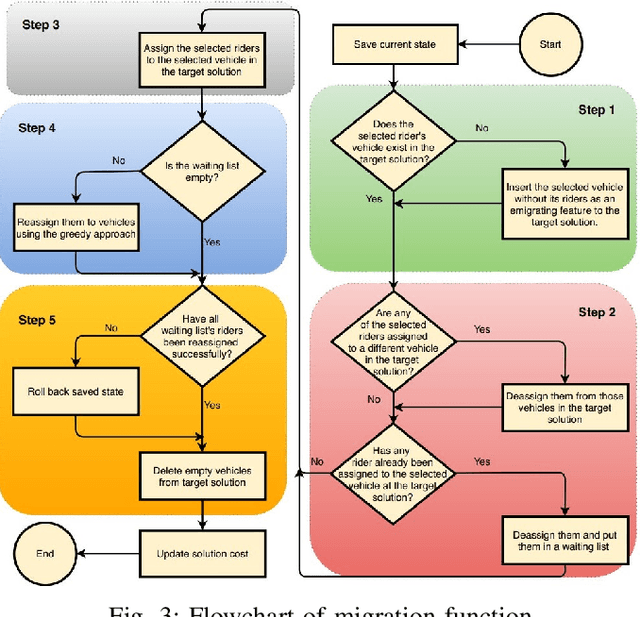
The ultimate goal of ridesharing systems is to matchtravelers who do not have a vehicle with those travelers whowant to share their vehicle. A good match can be found amongthose who have similar itineraries and time schedules. In thisway each rider can be served without any delay and also eachdriver can earn as much as possible without having too muchdeviation from their original route. We propose an algorithmthat leverages biogeography-based optimization to solve a multi-objective optimization problem for online ridesharing. It isnecessary to solve the ridesharing problem as a multi-objectiveproblem since there are some important objectives that must beconsidered simultaneously. We test our algorithm by evaluatingperformance on the Beijing ridesharing dataset. The simulationresults indicate that BBO provides competitive performancerelative to state-of-the-art ridesharing optimization algorithms.