 Add to Chrome
 Add to Firefox
 Add to Edge
Quantum Kernel Estimation for the Discovery of Early Lung Cancer Detection
Aug 19, 2026
Lung cancer screening with low-dose chest computed tomography reduces mortality, but its impact is limited by uptake, adherence, and management challenges. Blood-based cell-free DNA (cfDNA) biomarkers offer a complementary approach, although early detection remains difficult because of lung cancer heterogeneity and high-dimensional, nonlinear molecular signals. We evaluated quantum-classical hybrid machine learning for lung cancer detection using DNA fragmentomics and DNA methylation. After feature selection, models were trained using 20- and 40-feature subsets. Features were encoded into quantum Hilbert space using angle and dense-angle feature maps with multiple entanglement strategies. Fidelity-based quantum kernels were computed with exact statevector simulation and integrated with precomputed-kernel SVM and kernel-PCA logistic regression and compared with an SVM model trained on the original features. This framework enabled systematic evaluation of how encoding and entanglement design affect classification. Across repeated held-out evaluations, quantum-kernel models achieved competitive performance on both datasets. For fragmentomics, several 20-feature configurations improved AUC relative to a classical SVM baseline, suggesting effective capture of nonlinear cfDNA fragmentation structure. For methylation, the classical SVM achieved the highest AUC, although selected quantum models remained competitive and improved specificity in some cases. Increasing features from 20 to 40 did not consistently improve performance and often increased variability. Overall, these results support quantum kernel methods as a promising approach for cfDNA-based lung cancer detection.

Towards Quantum Tensor Decomposition in Biomedical Applications
Feb 19, 2025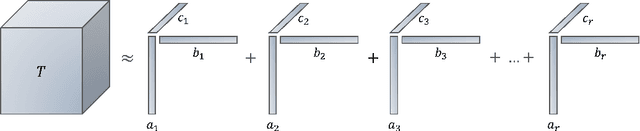
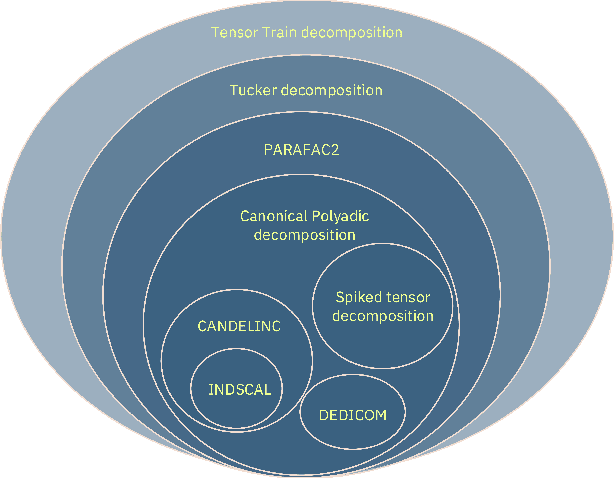
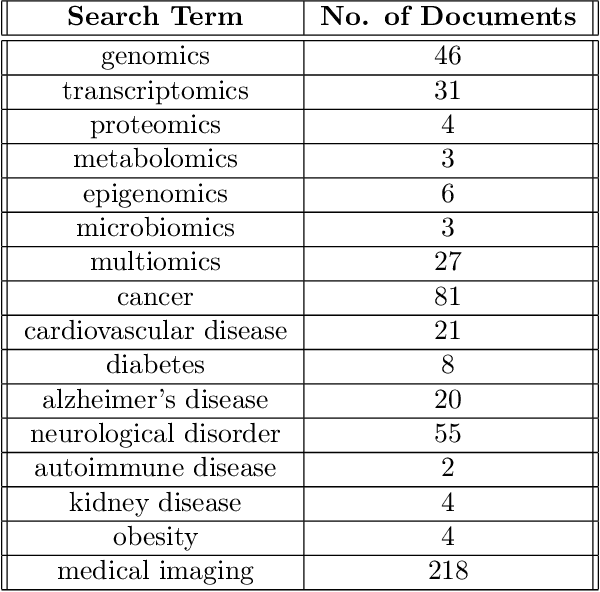
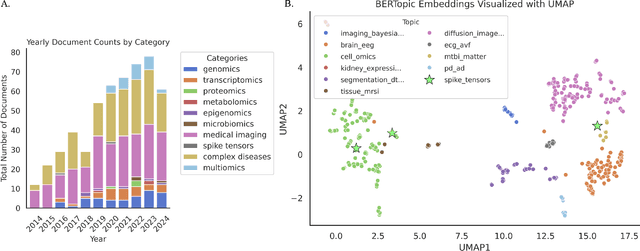
Tensor decomposition has emerged as a powerful framework for feature extraction in multi-modal biomedical data. In this review, we present a comprehensive analysis of tensor decomposition methods such as Tucker, CANDECOMP/PARAFAC, spiked tensor decomposition, etc. and their diverse applications across biomedical domains such as imaging, multi-omics, and spatial transcriptomics. To systematically investigate the literature, we applied a topic modeling-based approach that identifies and groups distinct thematic sub-areas in biomedicine where tensor decomposition has been used, thereby revealing key trends and research directions. We evaluated challenges related to the scalability of latent spaces along with obtaining the optimal rank of the tensor, which often hinder the extraction of meaningful features from increasingly large and complex datasets. Additionally, we discuss recent advances in quantum algorithms for tensor decomposition, exploring how quantum computing can be leveraged to address these challenges. Our study includes a preliminary resource estimation analysis for quantum computing platforms and examines the feasibility of implementing quantum-enhanced tensor decomposition methods on near-term quantum devices. Collectively, this review not only synthesizes current applications and challenges of tensor decomposition in biomedical analyses but also outlines promising quantum computing strategies to enhance its impact on deriving actionable insights from complex biomedical data.