 Add to Chrome
 Add to Firefox
 Add to Edge
Qwen-CUA: Native Computer Use for (almost) Everything
Aug 03, 2026
Native computer use offers a general interface for agents to operate almost any software available to people, but requires long-horizon state tracking, large-scale interactive experience, and learning from sparse yet verifiable outcomes. We introduce Qwen-CUA, a native computer-use agent with a 397B-A17B Qwen mixture-of-experts backbone. It observes only screenshots and acts through keyboard and mouse events, without DOM trees, accessibility metadata, or task-specific APIs. Its scaffold maintains up to 20 active screenshots and folds older visual history in fixed-size blocks to retain recent evidence while preserving reusable prompt prefixes. For training, we build a cloud rollout fleet with access to nearly 100,000 vCPUs and tens of thousands of concurrent environments, construct approximately 40,000 verifiable tasks, and collect personalized long-horizon workflows across everyday and professional software. We optimize complete trajectories with verifiable rewards and trajectory slicing, while iterative training runs refresh supervised data and recalibrate reinforcement-learning tasks. Across eight benchmarks, Qwen-CUA outperforms Qwen3.7 and remains competitive with leading proprietary systems, reaching 86.2 on OSWorld-Verified and 18.5/48.4 binary/partial completion on OSWorld 2.0. Scaling the same recipe to a model with over one trillion parameters yields Qwen-CUA-Max, improving these scores to 87.6 and 21.2/53.3. Qwen-CUA also reduces RedTeamCUA attack success from 36.6 to 16.4 relative to Qwen3.7. Efficiency analyses, a browser deployment, and Bash-augmented experiments further characterize practical behavior. These results establish native computer use as a broadly capable agent foundation and highlight scalable verifiable interaction and hybrid tool use as key directions.

CUA-Gym: Scaling Verifiable Training Environments and Tasks for Computer-Use Agents
May 25, 2026Reinforcement learning with verifiable rewards (RLVR) has driven breakthroughs in domains such as math, tool-use, and software engineering, yet its extension to computer-use agents (CUAs) has been bottlenecked by the scarcity of scalable training data with deterministic rewards. Constructing such data for CUAs requires consistent task instruction, executable environment, and verifiable reward. However, hand-curated benchmarks achieve high reward fidelity but cover few applications and LLM-as-judge-based datasets scale broadly but lack reliable verification. We present CUA-Gym, a scalable pipeline that co-generates task instructions, environment states, and reward functions. Concretely, a Generator agent constructs the initial and golden environment states, and a separate Discriminator agent writes the reward function from the task specification. An orchestrator agent drives the two through iterative rounds upon execution. Generated tuples then pass a final filter combining LLM majority voting and agent rollouts, ensuring quality beyond the per-task adversarial loop. To address the scarcity of training environments, we further synthesize CUA-Gym-Hub, a broad suite of high-fidelity mock web applications grounded in real-world software-use distributions, expanding the scale of CUA RLVR data by magnitude. Using this pipeline, we construct CUA-Gym, a dataset of 32,112 verified RLVR training tuples grounded in 110 environments. Trained with GSPO on CUA-Gym, our CUA-Gym-A3B and CUA-Gym-A17B achieve 62.1% and 72.6% on OSWorld-Verified, outperforming prior open-source CUAs at comparable scales, with performance scaling smoothly in both data volume and environment diversity. The same checkpoints also improve on the held-out WebArena benchmark, indicating transfer beyond the training environments. We will open-source the full synthesis pipeline, dataset, CUA-Gym-Hub environments, and models.
Adaptive Group Collaborative Artificial Bee Colony Algorithm
Dec 02, 2021
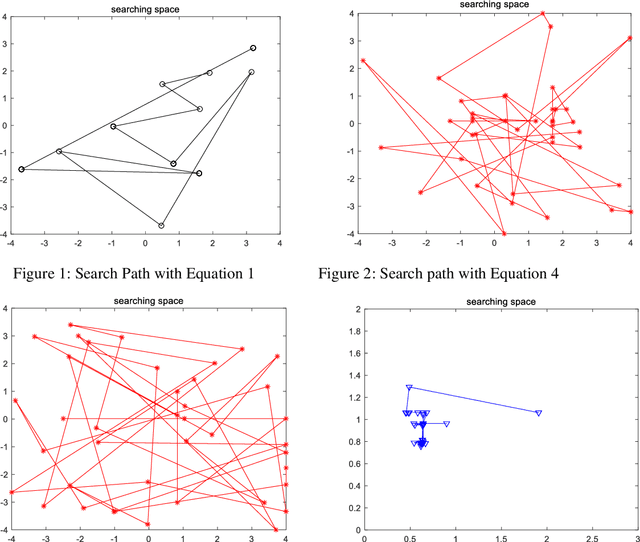
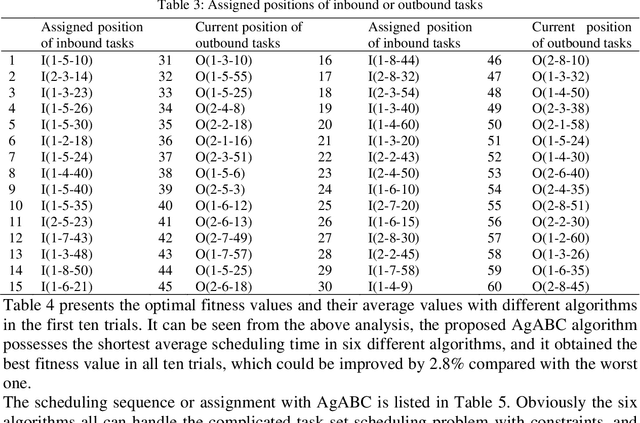
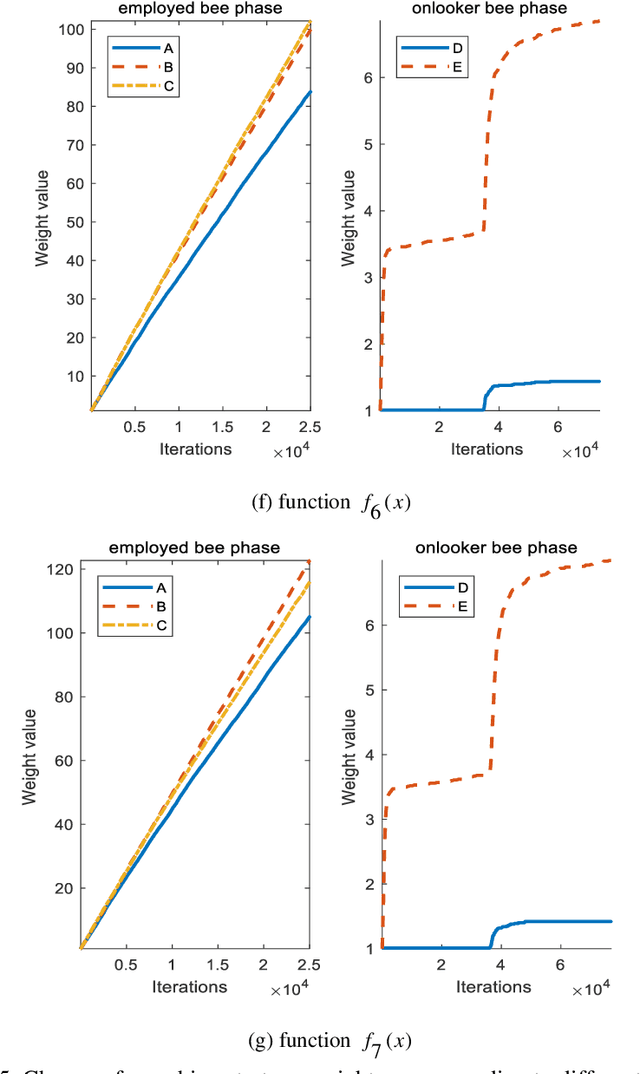
As an effective algorithm for solving complex optimization problems, artificial bee colony (ABC) algorithm has shown to be competitive, but the same as other population-based algorithms, it is poor at balancing the abilities of global searching in the whole solution space (named as exploration) and quick searching in local solution space which is defined as exploitation. For improving the performance of ABC, an adaptive group collaborative ABC (AgABC) algorithm is introduced where the population in different phases is divided to specific groups and different search strategies with different abilities are assigned to the members in groups, and the member or strategy which obtains the best solution will be employed for further searching. Experimental results on benchmark functions show that the proposed algorithm with dynamic mechanism is superior to other algorithms in searching accuracy and stability. Furthermore, numerical experiments show that the proposed method can generate the optimal solution for the complex scheduling problem.
An improved bearing fault detection strategy based on artificial bee colony algorithm
Dec 02, 2021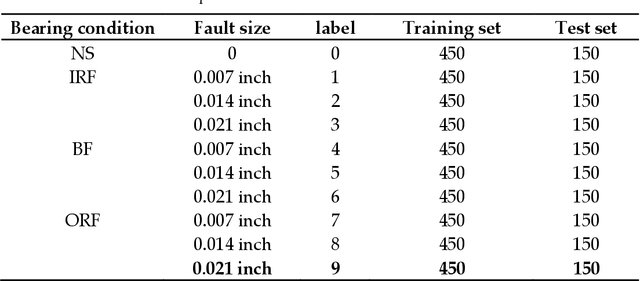
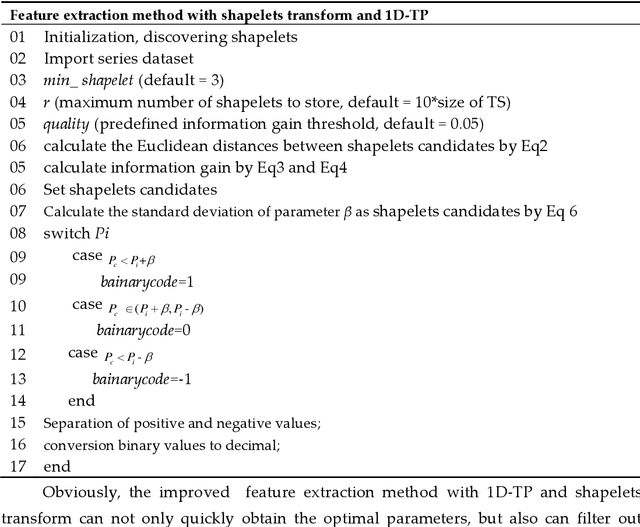
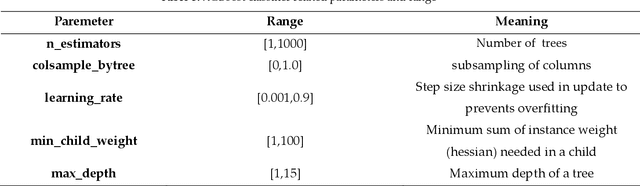
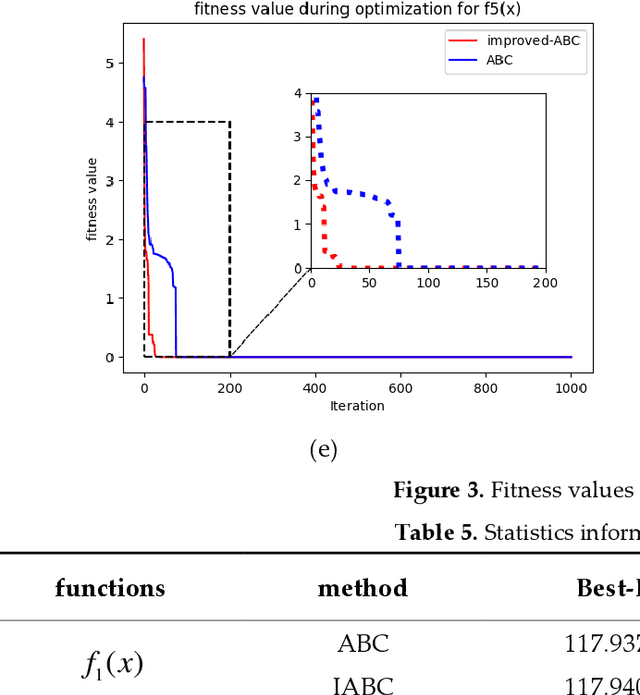
The operating state of bearing directly affects the performance of rotating machinery and how to accurately and decisively extract features from the original vibration signal and recognize the faulty parts as early as possible is very critical. In this study, the one-dimensional ternary model which has been proved to be an effective statistical method in feature selection is introduced and shapelets transformation is proposed to calculate the parameter of it which is also the standard deviation of the transformed shaplets that is usually selected by trial and error. Moreover, XGBoost is used to recognize the faults from the obtained features, and an improved artificial bee colony algorithm(ABC) where the evolution is guided by the importance indices of different search space is proposed to optimize the parameters of XGBoost. Here the value of importance index is related to the probability of optimal solutions in certain space, thus the problem of easily falling into local optimality in traditional ABC could be avoided.The experimental results based on the failure vibration signal samples show that the average accuracy of fault signal recognition can reach 97% which is much higher than the ones corresponding to other extraction strategies, thus the ability of extraction could be improved. And with the improved artificial bee colony algorithm which is used to optimize the parameters of XGBoost, the classification accuracy could be improved from 97.02% to about 98.60% compared with the traditional classification strategy