 Add to Chrome
 Add to Firefox
 Add to Edge
Bernoulli Filtering for Multi-Sensor Tracking with Thresholded Measurements
Jun 08, 2026
Target tracking is challenging when sensor detection thresholds cause state-dependent missed detections, particularly in multi-sensor scenarios with clutter and uncertain target existence. A recently developed missed detection framework models detection probability as a function of target state, sensor characteristics, and detection threshold, but it is limited to individual measurements and does not address the recursive tracking problem. This work extends the framework using a Bernoulli filter formulation to jointly handle recursive target tracking, clutter, and target existence uncertainty. A Bernoulli particle filter is evaluated in a simulated 2D multi-sensor tracking scenario with nonlinear measurements, clutter, and detection uncertainty. Incorporating accurate detection threshold knowledge reduces the generalized optimal subpattern assignment (GOSPA) metric by 62.4% compared to a conventional Bernoulli filter with fixed detection probability, while better balancing missed detections and false alarms.

Utilizing Missed Detections in Directional Sensitivity-Based DOA Estimation
May 22, 2026This paper introduces a signal strength-based direction of arrival (DOA) estimation approach for directional sensors that explicitly accounts for missed detections. In traditional phase-based DOA estimation frameworks, negative information from expected emitters that fall below the detection threshold fall outside the scope of standard measurement models. Unlike phase-based DOA estimation methods, the proposed approach relies only on received signal strength measurements. As a result, missed detections arise naturally from the sensing and detection process and convey valuable information via the known detection thresholds. By incorporating both detected signals and missed detections into the likelihood function, we develop a probabilistic estimation method that fully leverages the underlying measurement and detection models. Simulation results show that the proposed method significantly improves DOA estimation accuracy compared to baseline techniques, particularly in challenging scenarios with high missed-detection rates. Real-world experiments using Bluetooth Low Energy (BLE) signals and directional antennas further validate the effectiveness of the approach, demonstrating substantial performance gains. These findings highlight the value of modeling missed detections in sensor array processing and open new avenues for enhancing localization performance in wireless communication systems.
Road Roughness Estimation via Fusion of Standard Onboard Automotive Sensors
Jul 16, 2025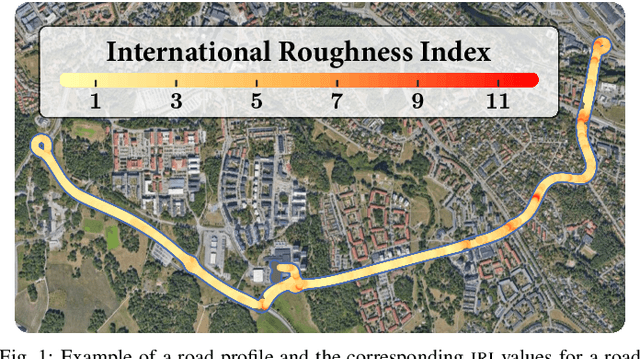
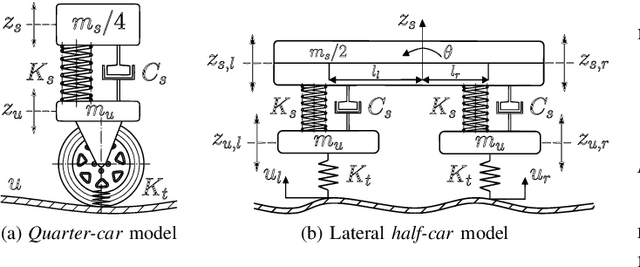
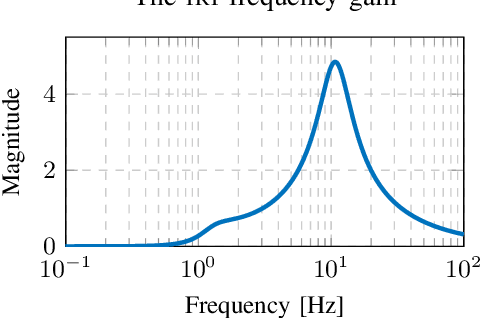
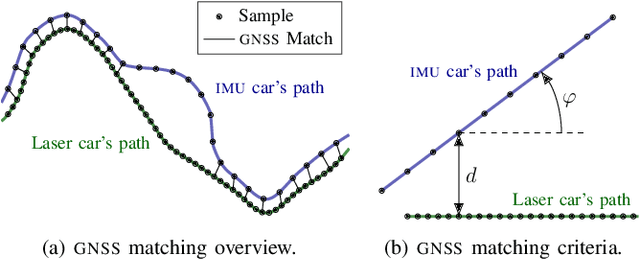
Road roughness significantly affects vehicle vibrations and ride quality. We introduce a Kalman filter (KF)-based method for estimating road roughness in terms of the international roughness index (IRI) by fusing inertial and speed measurements, offering a cost-effective solution for pavement monitoring. The method involves system identification on a physical vehicle to estimate realistic model parameters, followed by KF-based reconstruction of the longitudinal road profile to compute IRI values. It explores IRI estimation using vertical and lateral vibrations, the latter more common in modern vehicles. Validation on 230 km of real-world data shows promising results, with IRI estimation errors ranging from 1% to 10% of the reference values. However, accuracy deteriorates significantly when using only lateral vibrations, highlighting their limitations. These findings demonstrate the potential of KF-based estimation for efficient road roughness monitoring.
Using Received Power in Microphone Arrays to Estimate Direction of Arrival
May 04, 2023Conventional direction of arrival (DOA) estimators are based on array processing using either time differences or beamforming. The proposed approach is based on the received power at each microphone, which enables simple hardware, low sampling frequency and small arrays. The problem is recast into a linear regression framework where the least squares method applies, and the main drawback is that different sound sources are not readily separable. Our proposed approach is based on a training phase where the directional sensitivity of each microphone element is estimated. This model is then used as a fingerprint of the observed power vector in a real-time estimator. The learned power vector is here modeled by a Fourier series expansion, which enables Cram\'er-Rao lower bound computations. We demonstrate the performance using a circular array with eight microphones with promising results.