 Add to Chrome
 Add to Firefox
 Add to Edge
Detecting seizure onset and offset times using human intelligence: A critical-transitions-based approach
Jul 29, 2026
Most existing seizure detection algorithms require extensive pre-processing of the data and rely on heuristic or currently unexplainable machine learning approaches. These approaches often struggle with balancing detection sensitivity and specificity in the presence of variable seizure morphologies, interictal epileptiform discharges, and artefacts. Here, we consider an alternative approach: our seizure detection algorithm, which is based on the concept of critical transitions and overcomes the aforementioned limitations. Specifically, we perform a receiver-operating-characteristic analysis to quantify the performance of our algorithm in terms of its agreement with expert annotations of seizure onset and offset times in the voltage recordings of seizure activity in epileptic rodents with different seizure morphologies. We demonstrate how performance depends on algorithm parameters and varies across different rodent recording sessions. We determine the optimal set of algorithm parameters for each recording session, with near expert-level performance achieved in most cases. Finally, we derive a single general set of algorithm parameters applicable across all recording sessions. The algorithm maintains its high performance in this general setting, demonstrating its versatility, robustness across varying seizure morphologies, and potential to complement machine learning algorithms.

Neonatal Hypoxic-ischaemic Encephalopathy Classification from the EEG and HRV Signals Using a Conformer based Masked Autoencoder
Jul 26, 2026In this paper, we propose the MAEConformer, a novel self-supervised learning framework that combines the Conformer architecture with the Masked Autoencoder (MAE) paradigm for large-scale representation learning from unlabelled electroencephalography (EEG) and heart rate variability (HRV) signals. By integrating convolutional operations with Transformer-based self-attention, MAEConformer effectively captures both local temporal patterns and long-range contextual dependencies in physiological time series. To enhance reconstruction fidelity and representation quality, a multi-resolution short-time Fourier transform (MR-STFT) loss is incorporated alongside the reconstruction objective, enabling the model to jointly learn temporal and spectral characteristics across multiple scales. Modality-specific EEG and HRV MAEConformer models were pretrained on 6,030h and 4,868h of unlabelled recordings, respectively, and subsequently transferred to expert-annotated downstream tasks. Experimental results demonstrate that the learned representations provide strong transferability and data efficiency. In EEG-based hypoxic ischemic encephalopathy (HIE) severity classification, the pretrained MAE-EEG model achieved test AUCs of 97.19% and 96.56% for binary and four-class classification tasks, respectively, outperforming a range of state-of-the-art supervised and self-supervised baselines. On the HRV-based HIE severity classification task, MAE-HRV achieved a test AUC of 82.42%, surpassing both self-supervised Transformer-based and supervised convolutional baselines. These findings demonstrate the effectiveness of MAEConformer for learning robust and transferable representations across multiple physiological modalities.
HRVConformer: Neonatal Hypoxic-Ischemic Encephalopathy Classification from the Heart Rate signals
May 25, 2026This paper presents the HRVConformer, a novel deep learning architecture for the classification of hypoxic-ischemic encephalopathy (HIE) using the instantaneous heart rate (HR) signal. Unlike conventional approaches that rely on handcrafted features, HRVConformer directly processes raw HR signals in an end-to-end manner, capturing both local and long-range dependencies through a hybrid Convolution-Transformer framework. By integrating convolutional layers for local feature extraction and Transformer-based attention mechanisms for global context modelling, the architecture effectively enhances signal representation and classification performance. The model was trained using supervised learning on a large HR dataset consisting of 1,573 one-hour epochs, including 259 one-hour expert-annotated epochs and a substantial set of weakly labelled data. A 314-hour validation set provided a robust performance estimation, while an independent 215-hour dataset with expert annotations was reserved for final testing. HR signals were extracted from electrocardiogram (ECG) recordings using an improved Pan-Tompkins algorithm, which significantly enhanced both signal quality and data availability. Experimental results demonstrate that the HRVConformer achieves an AUC of 83.23\% and accuracy of 74.56\% on the test set. These results surpass the performance of the Transformer, ResNet50 and fully convolutional networks baselines, highlighting the advantages of integrating convolutional and Transformer-based components for HR-based HIE classification. The proposed method provides a promising step toward a more accurate and automated assessment of HIE using HR signals. The code is available at: https://github.com/syu-kylin/HRVConformer.
Neonatal EEG graded for severity of background abnormalities in hypoxic-ischaemic encephalopathy
Jun 09, 2022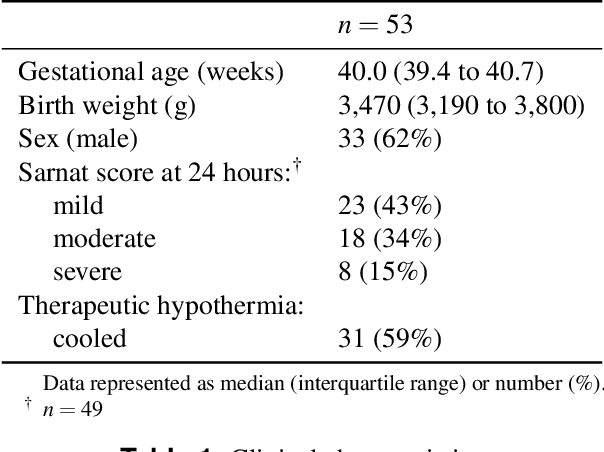
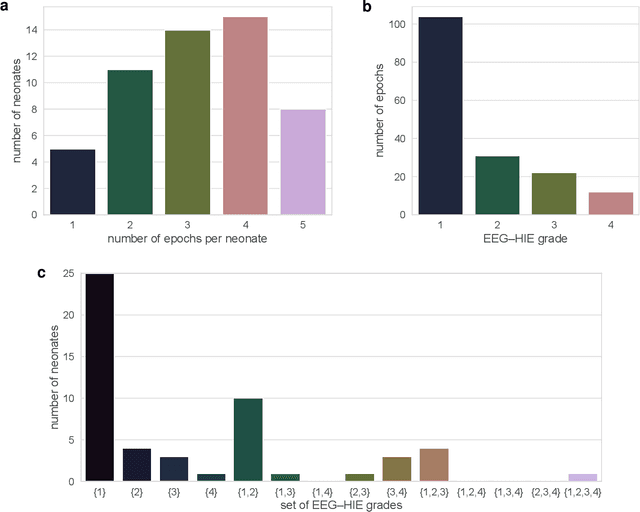
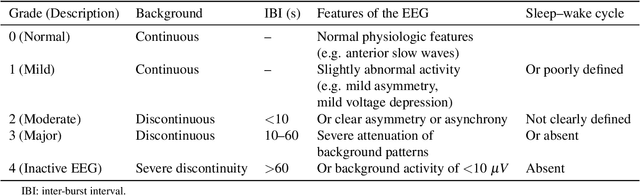
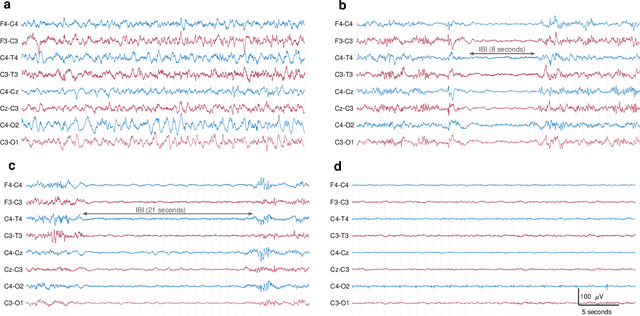
This report describes a set of neonatal electroencephalogram (EEG) recordings graded according to the severity of abnormalities in the background pattern. The dataset consists of 169 hours of multichannel EEG from 53 neonates recorded in a neonatal intensive care unit. All neonates received a diagnosis of hypoxic-ischaemic encephalopathy (HIE), the most common cause of brain injury in full term infants. For each neonate, multiple 1-hour epochs of good quality EEG were selected and then graded for background abnormalities. The grading system assesses EEG attributes such as amplitude and frequency, continuity, sleep-wake cycling, symmetry and synchrony, and abnormal waveforms. Background severity was then categorised into 4 grades: normal or mildly abnormal, moderately abnormal, severely abnormal, and inactive EEG. The data can be used as a reference set of multi-channel EEG for neonates with HIE, for EEG training purposes, or for developing and evaluating automated grading algorithms.
Tracé alternant detector for grading hypoxic-ischemic encephalopathy in neonatal EEG
May 31, 2021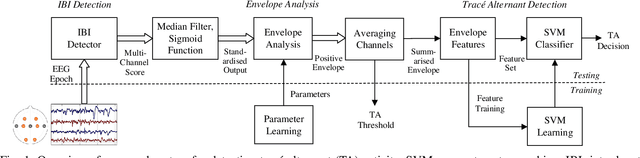
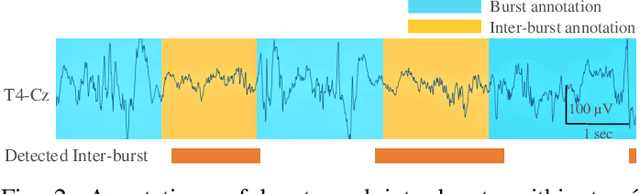
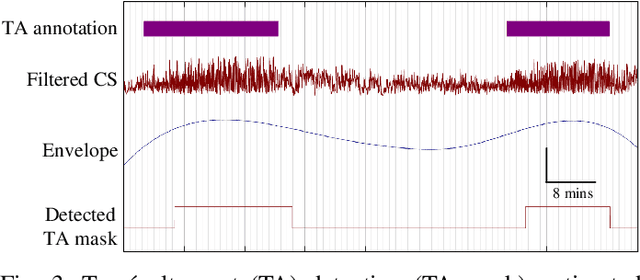
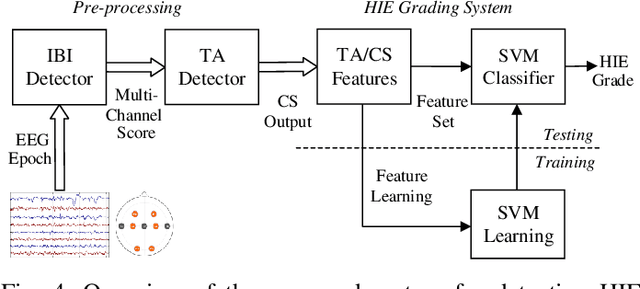
Electroencephalography (EEG) is an important clinical tool to capture sleep-wake cycling. It can also be used for grading injury, known as hypoxic-ischaemic encephalopathy(HIE), caused by lack of oxygen or blood to the brain during birth. Trac\'e alternant (TA) is a distinctive component of normal quiet sleep which consists of alternating periods of high-voltage activity (bursts) separated by lower-voltage activity (inter-bursts). This study presents an automated method to grade the severity of injury in HIE, using an automated method to first detect activity. The TA detector uses the output of an existing method to detect inter-bursts. Features are extracted from a processed output and then combined in a support vector machine (SVM). Next, we develop an HIE grading system using the TA detector by combining different features from the temporal organisation of the detected TA mask, again using an SVM. Training and testing for both models use a leave-one-baby-out cross-validation procedure, with model hyper-parameters selected from nested cross validations. The TA detector, tested on EEG from 71 healthy term neonates, has an accuracy of 79.1% (Cohen's \k{appa}=0.55). the grading system, tested on EEG from 54 term neonates in intensive care, has an accuracy of 81.5% (\k{appa}=0.74). These results validate how detecting the presence or absence of TA can be used to quantify the grade of HIE injury in neonatal EEG and open up the possibility of a clinically-meaningful grading system.
Neonatal seizure detection from raw multi-channel EEG using a fully convolutional architecture
May 28, 2021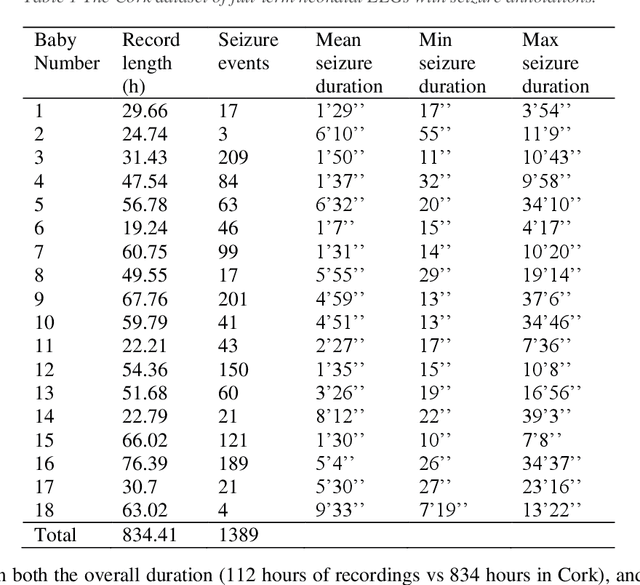
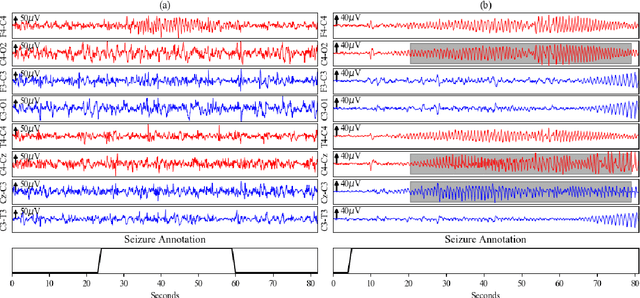
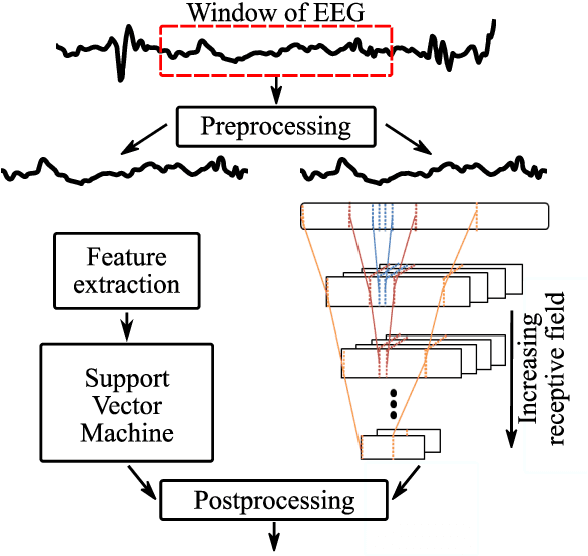
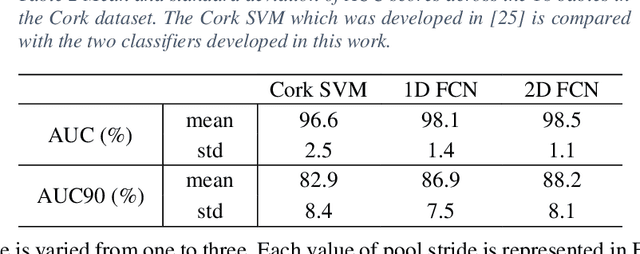
A deep learning classifier for detecting seizures in neonates is proposed. This architecture is designed to detect seizure events from raw electroencephalogram (EEG) signals as opposed to the state-of-the-art hand engineered feature-based representation employed in traditional machine learning based solutions. The seizure detection system utilises only convolutional layers in order to process the multichannel time domain signal and is designed to exploit the large amount of weakly labelled data in the training stage. The system performance is assessed on a large database of continuous EEG recordings of 834h in duration; this is further validated on a held-out publicly available dataset and compared with two baseline SVM based systems. The developed system achieves a 56% relative improvement with respect to a feature-based state-of-the art baseline, reaching an AUC of 98.5%; this also compares favourably both in terms of performance and run-time. The effect of varying architectural parameters is thoroughly studied. The performance improvement is achieved through novel architecture design which allows more efficient usage of available training data and end-to-end optimisation from the front-end feature extraction to the back-end classification. The proposed architecture opens new avenues for the application of deep learning to neonatal EEG, where the performance becomes a function of the amount of training data with less dependency on the availability of precise clinical labels.
Deep Learning for EEG Seizure Detection in Preterm Infants
May 28, 2021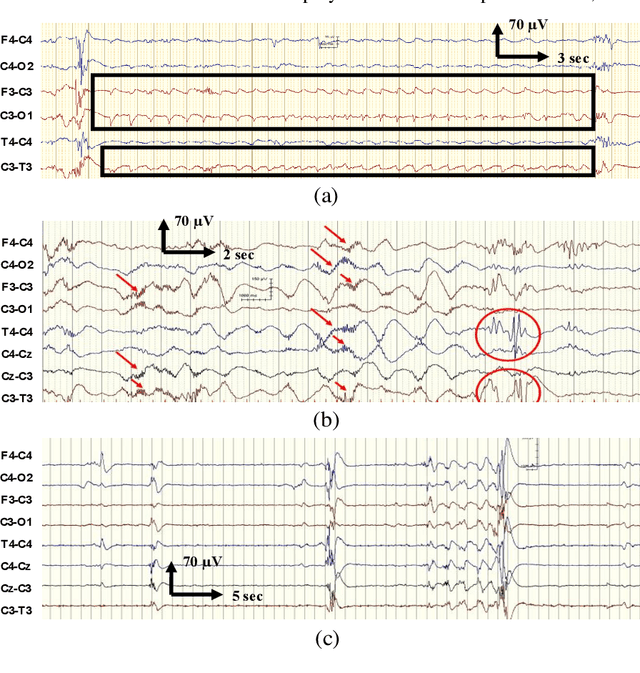
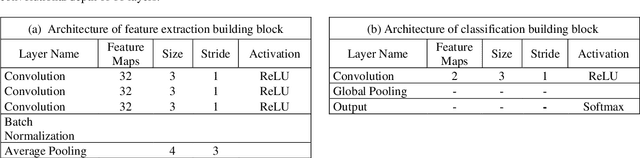
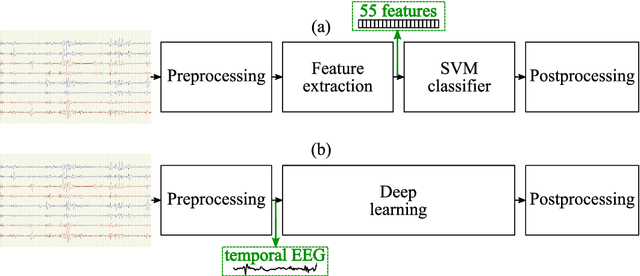
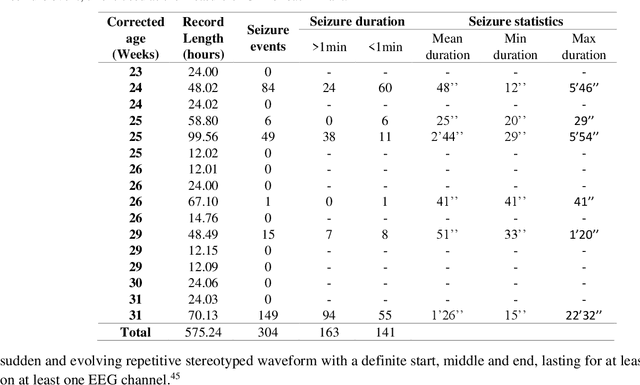
EEG is the gold standard for seizure detection in the newborn infant, but EEG interpretation in the preterm group is particularly challenging; trained experts are scarce and the task of interpreting EEG in real-time is arduous. Preterm infants are reported to have a higher incidence of seizures compared to term infants. Preterm EEG morphology differs from that of term infants, which implies that seizure detection algorithms trained on term EEG may not be appropriate. The task of developing preterm specific algorithms becomes extra-challenging given the limited amount of annotated preterm EEG data available. This paper explores novel deep learning (DL) architectures for the task of neonatal seizure detection in preterm infants. The study tests and compares several approaches to address the problem: training on data from full-term infants; training on data from preterm infants; training on age-specific preterm data and transfer learning. The system performance is assessed on a large database of continuous EEG recordings of 575h in duration. It is shown that the accuracy of a validated term-trained EEG seizure detection algorithm, based on a support vector machine classifier, when tested on preterm infants falls well short of the performance achieved for full-term infants. An AUC of 88.3% was obtained when tested on preterm EEG as compared to 96.6% obtained when tested on term EEG. When re-trained on preterm EEG, the performance marginally increases to 89.7%. An alternative DL approach shows a more stable trend when tested on the preterm cohort, starting with an AUC of 93.3% for the term-trained algorithm and reaching 95.0% by transfer learning from the term model using available preterm data.
Grading the severity of hypoxic-ischemic encephalopathy in newborn EEG using a convolutional neural network
May 12, 2020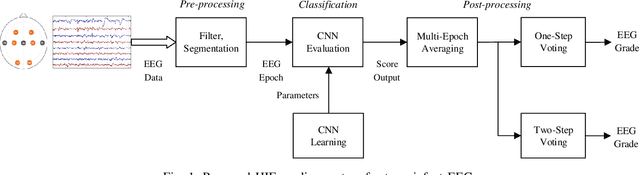
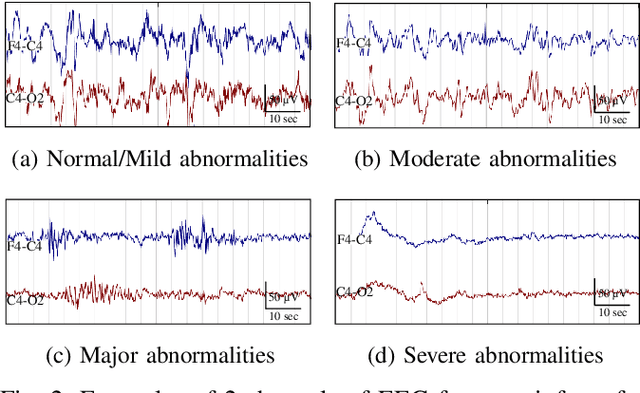
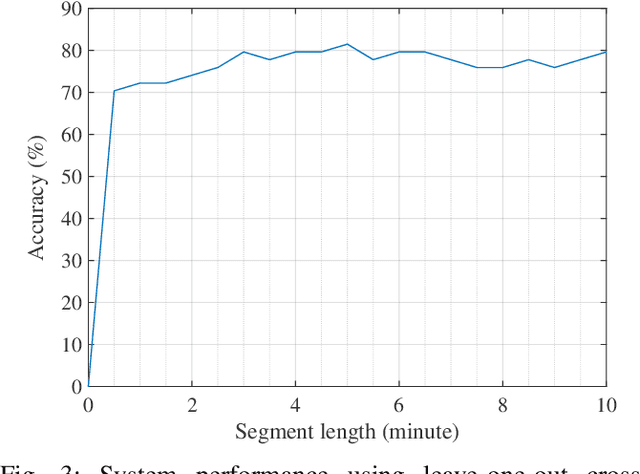
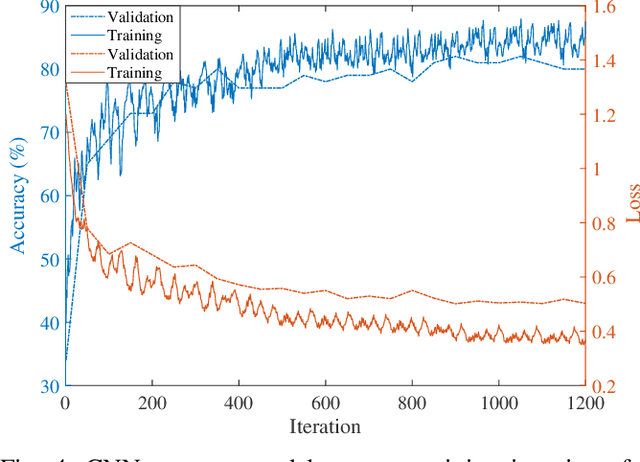
Electroencephalography (EEG) is a valuable clinical tool for grading injury caused by lack of blood and oxygen to the brain during birth. This study presents a novel end-to-end architecture, using a deep convolutional neural network, that learns hierarchical representations within raw EEG data. The system classifies 4 grades of hypoxic-ischemic encephalopathy and is evaluated on a multi-channel EEG dataset of 63 hours from 54 newborns. The proposed method achieves a testing accuracy of 79.6% with one-step voting and 81.5% with two-step voting. These results show how a feature-free approach can be used to classify different grades of injury in newborn EEG with comparable accuracy to existing feature-based systems. Automated grading of newborn background EEG could help with the early identification of those infants in need of interventional therapies such as hypothermia.
Identifying trace alternant activity in neonatal EEG using an inter-burst detection approach
May 12, 2020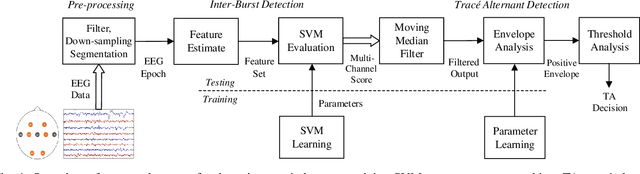
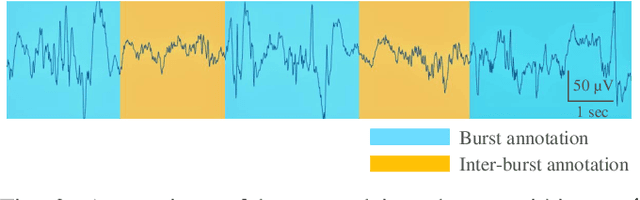
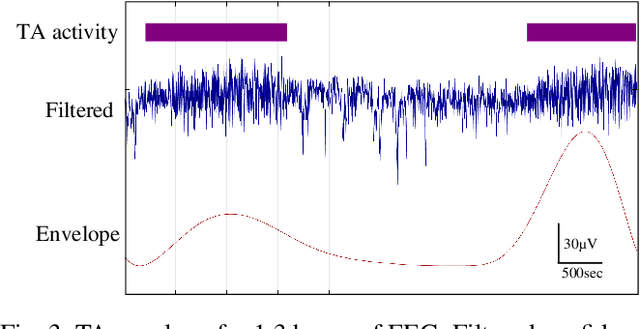
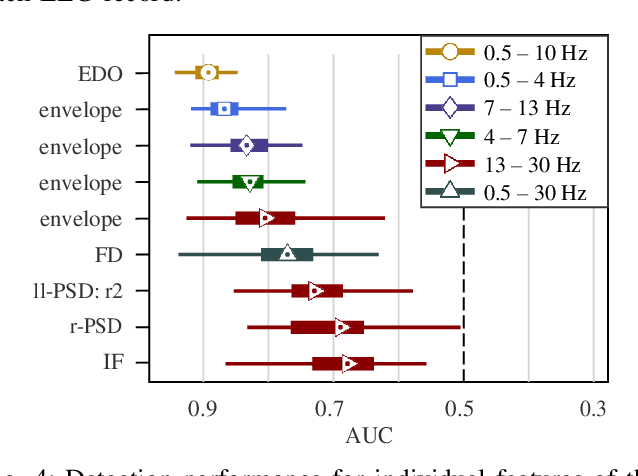
Electroencephalography (EEG) is an important clinical tool for reviewing sleep-wake cycling in neonates in intensive care. Trace alternant (TA)-a characteristic pattern of EEG activity during quiet sleep in term neonates-is defined by alternating periods of short-duration, high-voltage activity (bursts) separated by lower-voltage activity (inter-bursts). This study presents a novel approach for detecting TA activity by first detecting the inter-bursts and then processing the temporal map of the bursts and inter-bursts. EEG recordings from 72 healthy term neonates were used to develop and evaluate performance of 1) an inter-burst detection method which is then used for 2) detection of TA activity. First, multiple amplitude and spectral features were combined using a support vector machine (SVM) to classify bursts from inter-bursts within TA activity, resulting in a median area under the operating characteristic curve (AUC) of 0.95 (95% confidence interval, CI: 0.93 to 0.98). Second, post-processing of the continuous SVM output, the confidence score, was used to produce a TA envelope. This envelope was used to detect TA activity within the continuous EEG with a median AUC of 0.84 (95% CI: 0.80 to 0.88). These results validate how an inter-burst detection approach combined with post processing can be used to classify TA activity. Detecting the presence or absence of TA will help quantify disruption of the clinically important sleep-wake cycle.
Suitability of an inter-burst detection method for grading hypoxic-ischemic encephalopathy in newborn EEG
Jul 05, 2019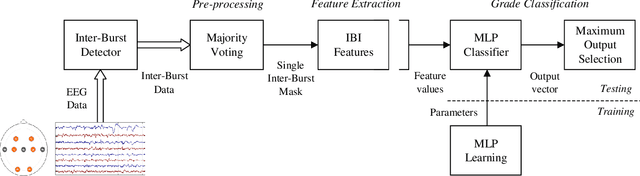
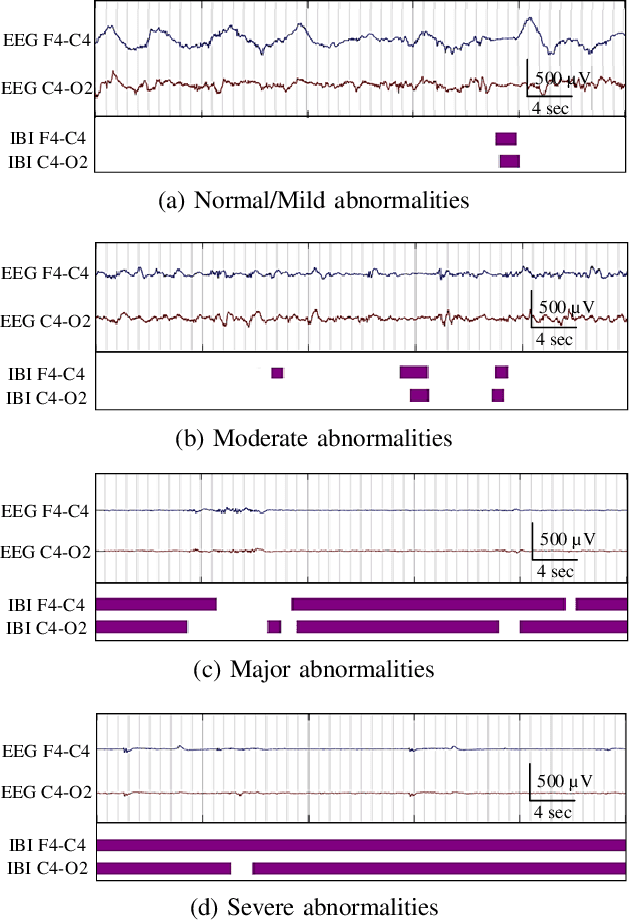
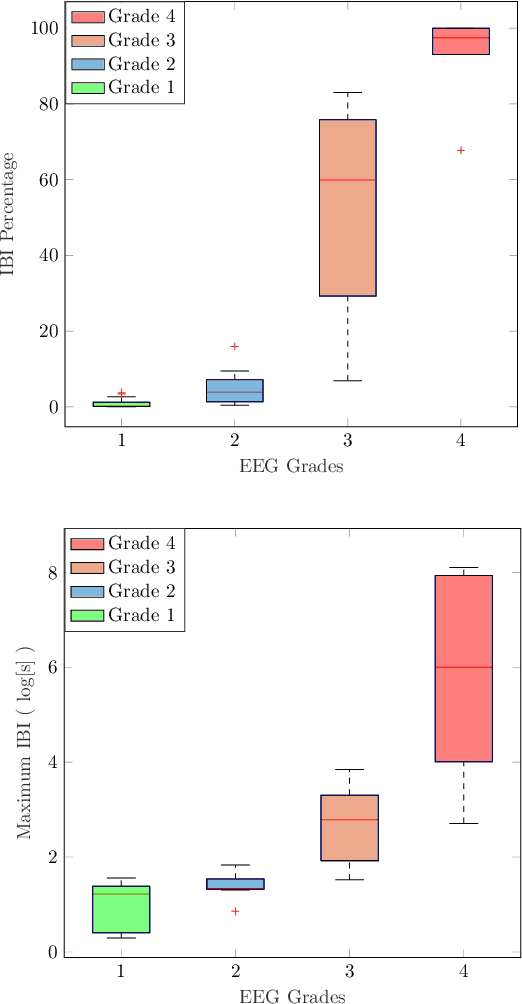
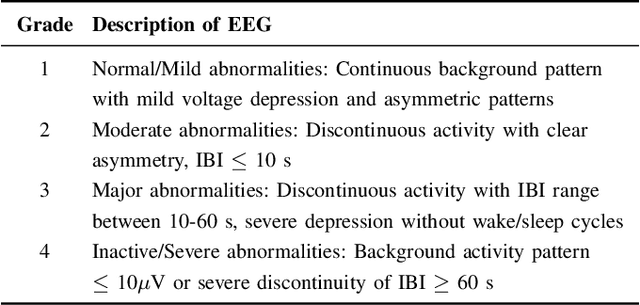
Electroencephalography (EEG) is an important clinical tool for grading injury caused by lack of oxygen or blood to the brain during birth. Characteristics of low-voltage waveforms, known as inter-bursts, are related to different grades of injury. This study assesses the suitability of an existing inter-burst detection method, developed from preterm infants born <30 weeks of gestational age, to detect inter-bursts in term infants. Different features from the temporal organisation of the inter-bursts are combined using a multi-layer perceptron (MLP) machine learning algorithm to classify four grades of injury in the EEG. We find that the best performing feature, percentage of inter-bursts, has an accuracy of 59.3%. Combining this with the maximum duration of inter-bursts in the MLP produces a testing accuracy of 77.8%, with similar performance to existing multi-feature methods. These results validate the use of the preterm detection method in term EEG and show how simple measures of the inter-burst interval can be used to classify different grades of injury.