 Add to Chrome
 Add to Firefox
 Add to Edge
Revisiting Glorot Initialization for Long-Range Linear Recurrences
May 26, 2025

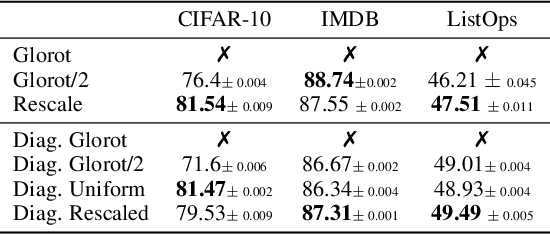
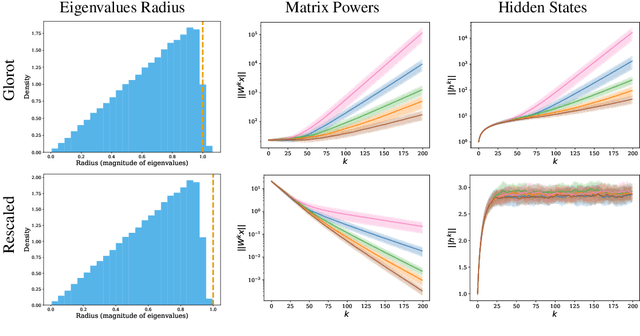
Proper initialization is critical for Recurrent Neural Networks (RNNs), particularly in long-range reasoning tasks, where repeated application of the same weight matrix can cause vanishing or exploding signals. A common baseline for linear recurrences is Glorot initialization, designed to ensure stable signal propagation--but derived under the infinite-width, fixed-length regime--an unrealistic setting for RNNs processing long sequences. In this work, we show that Glorot initialization is in fact unstable: small positive deviations in the spectral radius are amplified through time and cause the hidden state to explode. Our theoretical analysis demonstrates that sequences of length $t = O(\sqrt{n})$, where $n$ is the hidden width, are sufficient to induce instability. To address this, we propose a simple, dimension-aware rescaling of Glorot that shifts the spectral radius slightly below one, preventing rapid signal explosion or decay. These results suggest that standard initialization schemes may break down in the long-sequence regime, motivating a separate line of theory for stable recurrent initialization.

Time to Spike? Understanding the Representational Power of Spiking Neural Networks in Discrete Time
May 23, 2025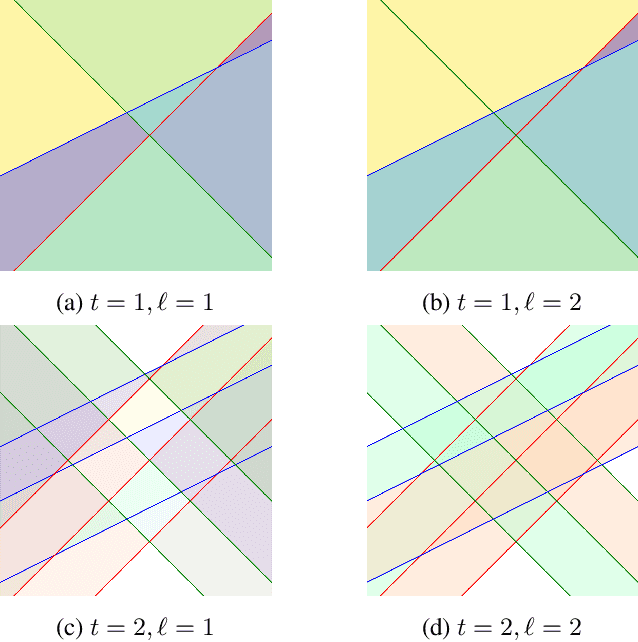
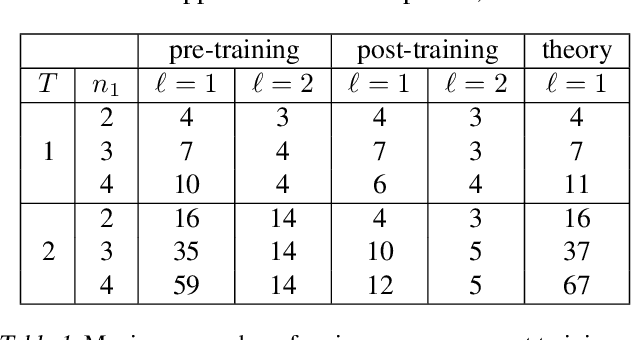
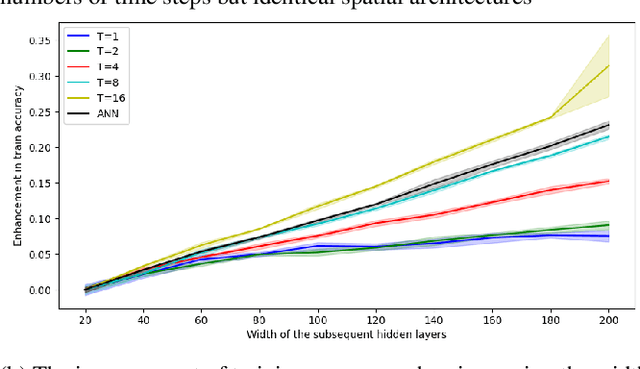
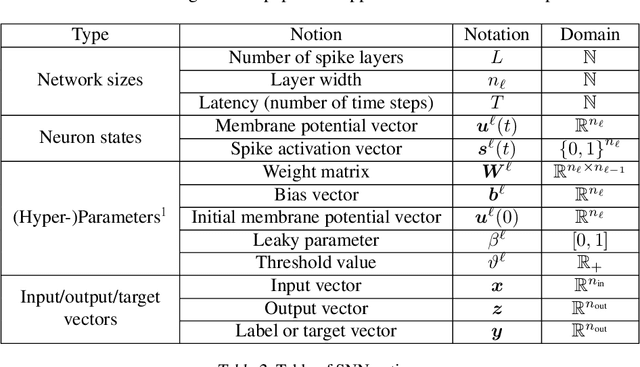
Recent years have seen significant progress in developing spiking neural networks (SNNs) as a potential solution to the energy challenges posed by conventional artificial neural networks (ANNs). However, our theoretical understanding of SNNs remains relatively limited compared to the ever-growing body of literature on ANNs. In this paper, we study a discrete-time model of SNNs based on leaky integrate-and-fire (LIF) neurons, referred to as discrete-time LIF-SNNs, a widely used framework that still lacks solid theoretical foundations. We demonstrate that discrete-time LIF-SNNs with static inputs and outputs realize piecewise constant functions defined on polyhedral regions, and more importantly, we quantify the network size required to approximate continuous functions. Moreover, we investigate the impact of latency (number of time steps) and depth (number of layers) on the complexity of the input space partitioning induced by discrete-time LIF-SNNs. Our analysis highlights the importance of latency and contrasts these networks with ANNs employing piecewise linear activation functions. Finally, we present numerical experiments to support our theoretical findings.
GradPCA: Leveraging NTK Alignment for Reliable Out-of-Distribution Detection
May 21, 2025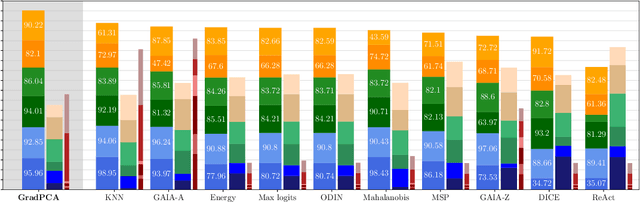
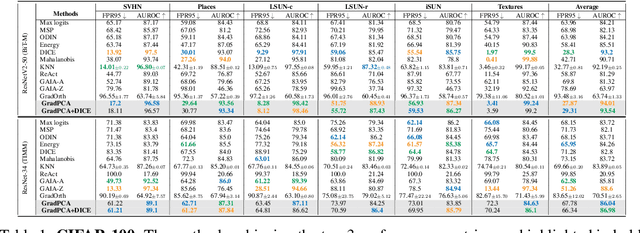

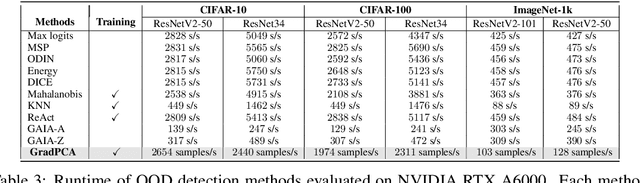
We introduce GradPCA, an Out-of-Distribution (OOD) detection method that exploits the low-rank structure of neural network gradients induced by Neural Tangent Kernel (NTK) alignment. GradPCA applies Principal Component Analysis (PCA) to gradient class-means, achieving more consistent performance than existing methods across standard image classification benchmarks. We provide a theoretical perspective on spectral OOD detection in neural networks to support GradPCA, highlighting feature-space properties that enable effective detection and naturally emerge from NTK alignment. Our analysis further reveals that feature quality -- particularly the use of pretrained versus non-pretrained representations -- plays a crucial role in determining which detectors will succeed. Extensive experiments validate the strong performance of GradPCA, and our theoretical framework offers guidance for designing more principled spectral OOD detectors.
Interpretable Robotic Friction Learning via Symbolic Regression
May 19, 2025Accurately modeling the friction torque in robotic joints has long been challenging due to the request for a robust mathematical description. Traditional model-based approaches are often labor-intensive, requiring extensive experiments and expert knowledge, and they are difficult to adapt to new scenarios and dependencies. On the other hand, data-driven methods based on neural networks are easier to implement but often lack robustness, interpretability, and trustworthiness--key considerations for robotic hardware and safety-critical applications such as human-robot interaction. To address the limitations of both approaches, we propose the use of symbolic regression (SR) to estimate the friction torque. SR generates interpretable symbolic formulas similar to those produced by model-based methods while being flexible to accommodate various dynamic effects and dependencies. In this work, we apply SR algorithms to approximate the friction torque using collected data from a KUKA LWR-IV+ robot. Our results show that SR not only yields formulas with comparable complexity to model-based approaches but also achieves higher accuracy. Moreover, SR-derived formulas can be seamlessly extended to include load dependencies and other dynamic factors.
Graph Representational Learning: When Does More Expressivity Hurt Generalization?
May 16, 2025Graph Neural Networks (GNNs) are powerful tools for learning on structured data, yet the relationship between their expressivity and predictive performance remains unclear. We introduce a family of premetrics that capture different degrees of structural similarity between graphs and relate these similarities to generalization, and consequently, the performance of expressive GNNs. By considering a setting where graph labels are correlated with structural features, we derive generalization bounds that depend on the distance between training and test graphs, model complexity, and training set size. These bounds reveal that more expressive GNNs may generalize worse unless their increased complexity is balanced by a sufficiently large training set or reduced distance between training and test graphs. Our findings relate expressivity and generalization, offering theoretical insights supported by empirical results.
An Axiomatic Assessment of Entropy- and Variance-based Uncertainty Quantification in Regression
Apr 25, 2025Uncertainty quantification (UQ) is crucial in machine learning, yet most (axiomatic) studies of uncertainty measures focus on classification, leaving a gap in regression settings with limited formal justification and evaluations. In this work, we introduce a set of axioms to rigorously assess measures of aleatoric, epistemic, and total uncertainty in supervised regression. By utilizing a predictive exponential family, we can generalize commonly used approaches for uncertainty representation and corresponding uncertainty measures. More specifically, we analyze the widely used entropy- and variance-based measures regarding limitations and challenges. Our findings provide a principled foundation for UQ in regression, offering theoretical insights and practical guidelines for reliable uncertainty assessment.
Graph Neural Networks for Enhancing Ensemble Forecasts of Extreme Rainfall
Apr 07, 2025Climate change is increasing the occurrence of extreme precipitation events, threatening infrastructure, agriculture, and public safety. Ensemble prediction systems provide probabilistic forecasts but exhibit biases and difficulties in capturing extreme weather. While post-processing techniques aim to enhance forecast accuracy, they rarely focus on precipitation, which exhibits complex spatial dependencies and tail behavior. Our novel framework leverages graph neural networks to post-process ensemble forecasts, specifically modeling the extremes of the underlying distribution. This allows to capture spatial dependencies and improves forecast accuracy for extreme events, thus leading to more reliable forecasts and mitigating risks of extreme precipitation and flooding.
Sustainable AI: Mathematical Foundations of Spiking Neural Networks
Mar 03, 2025Deep learning's success comes with growing energy demands, raising concerns about the long-term sustainability of the field. Spiking neural networks, inspired by biological neurons, offer a promising alternative with potential computational and energy-efficiency gains. This article examines the computational properties of spiking networks through the lens of learning theory, focusing on expressivity, training, and generalization, as well as energy-efficient implementations while comparing them to artificial neural networks. By categorizing spiking models based on time representation and information encoding, we highlight their strengths, challenges, and potential as an alternative computational paradigm.
Probabilistic neural operators for functional uncertainty quantification
Feb 18, 2025Neural operators aim to approximate the solution operator of a system of differential equations purely from data. They have shown immense success in modeling complex dynamical systems across various domains. However, the occurrence of uncertainties inherent in both model and data has so far rarely been taken into account\textemdash{}a critical limitation in complex, chaotic systems such as weather forecasting. In this paper, we introduce the probabilistic neural operator (PNO), a framework for learning probability distributions over the output function space of neural operators. PNO extends neural operators with generative modeling based on strictly proper scoring rules, integrating uncertainty information directly into the training process. We provide a theoretical justification for the approach and demonstrate improved performance in quantifying uncertainty across different domains and with respect to different baselines. Furthermore, PNO requires minimal adjustment to existing architectures, shows improved performance for most probabilistic prediction tasks, and leads to well-calibrated predictive distributions and adequate uncertainty representations even for long dynamical trajectories. Implementing our approach into large-scale models for physical applications can lead to improvements in corresponding uncertainty quantification and extreme event identification, ultimately leading to a deeper understanding of the prediction of such surrogate models.
Robust identifiability for symbolic recovery of differential equations
Oct 13, 2024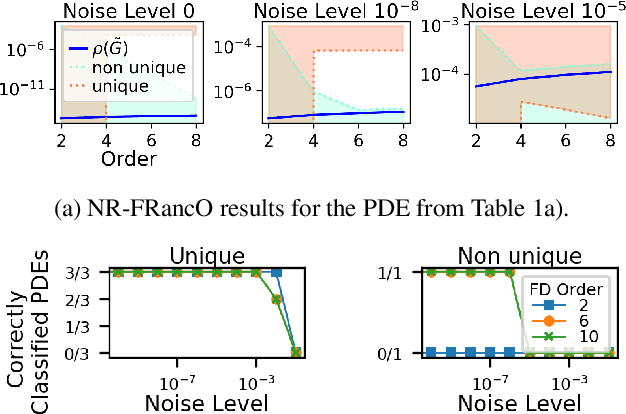
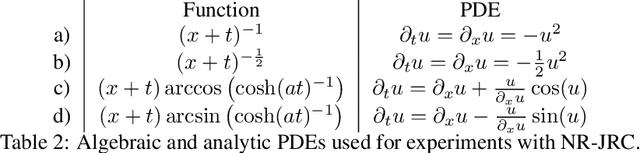
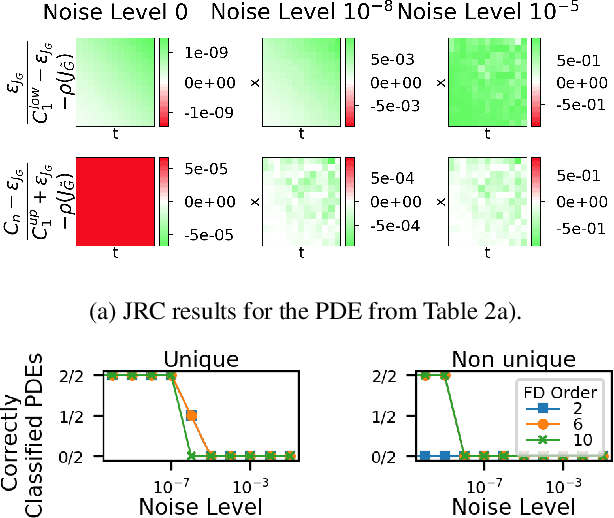
Recent advancements in machine learning have transformed the discovery of physical laws, moving from manual derivation to data-driven methods that simultaneously learn both the structure and parameters of governing equations. This shift introduces new challenges regarding the validity of the discovered equations, particularly concerning their uniqueness and, hence, identifiability. While the issue of non-uniqueness has been well-studied in the context of parameter estimation, it remains underexplored for algorithms that recover both structure and parameters simultaneously. Early studies have primarily focused on idealized scenarios with perfect, noise-free data. In contrast, this paper investigates how noise influences the uniqueness and identifiability of physical laws governed by partial differential equations (PDEs). We develop a comprehensive mathematical framework to analyze the uniqueness of PDEs in the presence of noise and introduce new algorithms that account for noise, providing thresholds to assess uniqueness and identifying situations where excessive noise hinders reliable conclusions. Numerical experiments demonstrate the effectiveness of these algorithms in detecting uniqueness despite the presence of noise.