 Add to Chrome
 Add to Firefox
 Add to Edge
Boundary Point Jailbreaking of Black-Box LLMs
Feb 16, 2026
Frontier LLMs are safeguarded against attempts to extract harmful information via adversarial prompts known as "jailbreaks". Recently, defenders have developed classifier-based systems that have survived thousands of hours of human red teaming. We introduce Boundary Point Jailbreaking (BPJ), a new class of automated jailbreak attacks that evade the strongest industry-deployed safeguards. Unlike previous attacks that rely on white/grey-box assumptions (such as classifier scores or gradients) or libraries of existing jailbreaks, BPJ is fully black-box and uses only a single bit of information per query: whether or not the classifier flags the interaction. To achieve this, BPJ addresses the core difficulty in optimising attacks against robust real-world defences: evaluating whether a proposed modification to an attack is an improvement. Instead of directly trying to learn an attack for a target harmful string, BPJ converts the string into a curriculum of intermediate attack targets and then actively selects evaluation points that best detect small changes in attack strength ("boundary points"). We believe BPJ is the first fully automated attack algorithm that succeeds in developing universal jailbreaks against Constitutional Classifiers, as well as the first automated attack algorithm that succeeds against GPT-5's input classifier without relying on human attack seeds. BPJ is difficult to defend against in individual interactions but incurs many flags during optimisation, suggesting that effective defence requires supplementing single-interaction methods with batch-level monitoring.

Characterizing stable regions in the residual stream of LLMs
Sep 26, 2024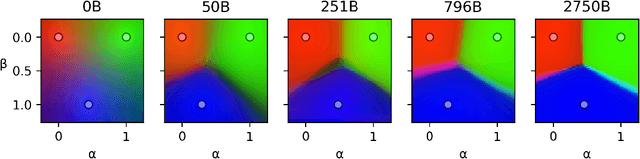
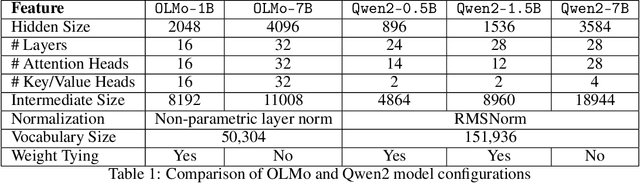
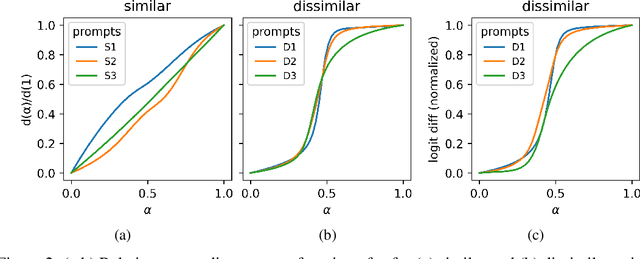
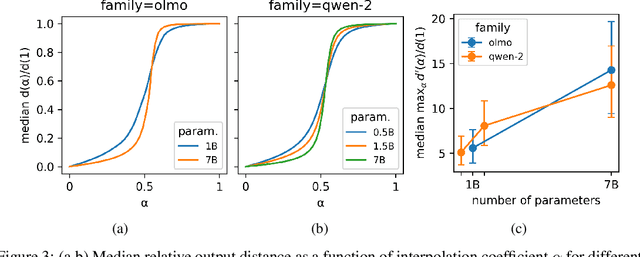
We identify "stable regions" in the residual stream of Transformers, where the model's output remains insensitive to small activation changes, but exhibits high sensitivity at region boundaries. These regions emerge during training and become more defined as training progresses or model size increases. The regions appear to be much larger than previously studied polytopes. Our analysis suggests that these stable regions align with semantic distinctions, where similar prompts cluster within regions, and activations from the same region lead to similar next token predictions. This work provides a promising research direction for understanding the complexity of neural networks, shedding light on training dynamics, and advancing interpretability.