 Add to Chrome
 Add to Firefox
 Add to Edge
A Content-Based Framework for Cybersecurity Refusal Decisions in Large Language Models
Feb 17, 2026
Large language models and LLM-based agents are increasingly used for cybersecurity tasks that are inherently dual-use. Existing approaches to refusal, spanning academic policy frameworks and commercially deployed systems, often rely on broad topic-based bans or offensive-focused taxonomies. As a result, they can yield inconsistent decisions, over-restrict legitimate defenders, and behave brittlely under obfuscation or request segmentation. We argue that effective refusal requires explicitly modeling the trade-off between offensive risk and defensive benefit, rather than relying solely on intent or offensive classification. In this paper, we introduce a content-based framework for designing and auditing cyber refusal policies that makes offense-defense tradeoffs explicit. The framework characterizes requests along five dimensions: Offensive Action Contribution, Offensive Risk, Technical Complexity, Defensive Benefit, and Expected Frequency for Legitimate Users, grounded in the technical substance of the request rather than stated intent. We demonstrate that this content-grounded approach resolves inconsistencies in current frontier model behavior and allows organizations to construct tunable, risk-aware refusal policies.

What Makes an Evaluation Useful? Common Pitfalls and Best Practices
Mar 30, 2025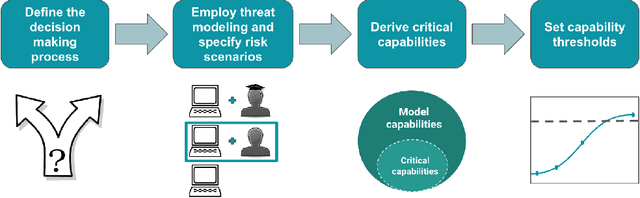
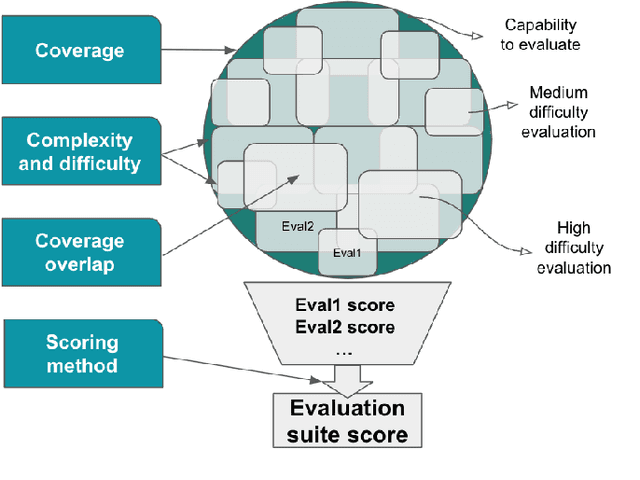
Following the rapid increase in Artificial Intelligence (AI) capabilities in recent years, the AI community has voiced concerns regarding possible safety risks. To support decision-making on the safe use and development of AI systems, there is a growing need for high-quality evaluations of dangerous model capabilities. While several attempts to provide such evaluations have been made, a clear definition of what constitutes a "good evaluation" has yet to be agreed upon. In this practitioners' perspective paper, we present a set of best practices for safety evaluations, drawing on prior work in model evaluation and illustrated through cybersecurity examples. We first discuss the steps of the initial thought process, which connects threat modeling to evaluation design. Then, we provide the characteristics and parameters that make an evaluation useful. Finally, we address additional considerations as we move from building specific evaluations to building a full and comprehensive evaluation suite.