 Add to Chrome
 Add to Firefox
 Add to Edge
M2Diff: Multi-Modality Multi-Task Enhanced Diffusion Model for MRI-Guided Low-Dose PET Enhancement
Mar 10, 2026
Positron emission tomography (PET) scans expose patients to radiation, which can be mitigated by reducing the dose, albeit at the cost of diminished quality. This makes low-dose (LD) PET recovery an active research area. Previous studies have focused on standard-dose (SD) PET recovery from LD PET scans and/or multi-modal scans, e.g., PET/CT or PET/MRI, using deep learning. While these studies incorporate multi-modal information through conditioning in a single-task model, such approaches may limit the capacity to extract modality-specific features, potentially leading to early feature dilution. Although recent studies have begun incorporating pathology-rich data, challenges remain in effectively leveraging multi-modality inputs for reconstructing diverse features, particularly in heterogeneous patient populations. To address these limitations, we introduce a multi-modality multi-task diffusion model (M2Diff) that processes MRI and LD PET scans separately to learn modality-specific features and fuse them via hierarchical feature fusion to reconstruct SD PET. This design enables effective integration of complementary structural and functional information, leading to improved reconstruction fidelity. We have validated the effectiveness of our model on both healthy and Alzheimer's disease brain datasets. The M2Diff achieves superior qualitative and quantitative performance on both datasets.

Brain Tumor Diagnosis and Classification via Pre-Trained Convolutional Neural Networks
Jul 27, 2022The brain tumor is the most aggressive kind of tumor and can cause low life expectancy if diagnosed at the later stages. Manual identification of brain tumors is tedious and prone to errors. Misdiagnosis can lead to false treatment and thus reduce the chances of survival for the patient. Medical resonance imaging (MRI) is the conventional method used to diagnose brain tumors and their types. This paper attempts to eliminate the manual process from the diagnosis process and use machine learning instead. We proposed the use of pretrained convolutional neural networks (CNN) for the diagnosis and classification of brain tumors. Three types of tumors were classified with one class of non-tumor MRI images. Networks that has been used are ResNet50, EfficientNetB1, EfficientNetB7, EfficientNetV2B1. EfficientNet has shown promising results due to its scalable nature. EfficientNetB1 showed the best results with training and validation accuracy of 87.67% and 89.55%, respectively.
Forest and Water Bodies Segmentation Through Satellite Images Using U-Net
Jul 12, 2022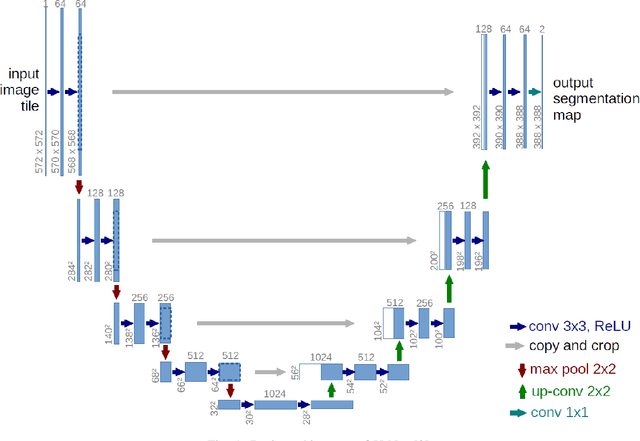
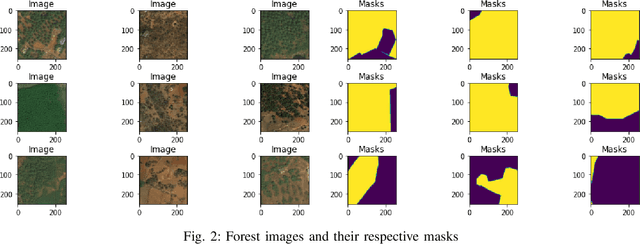
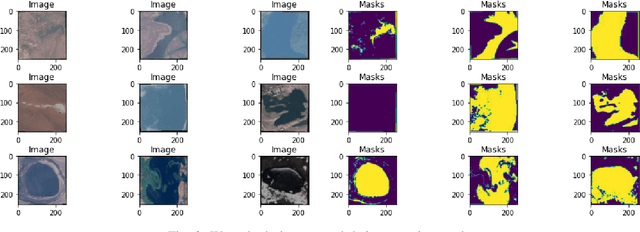
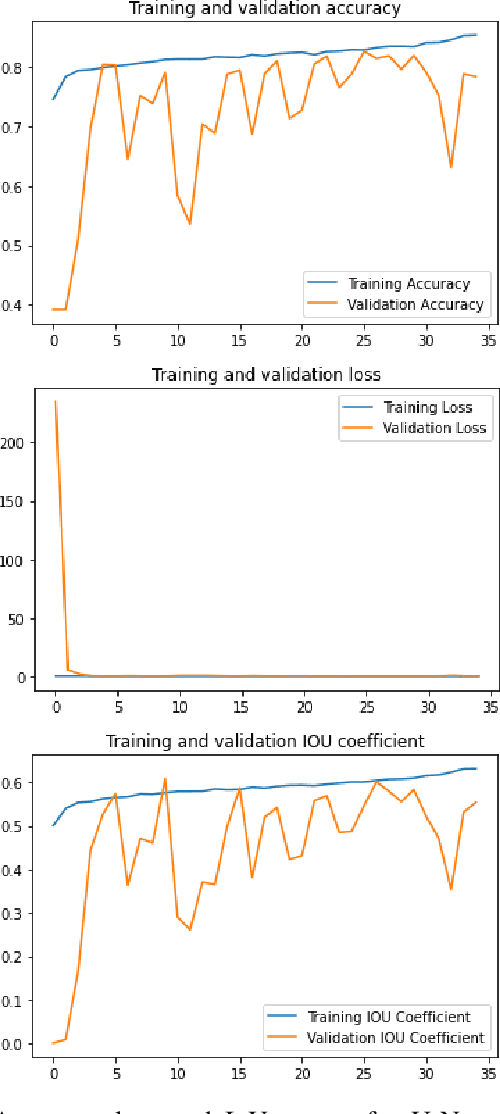
Global environment monitoring is a task that requires additional attention in the contemporary rapid climate change environment. This includes monitoring the rate of deforestation and areas affected by flooding. Satellite imaging has greatly helped monitor the earth, and deep learning techniques have helped to automate this monitoring process. This paper proposes a solution for observing the area covered by the forest and water. To achieve this task UNet model has been proposed, which is an image segmentation model. The model achieved a validation accuracy of 82.55% and 82.92% for the segmentation of areas covered by forest and water, respectively.