 Add to Chrome
 Add to Firefox
 Add to Edge
Prompt Compression via Activation Aggregation
Jul 09, 2026
Large language models process prompts by propagating activations through dozens of layers before generating a response. We ask whether the task-relevant information contained in an instruction prompt can be compressed into a single activation vector and re-injected into the model, replacing the original token sequence? We show this is achievable using a learned weighted sum of activations extracted at an intermediate layer and injected at an early layer of the target LLM. The compressed vector preserves task-relevant information, incurring an accuracy drop of under $2\%$ relative to full prompt processing. Beyond its practical implications, including reducing per-query computation for fixed instruction prompts without reprocessing the original token sequence, our analysis reveals structure in the activation space of LLMs: (i) mid-layer representations transfer meaningfully to early layers, suggesting a degree of cross-layer compatibility in how information is encoded; (ii) a single activation vector encodes a quantifiable and recoverable amount of semantic information; (iii) a weighted sum of activations is a robust representation compressor.

Robust Text Watermarking for Large Language Models via Dual Semantic Embeddings
Jul 01, 2026This work presents Dual-Embedding Watermarking (DEW), a semantic watermarking scheme for large language models (LLMs) that leverages contextual and token-level embeddings to enhance robustness against paraphrasing and translation. DEW utilizes a signal-processing methodology, applying algebraic vector-space operations to token and context embeddings to derive a watermark signal that degrades gracefully under semantic shifts. The method obfuscates the watermark by projecting embedding vectors through pseudo-random matrices seeded with a secret key. Relevant distributions derived from the underlying algebra are evaluated and employed for statistical testing and benchmarking of DEW. Experimental results across multiple LLMs indicate that DEW improves post-paraphrase detection while maintaining competitive text quality, and remains detectable after translation, even when prior semantic watermarks degrade significantly. These findings position DEW as a practical and robust solution for safeguarding LLM-generated text and addressing critical issues in responsible AI deployment.
LLM Self-Recognition: Steering and Retrieving Activation Signatures
Jun 04, 2026Recent advances in interpretability suggest that large language models (LLMs) implicitly encode signals in their generated text that enable self-recognition of their outputs. We demonstrate that this capability is reliable, even in low-entropy scenarios, and that it can be amplified through targeted intervention. By steering the internal residual stream during generation with a random sparse vector, we create a detectable fingerprint that enables attribution of a given text to a specific LLM. This signal is recoverable from the activations of an LLM used as a detector, achieving over 98% accuracy across multiple detection settings while preserving the quality of generated text. As AI-generated content proliferates, this approach offers a practical alternative to traditional detectors by leveraging the model's natural representation structure for attribution rather than embedding a signal externally. Our contributions include: (i) establishing reliable self-recognition capabilities in LLMs, (ii) a simple steering mechanism enabling multi-LLM identification with no quality degradation, (iii) demonstrating that activation spaces contain exploitable structure for encoding signals without semantic interference.
ALIGN-FL: Architecture-independent Learning through Invariant Generative component sharing in Federated Learning
Dec 15, 2025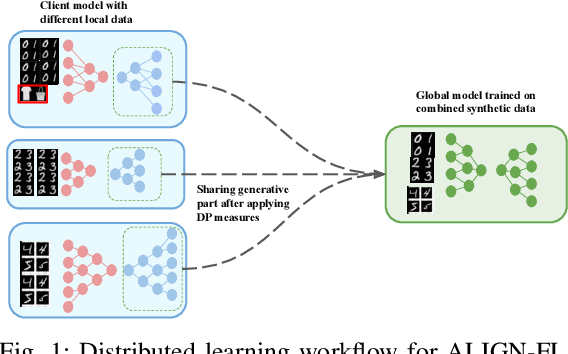
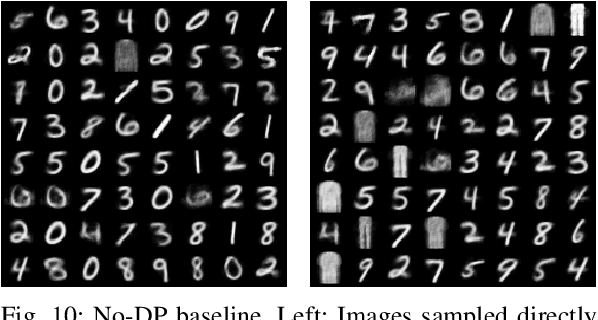
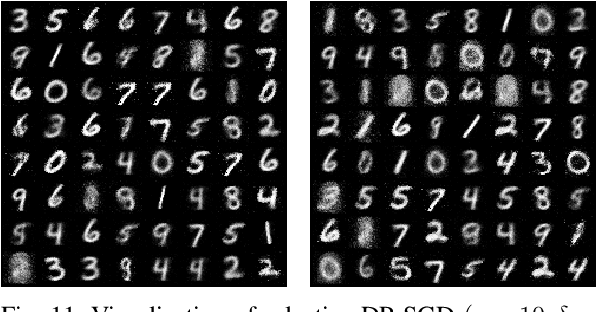
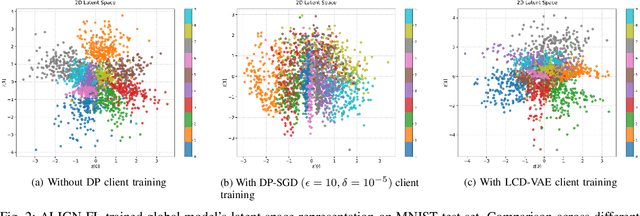
We present ALIGN-FL, a novel approach to distributed learning that addresses the challenge of learning from highly disjoint data distributions through selective sharing of generative components. Instead of exchanging full model parameters, our framework enables privacy-preserving learning by transferring only generative capabilities across clients, while the server performs global training using synthetic samples. Through complementary privacy mechanisms: DP-SGD with adaptive clipping and Lipschitz regularized VAE decoders and a stateful architecture supporting heterogeneous clients, we experimentally validate our approach on MNIST and Fashion-MNIST datasets with cross-domain outliers. Our analysis demonstrates that both privacy mechanisms effectively map sensitive outliers to typical data points while maintaining utility in extreme Non-IID scenarios typical of cross-silo collaborations. Index Terms: Client-invariant Learning, Federated Learning (FL), Privacy-preserving Generative Models, Non-Independent and Identically Distributed (Non-IID), Heterogeneous Architectures
Rethinking Explanation Evaluation under the Retraining Scheme
Nov 11, 2025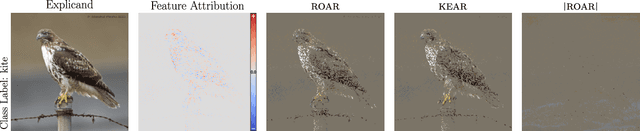
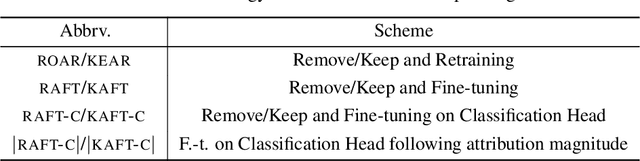
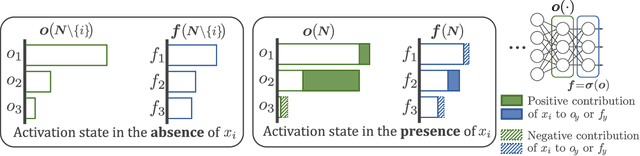
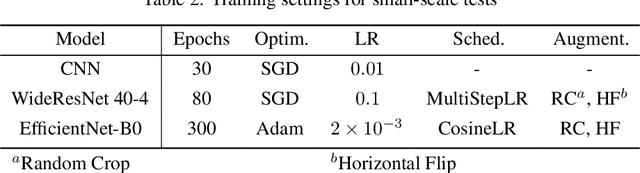
Feature attribution has gained prominence as a tool for explaining model decisions, yet evaluating explanation quality remains challenging due to the absence of ground-truth explanations. To circumvent this, explanation-guided input manipulation has emerged as an indirect evaluation strategy, measuring explanation effectiveness through the impact of input modifications on model outcomes during inference. Despite the widespread use, a major concern with inference-based schemes is the distribution shift caused by such manipulations, which undermines the reliability of their assessments. The retraining-based scheme ROAR overcomes this issue by adapting the model to the altered data distribution. However, its evaluation results often contradict the theoretical foundations of widely accepted explainers. This work investigates this misalignment between empirical observations and theoretical expectations. In particular, we identify the sign issue as a key factor responsible for residual information that ultimately distorts retraining-based evaluation. Based on the analysis, we show that a straightforward reframing of the evaluation process can effectively resolve the identified issue. Building on the existing framework, we further propose novel variants that jointly structure a comprehensive perspective on explanation evaluation. These variants largely improve evaluation efficiency over the standard retraining protocol, thereby enhancing practical applicability for explainer selection and benchmarking. Following our proposed schemes, empirical results across various data scales provide deeper insights into the performance of carefully selected explainers, revealing open challenges and future directions in explainability research.
Tracking UWB Devices Through Radio Frequency Fingerprinting Is Possible
Jan 08, 2025Ultra-wideband (UWB) is a state-of-the-art technology designed for applications requiring centimeter-level localization. Its widespread adoption by smartphone manufacturer naturally raises security and privacy concerns. Successfully implementing Radio Frequency Fingerprinting (RFF) to UWB could enable physical layer security, but might also allow undesired tracking of the devices. The scope of this paper is to explore the feasibility of applying RFF to UWB and investigates how well this technique generalizes across different environments. We collected a realistic dataset using off-the-shelf UWB devices with controlled variation in device positioning. Moreover, we developed an improved deep learning pipeline to extract the hardware signature from the signal data. In stable conditions, the extracted RFF achieves over 99% accuracy. While the accuracy decreases in more changing environments, we still obtain up to 76% accuracy in untrained locations.
Transparent Neighborhood Approximation for Text Classifier Explanation
Nov 25, 2024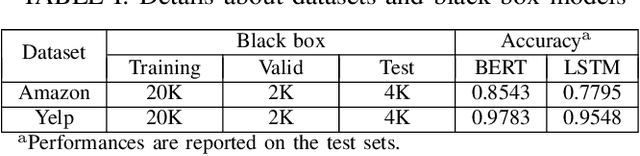
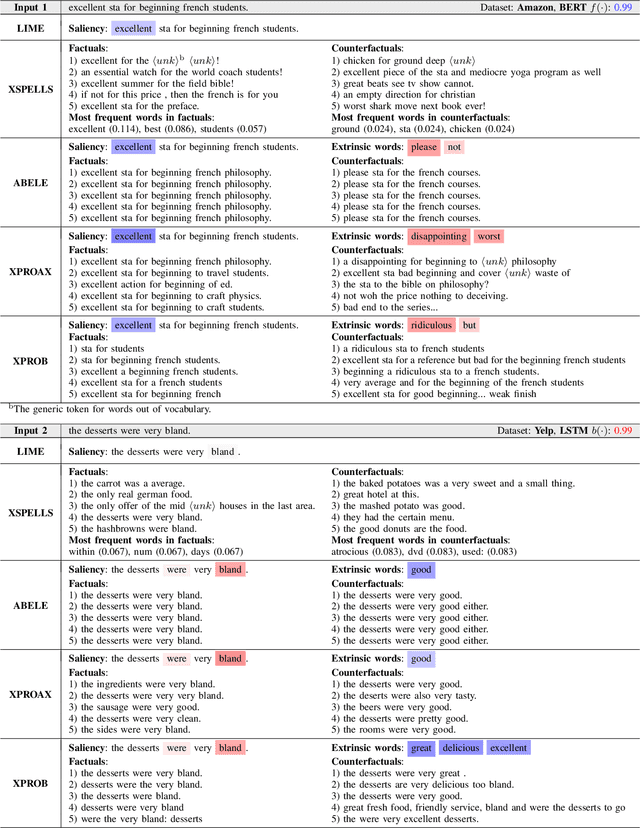
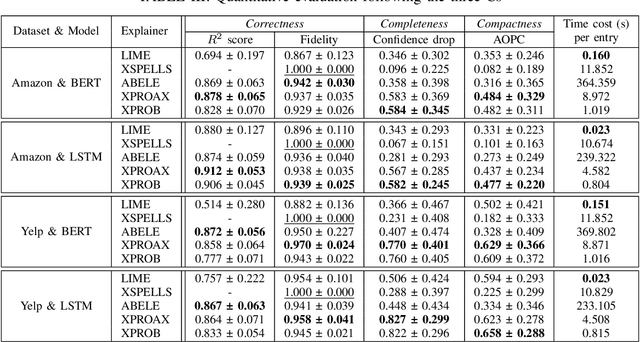
Recent literature highlights the critical role of neighborhood construction in deriving model-agnostic explanations, with a growing trend toward deploying generative models to improve synthetic instance quality, especially for explaining text classifiers. These approaches overcome the challenges in neighborhood construction posed by the unstructured nature of texts, thereby improving the quality of explanations. However, the deployed generators are usually implemented via neural networks and lack inherent explainability, sparking arguments over the transparency of the explanation process itself. To address this limitation while preserving neighborhood quality, this paper introduces a probability-based editing method as an alternative to black-box text generators. This approach generates neighboring texts by implementing manipulations based on in-text contexts. Substituting the generator-based construction process with recursive probability-based editing, the resultant explanation method, XPROB (explainer with probability-based editing), exhibits competitive performance according to the evaluation conducted on two real-world datasets. Additionally, XPROB's fully transparent and more controllable construction process leads to superior stability compared to the generator-based explainers.
On Gradient-like Explanation under a Black-box Setting: When Black-box Explanations Become as Good as White-box
Aug 18, 2023Attribution methods shed light on the explainability of data-driven approaches such as deep learning models by revealing the most contributing features to decisions that have been made. A widely accepted way of deriving feature attributions is to analyze the gradients of the target function with respect to input features. Analysis of gradients requires full access to the target system, meaning that solutions of this kind treat the target system as a white-box. However, the white-box assumption may be untenable due to security and safety concerns, thus limiting their practical applications. As an answer to the limited flexibility, this paper presents GEEX (gradient-estimation-based explanation), an explanation method that delivers gradient-like explanations under a black-box setting. Furthermore, we integrate the proposed method with a path method. The resulting approach iGEEX (integrated GEEX) satisfies the four fundamental axioms of attribution methods: sensitivity, insensitivity, implementation invariance, and linearity. With a focus on image data, the exhaustive experiments empirically show that the proposed methods outperform state-of-the-art black-box methods and achieve competitive performance compared to the ones with full access.
Differentially Private Synthetic Data Generation via Lipschitz-Regularised Variational Autoencoders
Apr 22, 2023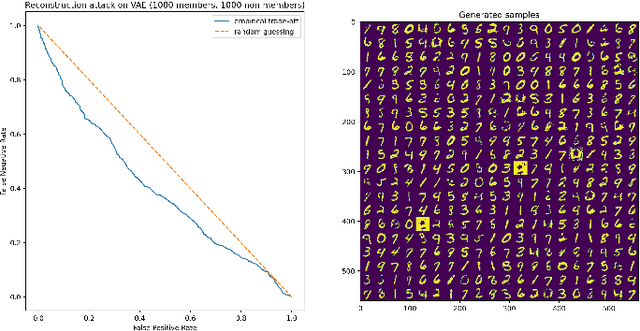
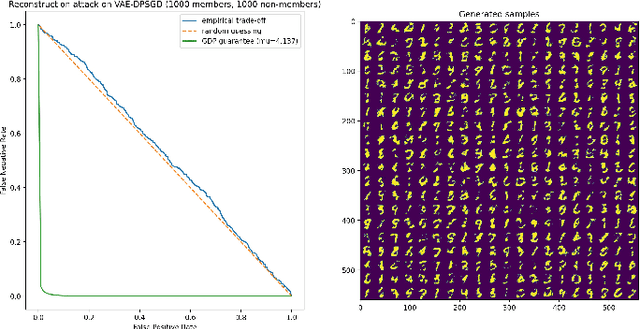
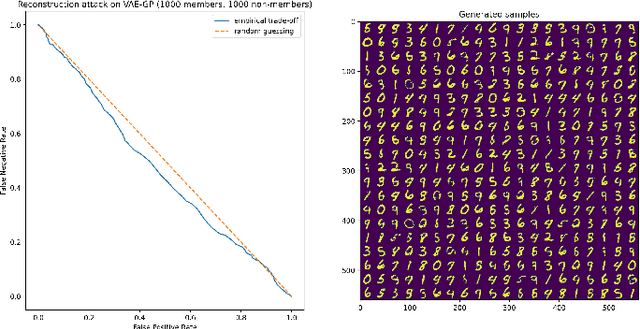
Synthetic data has been hailed as the silver bullet for privacy preserving data analysis. If a record is not real, then how could it violate a person's privacy? In addition, deep-learning based generative models are employed successfully to approximate complex high-dimensional distributions from data and draw realistic samples from this learned distribution. It is often overlooked though that generative models are prone to memorising many details of individual training records and often generate synthetic data that too closely resembles the underlying sensitive training data, hence violating strong privacy regulations as, e.g., encountered in health care. Differential privacy is the well-known state-of-the-art framework for guaranteeing protection of sensitive individuals' data, allowing aggregate statistics and even machine learning models to be released publicly without compromising privacy. The training mechanisms however often add too much noise during the training process, and thus severely compromise the utility of these private models. Even worse, the tight privacy budgets do not allow for many training epochs so that model quality cannot be properly controlled in practice. In this paper we explore an alternative approach for privately generating data that makes direct use of the inherent stochasticity in generative models, e.g., variational autoencoders. The main idea is to appropriately constrain the continuity modulus of the deep models instead of adding another noise mechanism on top. For this approach, we derive mathematically rigorous privacy guarantees and illustrate its effectiveness with practical experiments.
Explaining text classifiers through progressive neighborhood approximation with realistic samples
Feb 11, 2023The importance of neighborhood construction in local explanation methods has been already highlighted in the literature. And several attempts have been made to improve neighborhood quality for high-dimensional data, for example, texts, by adopting generative models. Although the generators produce more realistic samples, the intuitive sampling approaches in the existing solutions leave the latent space underexplored. To overcome this problem, our work, focusing on local model-agnostic explanations for text classifiers, proposes a progressive approximation approach that refines the neighborhood of a to-be-explained decision with a careful two-stage interpolation using counterfactuals as landmarks. We explicitly specify the two properties that should be satisfied by generative models, the reconstruction ability and the locality-preserving property, to guide the selection of generators for local explanation methods. Moreover, noticing the opacity of generative models during the study, we propose another method that implements progressive neighborhood approximation with probability-based editions as an alternative to the generator-based solution. The explanation results from both methods consist of word-level and instance-level explanations benefiting from the realistic neighborhood. Through exhaustive experiments, we qualitatively and quantitatively demonstrate the effectiveness of the two proposed methods.