 Add to Chrome
 Add to Firefox
 Add to Edge
RADIUS: Ranking, Distribution, and Significance - A Comprehensive Alignment Suite for Survey Simulation
Mar 19, 2026
Simulation of surveys using LLMs is emerging as a powerful application for generating human-like responses at scale. Prior work evaluates survey simulation using metrics borrowed from other domains, which are often ad hoc, fragmented, and non-standardized, leading to results that are difficult to compare. Moreover, existing metrics focus mainly on accuracy or distributional measures, overlooking the critical dimension of ranking alignment. In practice, a simulation can achieve high accuracy while still failing to capture the option most preferred by humans - a distinction that is critical in decision-making applications. We introduce RADIUS, a comprehensive two-dimensional alignment suite for survey simulation that captures: 1) RAnking alignment and 2) DIstribUtion alignment, each complemented by statistical Significance testing. RADIUS highlights the limitations of existing metrics, enables more meaningful evaluation of survey simulation, and provides an open-source implementation for reproducible and comparable assessment.

PAARS: Persona Aligned Agentic Retail Shoppers
Mar 31, 2025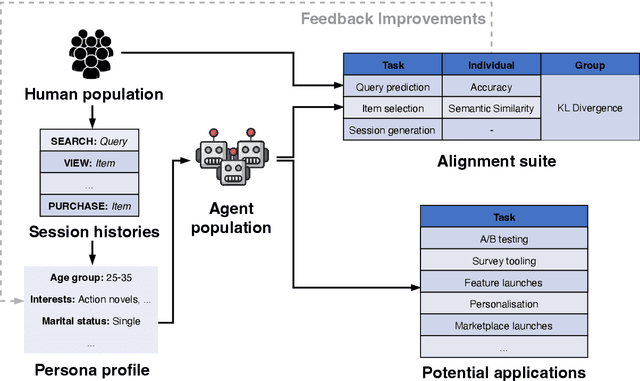
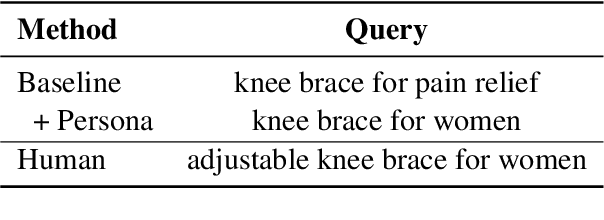
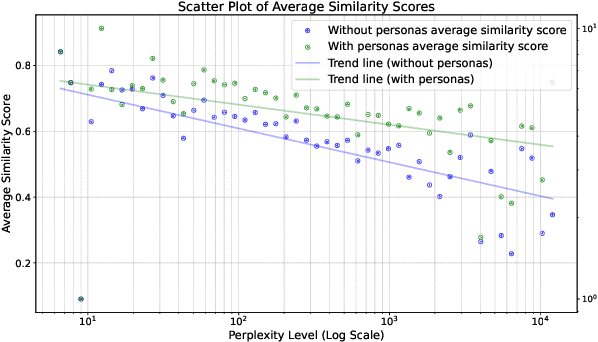
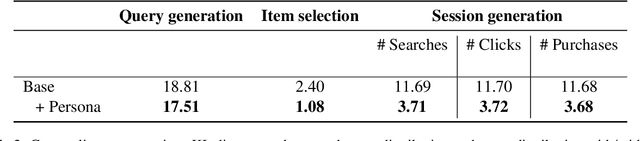
In e-commerce, behavioral data is collected for decision making which can be costly and slow. Simulation with LLM powered agents is emerging as a promising alternative for representing human population behavior. However, LLMs are known to exhibit certain biases, such as brand bias, review rating bias and limited representation of certain groups in the population, hence they need to be carefully benchmarked and aligned to user behavior. Ultimately, our goal is to synthesise an agent population and verify that it collectively approximates a real sample of humans. To this end, we propose a framework that: (i) creates synthetic shopping agents by automatically mining personas from anonymised historical shopping data, (ii) equips agents with retail-specific tools to synthesise shopping sessions and (iii) introduces a novel alignment suite measuring distributional differences between humans and shopping agents at the group (i.e. population) level rather than the traditional "individual" level. Experimental results demonstrate that using personas improves performance on the alignment suite, though a gap remains to human behaviour. We showcase an initial application of our framework for automated agentic A/B testing and compare the findings to human results. Finally, we discuss applications, limitations and challenges setting the stage for impactful future work.