 Add to Chrome
 Add to Firefox
 Add to Edge
Young people's perceptions and recommendations for conversational generative artificial intelligence in youth mental health
Apr 15, 2026
Conversational generative artificial intelligence agents (or genAI chatbots) could benefit youth mental health, yet young people's perspectives remain underexplored. We examined the Mental health Intelligence Agent (Mia), a genAI chatbot originally designed for professionals in Australian youth services. Following co-design, 32 young people participated in online workshops exploring their perceptions of genAI chatbots in youth mental health and to develop recommendations for reconceptualising Mia for consumers and integrating it into services. Four themes were developed: (1) Humanising AI without dehumanising care, (2) I need to know what's under the hood, (3) Right tool, right place, right time?, and (4) Making it mine on safe ground. This study offers insights into young people's attitudes, needs, and requirements regarding genAI chatbots in youth mental health, with key implications for service integration. Additionally, by co-designing system requirements, this work informs the ethics, design, development, implementation, and governance of genAI chatbots in youth mental health contexts.

Covariate Dependent Mixture of Bayesian Networks
Jan 10, 2025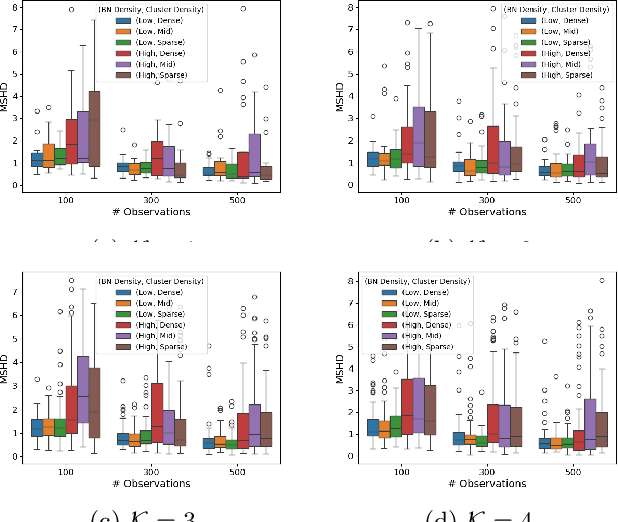
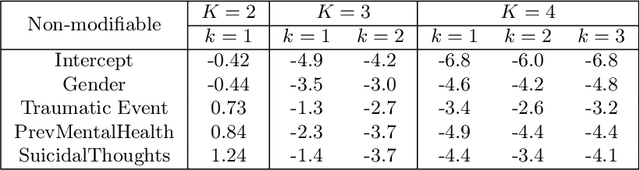
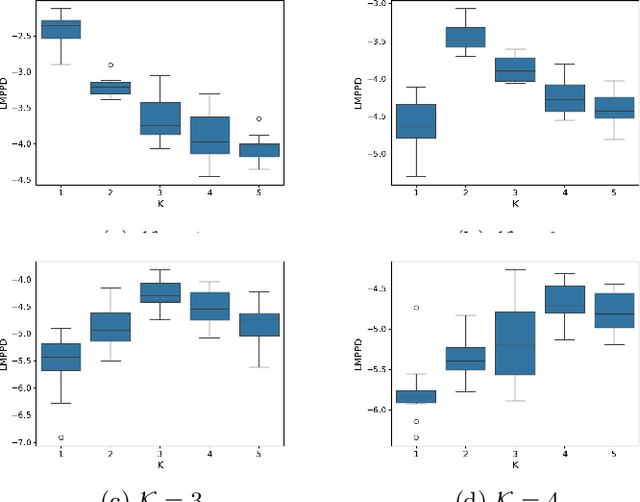
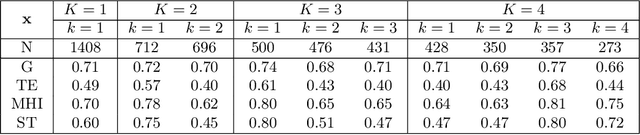
Learning the structure of Bayesian networks from data provides insights into underlying processes and the causal relationships that generate the data, but its usefulness depends on the homogeneity of the data population, a condition often violated in real-world applications. In such cases, using a single network structure for inference can be misleading, as it may not capture sub-population differences. To address this, we propose a novel approach of modelling a mixture of Bayesian networks where component probabilities depend on individual characteristics. Our method identifies both network structures and demographic predictors of sub-population membership, aiding personalised interventions. We evaluate our method through simulations and a youth mental health case study, demonstrating its potential to improve tailored interventions in health, education, and social policy.