 Add to Chrome
 Add to Firefox
 Add to Edge
Projecting Latent RL Actions: Towards Generalizable and Scalable Graph Combinatorial Optimization
May 19, 2026
Graph combinatorial optimization (GCO) has attracted growing interest, as many NP-hard problems naturally admit graph formulations, yet their combinatorial explosion renders exact methods computationally intractable. Recent advances in Reinforcement Learning (RL) combined with Graph Neural Networks (GNNs) have significantly improved learning-based GCO solvers. However, existing approaches face limitations in both generalization across diverse graph instances and computational scalability as action spaces grow. To address both challenges, we introduce projection agents, a novel RL-GCO approach that operates directly in a continuous GNN-based action embedding space, predicting a desired latent action in a single forward pass and subsequently decoding it into a valid discrete action. Additionally, we enable fair comparison across RL methods through a shared embedding space for both observations and actions. Across diverse benchmarks, our approach achieves up to 16.2x faster inference and up to 40% better generalization than existing solutions using only simple nearest-neighbor decoding, while opening the door to strong RL performance in super-linear decision spaces with multiple interdependent variables. Finally, we release LaGCO-RL, a Python library that automates latent action-space construction and supports existing RL-GCO solutions, promoting reproducibility and adaptation to new GCO benchmarks.

Self-Driving Telescopes: Autonomous Scheduling of Astronomical Observation Campaigns with Offline Reinforcement Learning
Nov 29, 2023

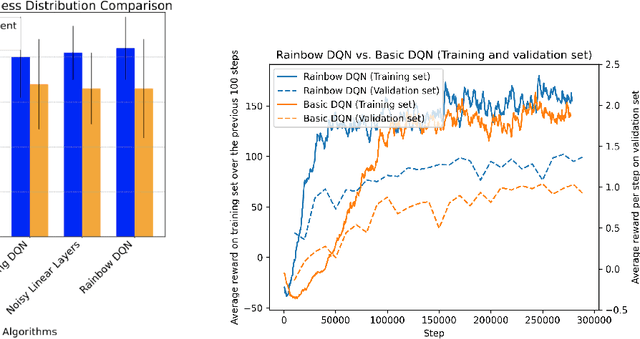
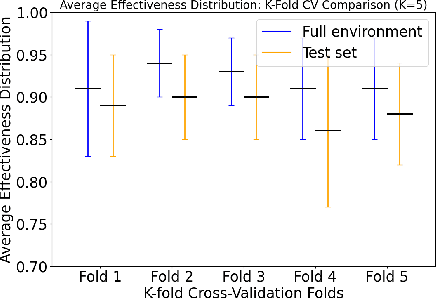
Modern astronomical experiments are designed to achieve multiple scientific goals, from studies of galaxy evolution to cosmic acceleration. These goals require data of many different classes of night-sky objects, each of which has a particular set of observational needs. These observational needs are typically in strong competition with one another. This poses a challenging multi-objective optimization problem that remains unsolved. The effectiveness of Reinforcement Learning (RL) as a valuable paradigm for training autonomous systems has been well-demonstrated, and it may provide the basis for self-driving telescopes capable of optimizing the scheduling for astronomy campaigns. Simulated datasets containing examples of interactions between a telescope and a discrete set of sky locations on the celestial sphere can be used to train an RL model to sequentially gather data from these several locations to maximize a cumulative reward as a measure of the quality of the data gathered. We use simulated data to test and compare multiple implementations of a Deep Q-Network (DQN) for the task of optimizing the schedule of observations from the Stone Edge Observatory (SEO). We combine multiple improvements on the DQN and adjustments to the dataset, showing that DQNs can achieve an average reward of 87%+-6% of the maximum achievable reward in each state on the test set. This is the first comparison of offline RL algorithms for a particular astronomical challenge and the first open-source framework for performing such a comparison and assessment task.