 Add to Chrome
 Add to Firefox
 Add to Edge
What Do Humanities Scholars Need? A User Model for Recommendation in Digital Archives
Apr 02, 2026
User models for recommender systems (RecSys) typically assume stable preferences, similarity-based relevance, and session-bounded interactions -- assumptions derived from high-volume consumer contexts. This paper investigates these assumptions for humanities scholars working with digital archives. Following a human-centered design approach, we conducted focus groups and analyzed interview data from 18 researchers. Our analysis identifies four dimensions where scholarly information-seeking diverges from common RecSys user modeling: (1) context volatility -- preferences shift with research tasks and domain expertise; (2) epistemic trust -- relevance depends on verifiable provenance; (3) contrastive seeking -- researchers seek items that challenge their current direction; and (4) strand continuity -- research spans long-term threads rather than discrete sessions. We discuss implications for user modeling and outline how these dimensions relate to collaborative filtering, content-based, and session-based recommendation. We propose these dimensions as a diagnostic framework applicable beyond archives to similar application domains where typical user modeling assumptions may not hold.

Challenges in Implementing a Recommender System for Historical Research in the Humanities
Oct 28, 2024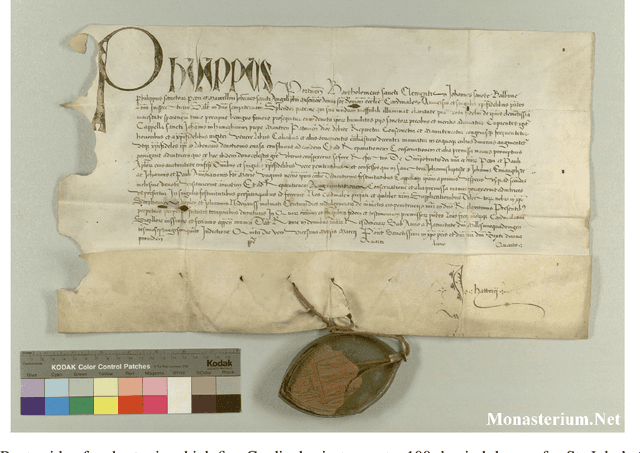
This extended abstract describes the challenges in implementing recommender systems for digital archives in the humanities, focusing on Monasterium.net, a platform for historical legal documents. We discuss three key aspects: (i) the unique characteristics of so-called charters as items for recommendation, (ii) the complex multi-stakeholder environment, and (iii) the distinct information-seeking behavior of scholars in the humanities. By examining these factors, we aim to contribute to the development of more effective and tailored recommender systems for (digital) humanities research.
Value Identification in Multistakeholder Recommender Systems for Humanities and Historical Research: The Case of the Digital Archive Monasterium.net
Sep 26, 2024Recommender systems remain underutilized in humanities and historical research, despite their potential to enhance the discovery of cultural records. This paper offers an initial value identification of the multiple stakeholders that might be impacted by recommendations in Monasterium.net, a digital archive for historical legal documents. Specifically, we discuss the diverse values and objectives of its stakeholders, such as editors, aggregators, platform owners, researchers, publishers, and funding agencies. These in-depth insights into the potentially conflicting values of stakeholder groups allow designing and adapting recommender systems to enhance their usefulness for humanities and historical research. Additionally, our findings will support deeper engagement with additional stakeholders to refine value models and evaluation metrics for recommender systems in the given domains. Our conclusions are embedded in and applicable to other digital archives and a broader cultural heritage context.
Is text normalization relevant for classifying medieval charters?
Aug 29, 2024This study examines the impact of historical text normalization on the classification of medieval charters, specifically focusing on document dating and locating. Using a data set of Middle High German charters from a digital archive, we evaluate various classifiers, including traditional and transformer-based models, with and without normalization. Our results indicate that the given normalization minimally improves locating tasks but reduces accuracy for dating, implying that original texts contain crucial features that normalization may obscure. We find that support vector machines and gradient boosting outperform other models, questioning the efficiency of transformers for this use case. Results suggest a selective approach to historical text normalization, emphasizing the significance of preserving some textual characteristics that are critical for classification tasks in document analysis.