 Add to Chrome
 Add to Firefox
 Add to Edge
A Computationally Efficient Learning of Artificial Intelligence System Reliability Considering Error Propagation
Mar 18, 2026
Artificial Intelligence (AI) systems are increasingly prominent in emerging smart cities, yet their reliability remains a critical concern. These systems typically operate through a sequence of interconnected functional stages, where upstream errors may propagate to downstream stages, ultimately affecting overall system reliability. Quantifying such error propagation is essential for accurate modeling of AI system reliability. However, this task is challenging due to: i) data availability: real-world AI system reliability data are often scarce and constrained by privacy concerns; ii) model validity: recurring error events across sequential stages are interdependent, violating the independence assumptions of statistical inference; and iii) computational complexity: AI systems process large volumes of high-speed data, resulting in frequent and complex recurrent error events that are difficult to track and analyze. To address these challenges, this paper leverages a physics-based autonomous vehicle simulation platform with a justifiable error injector to generate high-quality data for AI system reliability analysis. Building on this data, a new reliability modeling framework is developed to explicitly characterize error propagation across stages. Model parameters are estimated using a computationally efficient, theoretically guaranteed composite likelihood expectation - maximization algorithm. Its application to the reliability modeling for autonomous vehicle perception systems demonstrates its predictive accuracy and computational efficiency.

Bridging the Data Gap in AI Reliability Research and Establishing DR-AIR, a Comprehensive Data Repository for AI Reliability
Feb 17, 2025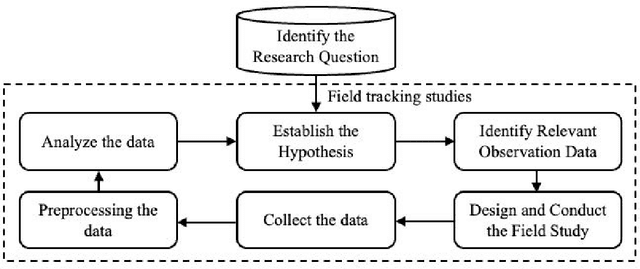
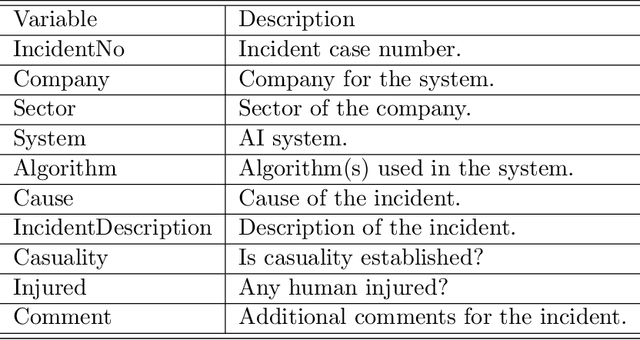
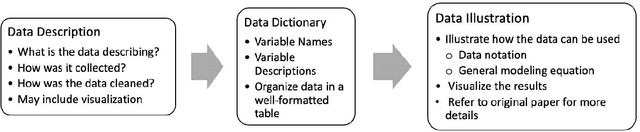
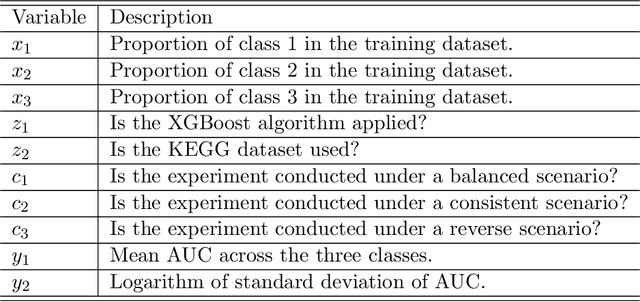
Artificial intelligence (AI) technology and systems have been advancing rapidly. However, ensuring the reliability of these systems is crucial for fostering public confidence in their use. This necessitates the modeling and analysis of reliability data specific to AI systems. A major challenge in AI reliability research, particularly for those in academia, is the lack of readily available AI reliability data. To address this gap, this paper focuses on conducting a comprehensive review of available AI reliability data and establishing DR-AIR: a data repository for AI reliability. Specifically, we introduce key measurements and data types for assessing AI reliability, along with the methodologies used to collect these data. We also provide a detailed description of the currently available datasets with illustrative examples. Furthermore, we outline the setup of the DR-AIR repository and demonstrate its practical applications. This repository provides easy access to datasets specifically curated for AI reliability research. We believe these efforts will significantly benefit the AI research community by facilitating access to valuable reliability data and promoting collaboration across various academic domains within AI. We conclude our paper with a call to action, encouraging the research community to contribute and share AI reliability data to further advance this critical field of study.
BiDepth Multimodal Neural Network: Bidirectional Depth Deep Learning Arcitecture for Spatial-Temporal Prediction
Jan 14, 2025
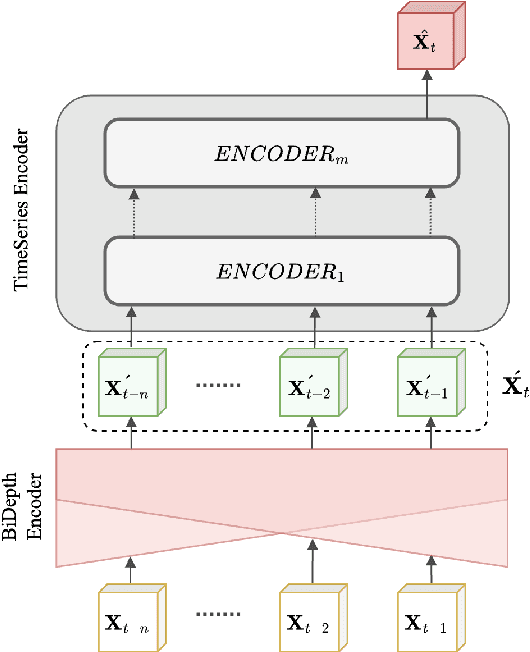
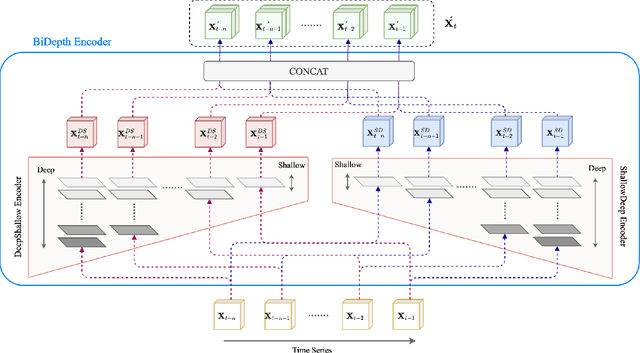
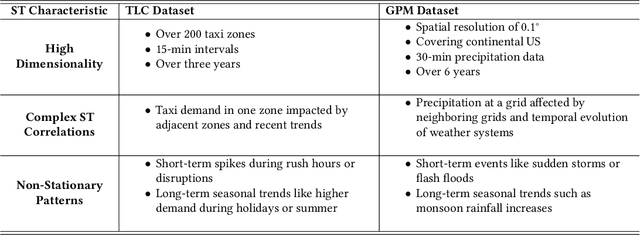
Accurate prediction of spatial-temporal (ST) information in dynamic systems, such as urban mobility and weather patterns, is a crucial yet challenging problem. The complexity stems from the intricate interplay between spatial proximity and temporal relevance, where both long-term trends and short-term fluctuations are present in convoluted patterns. Existing approaches, including traditional statistical methods and conventional neural networks, may provide inaccurate results due to the lack of an effective mechanism that simultaneously incorporates information at variable temporal depths while maintaining spatial context, resulting in a trade-off between comprehensive long-term historical analysis and responsiveness to short-term new information. To bridge this gap, this paper proposes the BiDepth Multimodal Neural Network (BDMNN) with bidirectional depth modulation that enables a comprehensive understanding of both long-term seasonality and short-term fluctuations, adapting to the complex ST context. Case studies with real-world public data demonstrate significant improvements in prediction accuracy, with a 12% reduction in Mean Squared Error for urban traffic prediction and a 15% improvement in rain precipitation forecasting compared to state-of-the-art benchmarks, without demanding extra computational resources.