 Add to Chrome
 Add to Firefox
 Add to Edge
QMBench: A Research Level Benchmark for Quantum Materials Research
Dec 19, 2025
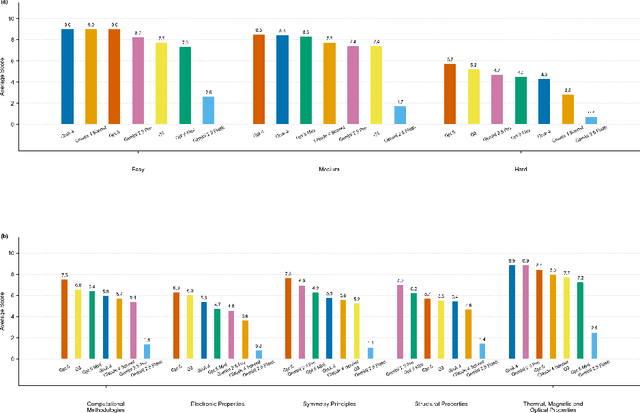
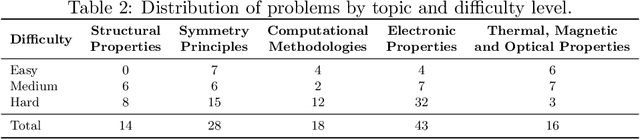
We introduce QMBench, a comprehensive benchmark designed to evaluate the capability of large language model agents in quantum materials research. This specialized benchmark assesses the model's ability to apply condensed matter physics knowledge and computational techniques such as density functional theory to solve research problems in quantum materials science. QMBench encompasses different domains of the quantum material research, including structural properties, electronic properties, thermodynamic and other properties, symmetry principle and computational methodologies. By providing a standardized evaluation framework, QMBench aims to accelerate the development of an AI scientist capable of making creative contributions to quantum materials research. We expect QMBench to be developed and constantly improved by the research community.

Accurate, transferable, and verifiable machine-learned interatomic potentials for layered materials
Mar 19, 2025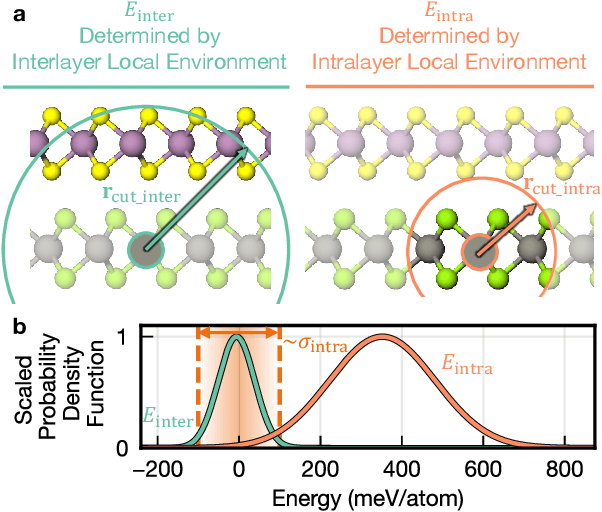
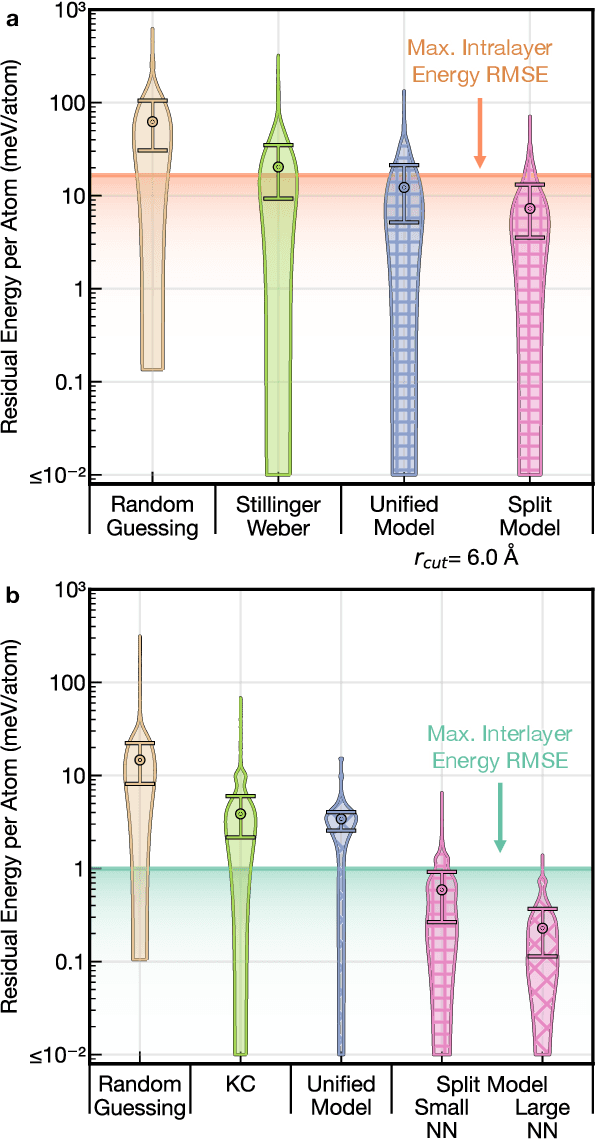
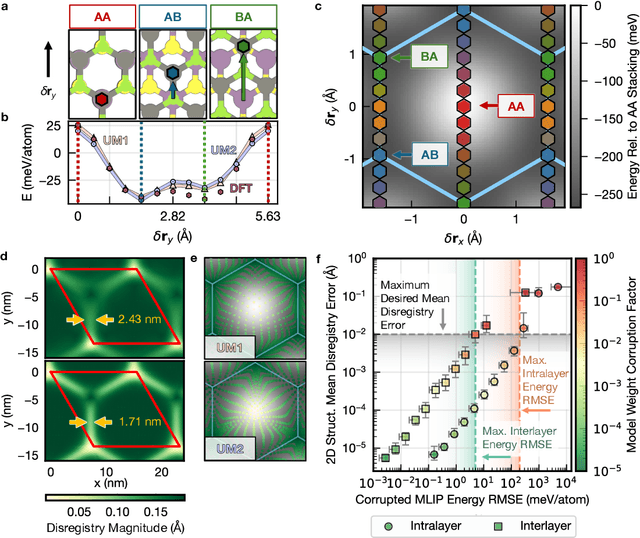
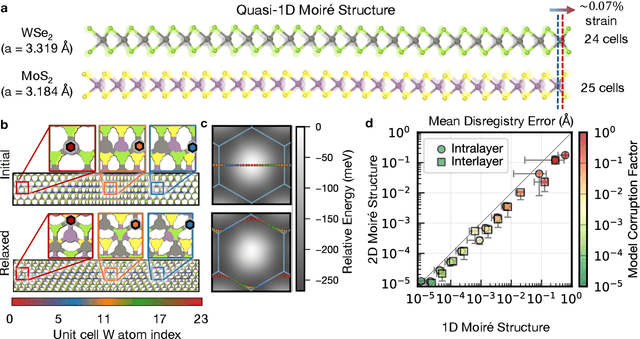
Twisted layered van-der-Waals materials often exhibit unique electronic and optical properties absent in their non-twisted counterparts. Unfortunately, predicting such properties is hindered by the difficulty in determining the atomic structure in materials displaying large moir\'e domains. Here, we introduce a split machine-learned interatomic potential and dataset curation approach that separates intralayer and interlayer interactions and significantly improves model accuracy -- with a tenfold increase in energy and force prediction accuracy relative to conventional models. We further demonstrate that traditional MLIP validation metrics -- force and energy errors -- are inadequate for moir\'e structures and develop a more holistic, physically-motivated metric based on the distribution of stacking configurations. This metric effectively compares the entirety of large-scale moir\'e domains between two structures instead of relying on conventional measures evaluated on smaller commensurate cells. Finally, we establish that one-dimensional instead of two-dimensional moir\'e structures can serve as efficient surrogate systems for validating MLIPs, allowing for a practical model validation protocol against explicit DFT calculations. Applying our framework to HfS2/GaS bilayers reveals that accurate structural predictions directly translate into reliable electronic properties. Our model-agnostic approach integrates seamlessly with various intralayer and interlayer interaction models, enabling computationally tractable relaxation of moir\'e materials, from bilayer to complex multilayers, with rigorously validated accuracy.